

 Stop 01
Stop 1 of 6Singapore
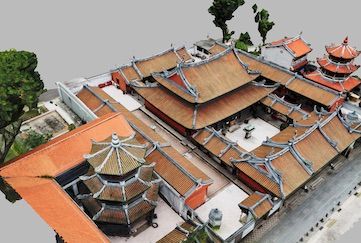
Thian Hock Keng Temple
The southern Chinese courtyard temple honors Mazu, placing Hokkien immigrants’ prayers for safe sea passage at the beginning of Singapore’s diverse sacred landscape.
Architectural Heritage Route
Hokkien maritime devotion, Hindu worship, a Malay Muslim landmark, Chinese temple traditions, and a Buddhist devotional figure reveal a port city built by different communities. Distinct sacred forms share an urban landscape.
6 geolocated stops
Curated Sequence
Stop 01The southern Chinese courtyard temple honors Mazu, placing Hokkien immigrants’ prayers for safe sea passage at the beginning of Singapore’s diverse sacred landscape.
 Stop 02
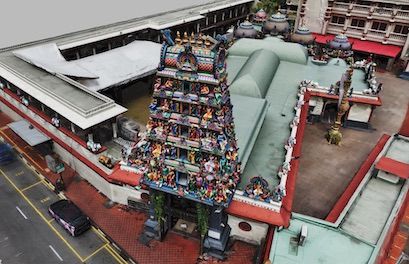
The sculpted Dravidian gopuram makes Hindu deities visible at the street threshold, introducing a distinct architectural and devotional tradition into the port-city comparison.
 Stop 03
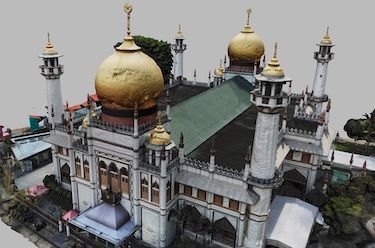
The mosque’s domes and bottle-glass decoration connect Kampong Glam’s Muslim landmark with contributions from poorer worshippers, giving communal participation a visible architectural form.
 Stop 04
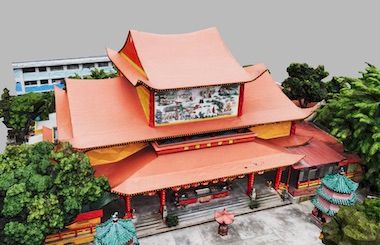
The temple gathered deities transferred from private homes, showing how changing household circumstances could create a shared place of worship within Singapore’s urban communities.
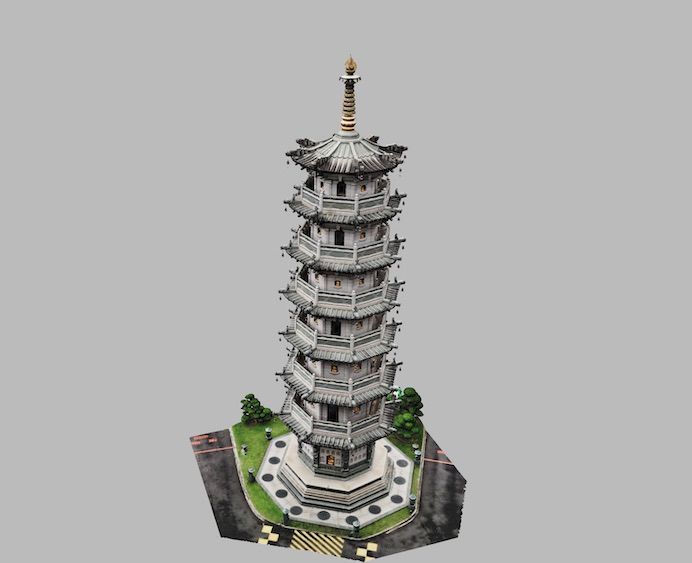 Stop 05
Modeled after Fujian's Shengshou Pagoda, Shuanglin's modern tower carries a specifically southern Chinese Buddhist form into Singapore, adding architectural memory to the port's distinct religious communities.
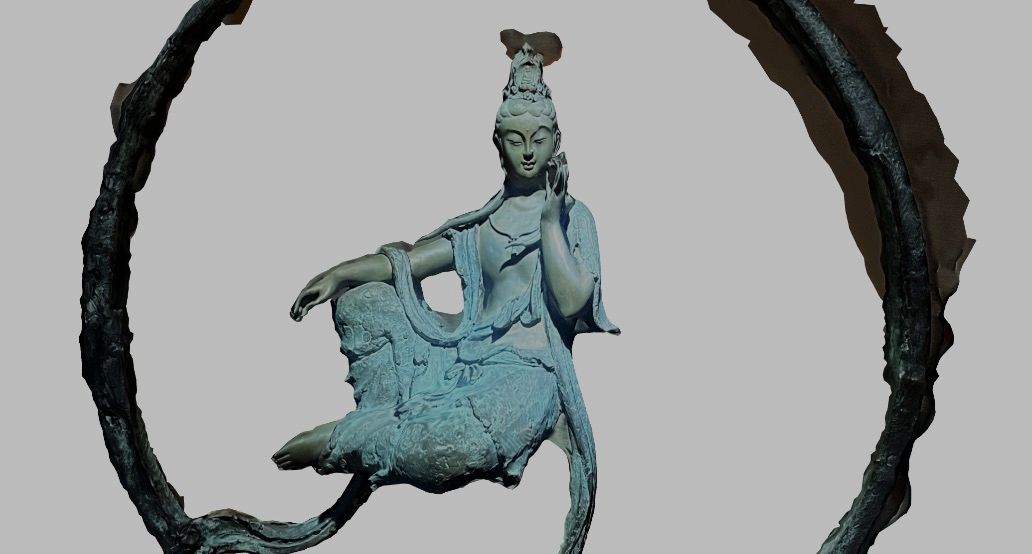 Stop 06
The Bodhisattva figure at the relic corridor’s exit narrows the journey from sacred buildings to one devotional object documented within a Singapore Buddhist monastery.
40 Stops
Guild halls and migrant-community temples carry regional gods, stages, courtyards, lodging, and carving traditions into towns far from their builders’ origins. Across China and into Singapore, shared hometown ties become architecture for worship, commerce, study, mutual assistance, and remembrance.
19 Stops
Suspended sculpture, miniature wooden heavens, gilded narrative carving, sandstone reliefs, and crowded temple gateways explore the aesthetics of abundance. Ornament becomes an environment rather than an accessory.
26 Stops
Academies, Confucian temples, private studies, and public libraries shape spaces for study, ritual, memory, and concentration. A journey through the architecture of attention, from scholarly courtyards to civic reading rooms.