

 3DGS · .sog
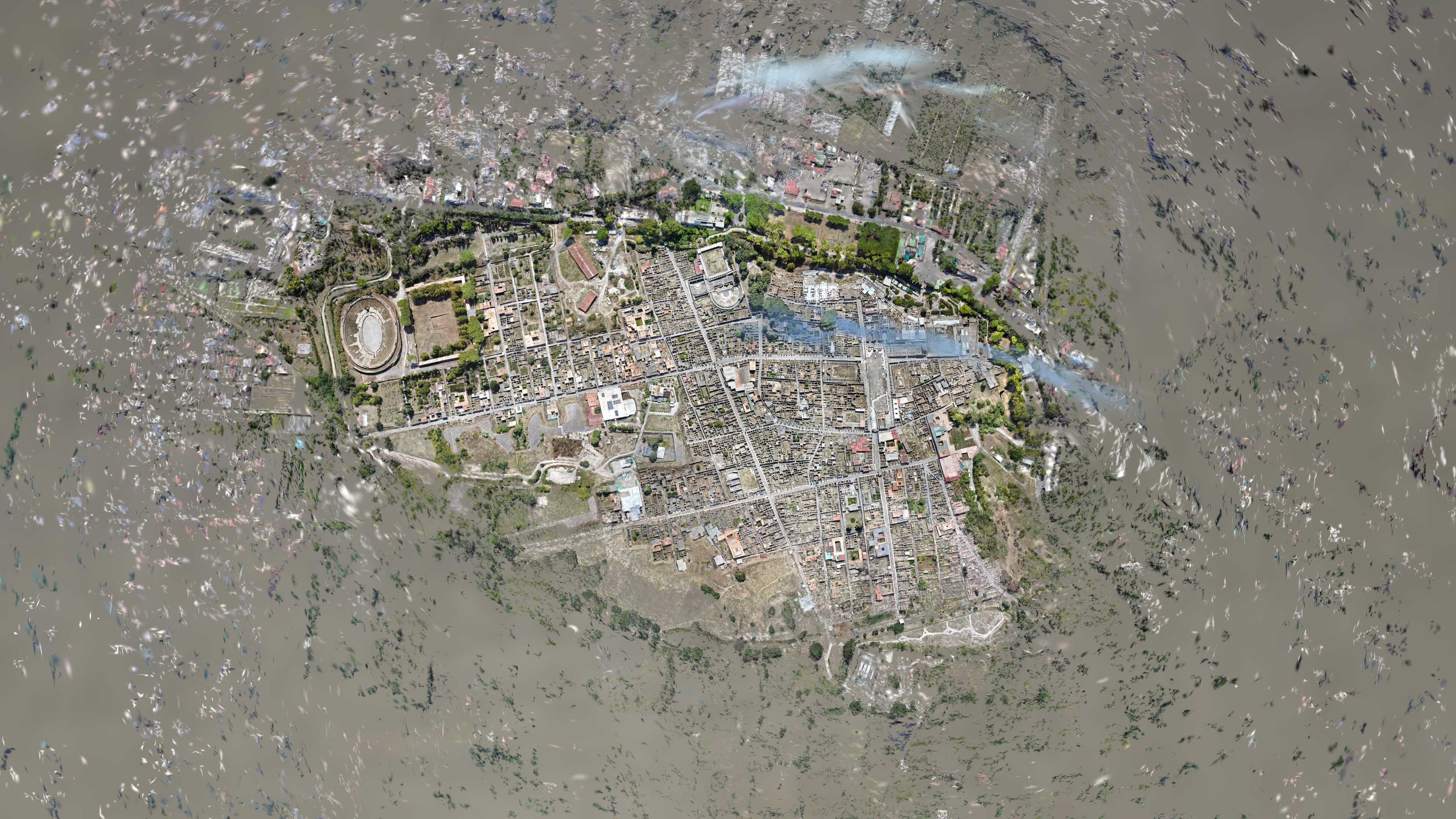
Pompeii 3D Gaussian Splat Model
Interactive 3D Gaussian Splatting heritage scene preserving the Roman archaeological site of Pompeii near Mount Vesuvius.
- Format:
- .sog
- File size:
- 40.9 MB
- Record ID:
- nicndrjlqh4v5zgcx4el6ls4
3D Gaussian Splatting Archive
A curated collection of four flagship archaeological and cultural heritage sites reconstructed with 3D Gaussian Splatting and packaged in PlayCanvas compressed .sog format for interactive browser inspection and spatial preservation research.
Flagship Radiance Fields
Each flagship site includes an interactive full-screen browser viewer, its canonical archive record, and the compressed .sog distribution file.
3DGS · .sogInteractive 3D Gaussian Splatting heritage scene preserving the Roman archaeological site of Pompeii near Mount Vesuvius.
 3DGS · .sog
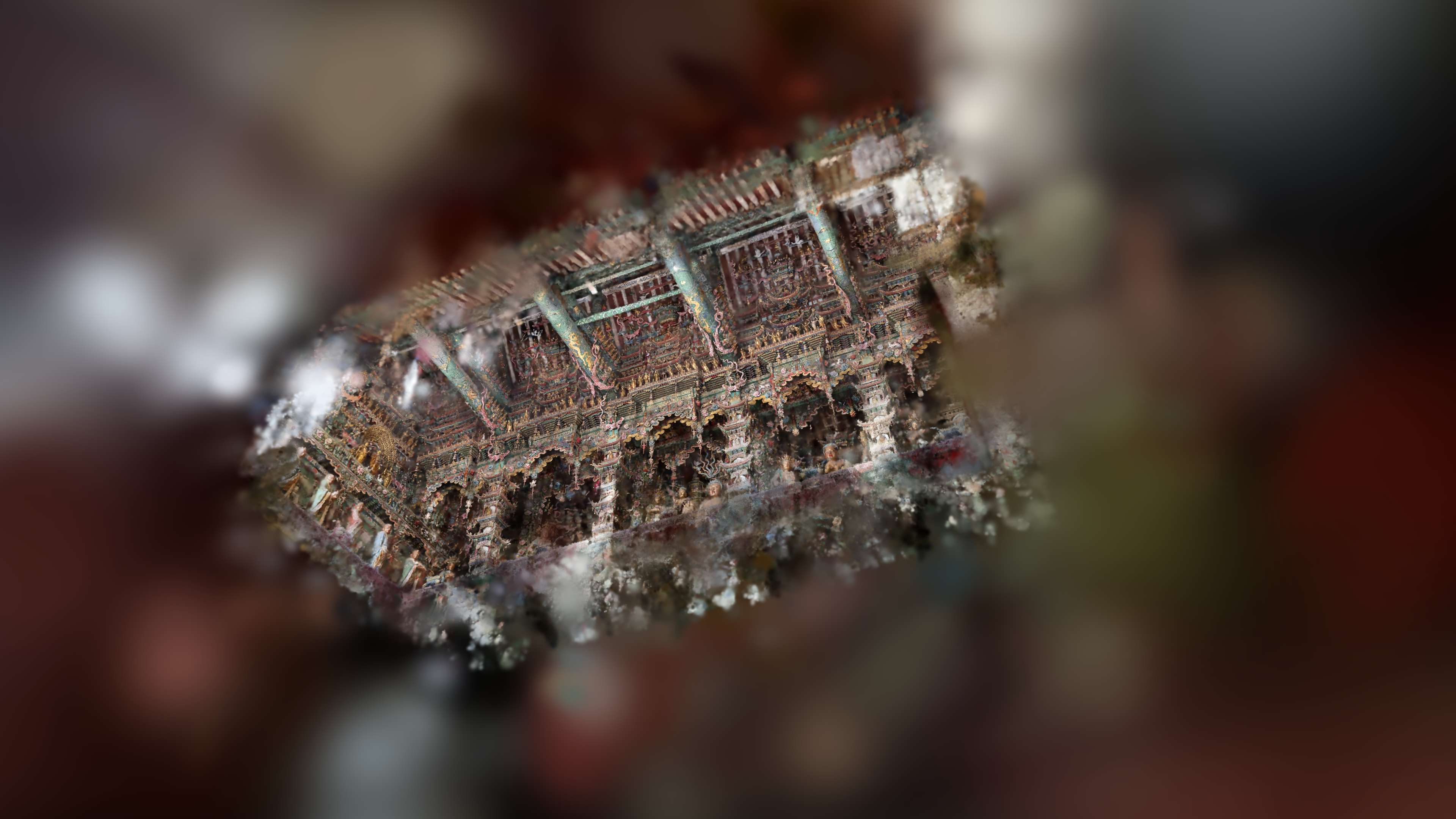
小西天悬塑
Interactive 3D Gaussian Splatting scene preserving the polychrome suspended clay Buddhist sculptures of Xiaoxitian Mahavira Hall in Shanxi.
 3DGS · .sog
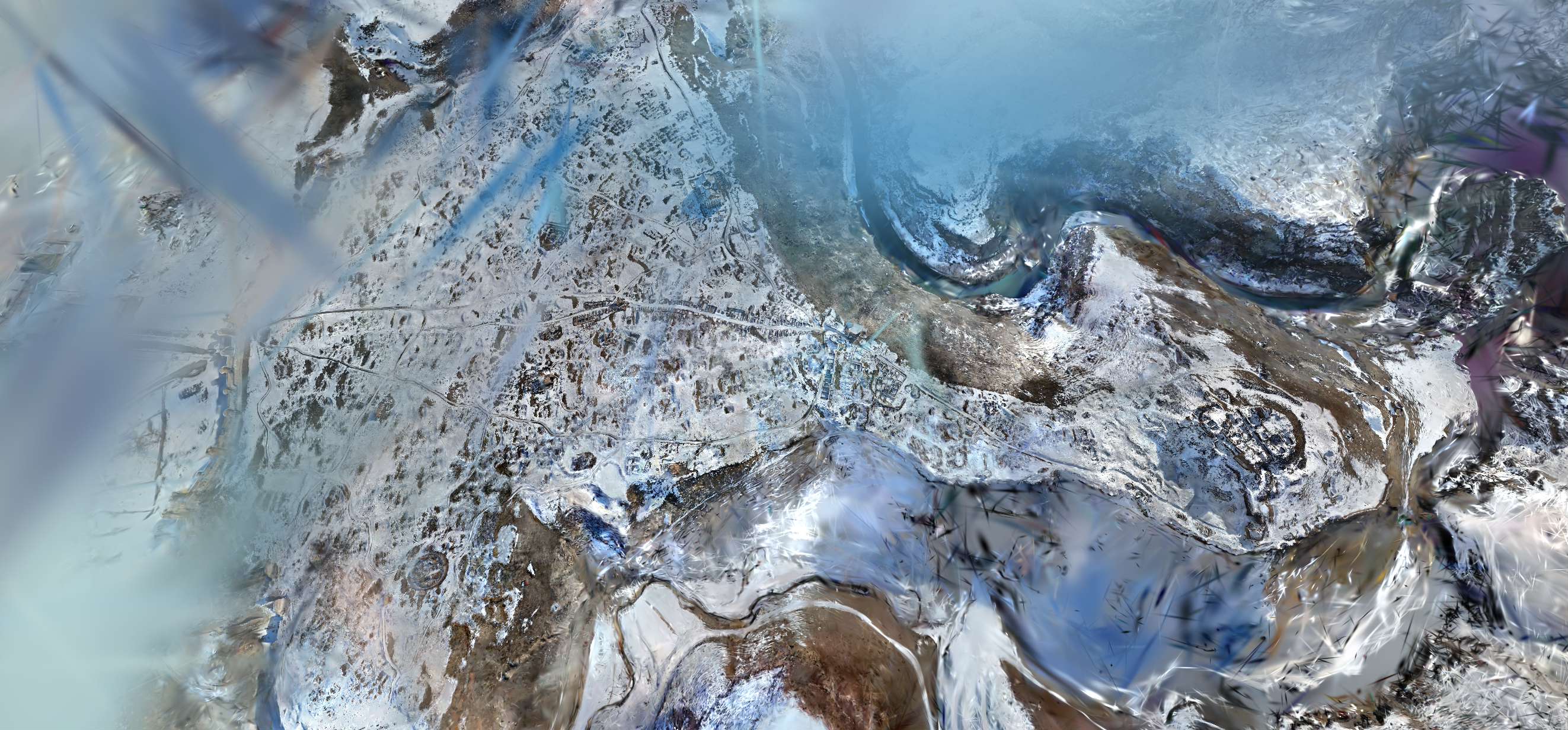
KARS, EASTERN ANATOLIA, TÜRKIYE
Interactive 3D Gaussian Splatting reconstruction of the medieval Armenian Silk Road capital of Ani on the Kars plateau.
 3DGS · .sog
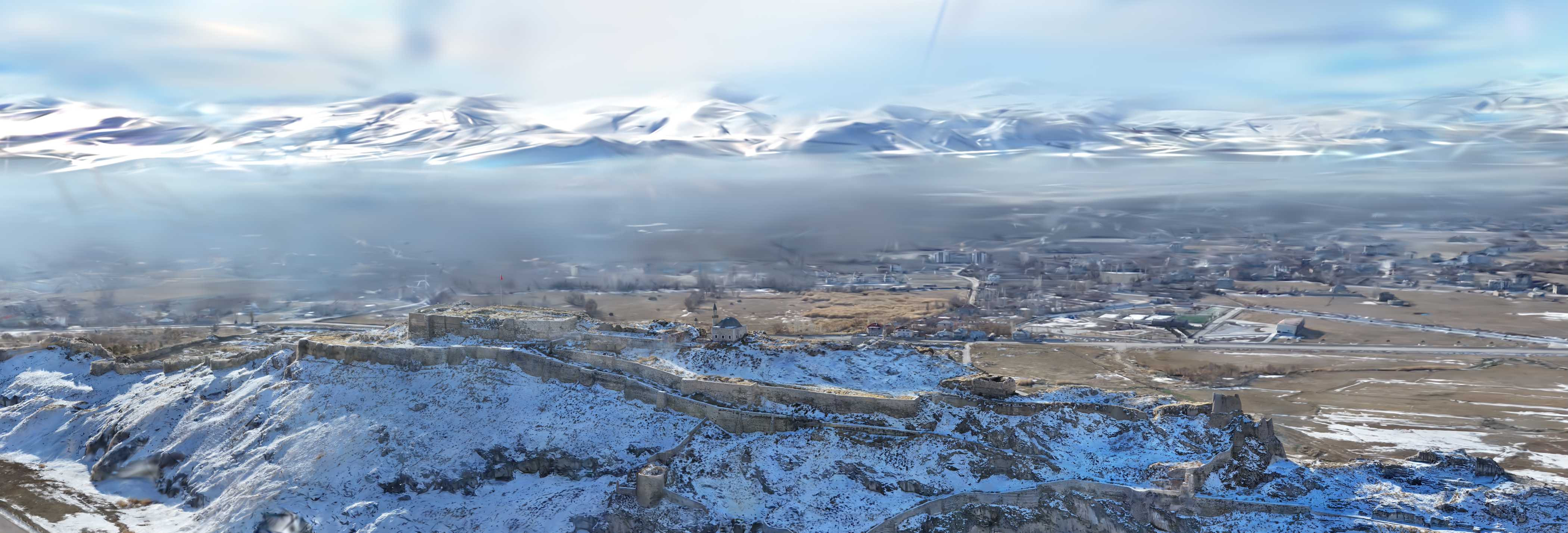
VAN, EASTERN ANATOLIA, TÜRKIYE
Interactive 3D Gaussian Splatting scene capturing the Urartian citadel of Van Castle overlooking Lake Van.
Each scene is distributed in PlayCanvas Spatially Ordered Gaussians (.sog) format, compressing Morton-ordered Gaussian attributes into compact WebP textures plus a meta.json manifest for fast WebGL2 and WebGPU streaming.
# Convert .sog to standard .ply
npm install -g @playcanvas/splat-transform
splat-transform scene.sog scene.ply
Need raw multi-view photographs and COLMAP camera trajectories for training instead of viewing assets? Use the FUNES Open 3D Architecture Dataset.
Switch between BibTeX, APA, and RIS formats to cite this resource in publications or reference managers.
@misc{FUNES_3dgs_cultural_heritage_2026,
  author       = {FUNES.WORLD Cultural Heritage Team},
  title        = {{FUNES 3D Gaussian Splatting Cultural Heritage Collection}},
  year         = {2026},
  publisher    = {FUNES.WORLD},
  version      = {1.0},
  url          = {https://funes.world/datasets/3dgs-cultural-heritage},
  note         = {License: CC BY-NC 4.0; Repository: https://funes.world/3dgs}
}
Technical Reference
Practical guidance on coordinate conventions, evaluation protocols, file conversion, and licensing boundaries.
Developed by PlayCanvas, the Spatially Ordered Gaussians (.sog) format packs Morton-ordered Gaussian positions, scales, quaternion rotations, opacities, and clustered spherical harmonics palettes into lossless WebP attribute textures with a meta.json manifest inside a single compact archive—typically 15 to 20 times smaller than uncompressed .ply files for fast browser delivery. Because coordinate quantization and codebook clustering are lossy relative to raw float32 training checkpoints, .sog assets are engineered for real-time spatial inspection rather than resuming exact floating-point optimization.
You can inspect or convert any of the four .sog files (Pompeii, The Hanging Sculptures of the Xiaoxitian, Ani Ruins, and Van Castle) using the open-source PlayCanvas CLI @playcanvas/splat-transform (for example, splat-transform scene.sog scene.ply) or by opening the file in SuperSplat. Converting .sog to .ply exposes standard per-Gaussian positions, scales, rotations, opacities, and spherical harmonics for downstream analysis, though quantization applied during .sog packaging cannot restore pre-compression float32 precision.
No. This collection publishes reconstructed viewing assets with guided camera bounds paired with canonical FUNES heritage records (/entities/...), rather than raw multi-view training frames, COLMAP sparse poses, or train/test splits. Researchers looking for multi-view photography and COLMAP Structure-from-Motion camera geometry to train or benchmark 3D Gaussian Splatting algorithms should use the FUNES Open 3D Architecture Dataset (/datasets/open-3d-architecture).
All four scenes render directly through the PlayCanvas and SuperSplat browser runtime across both WebGL2 and WebGPU, allowing visitors on standard desktop and mobile hardware to explore the reconstructions without plugins. Browsers with WebGPU enabled accelerate compute-heavy sorting and editing workflows in newer SuperSplat pipelines, while WebGL2 viewers unpack the .sog attribute textures via standard texture sampling.
Under Creative Commons Attribution-NonCommercial 4.0 International (CC BY-NC 4.0), researchers, educators, and heritage conservationists may embed references, render figures for academic papers, or convert scenes for non-commercial spatial analysis with attribution to FUNES and the corresponding archive record. Commercial exhibitions, paid virtual experiences, and commercial generative or 3D model training using these assets require separate permission from FUNES.