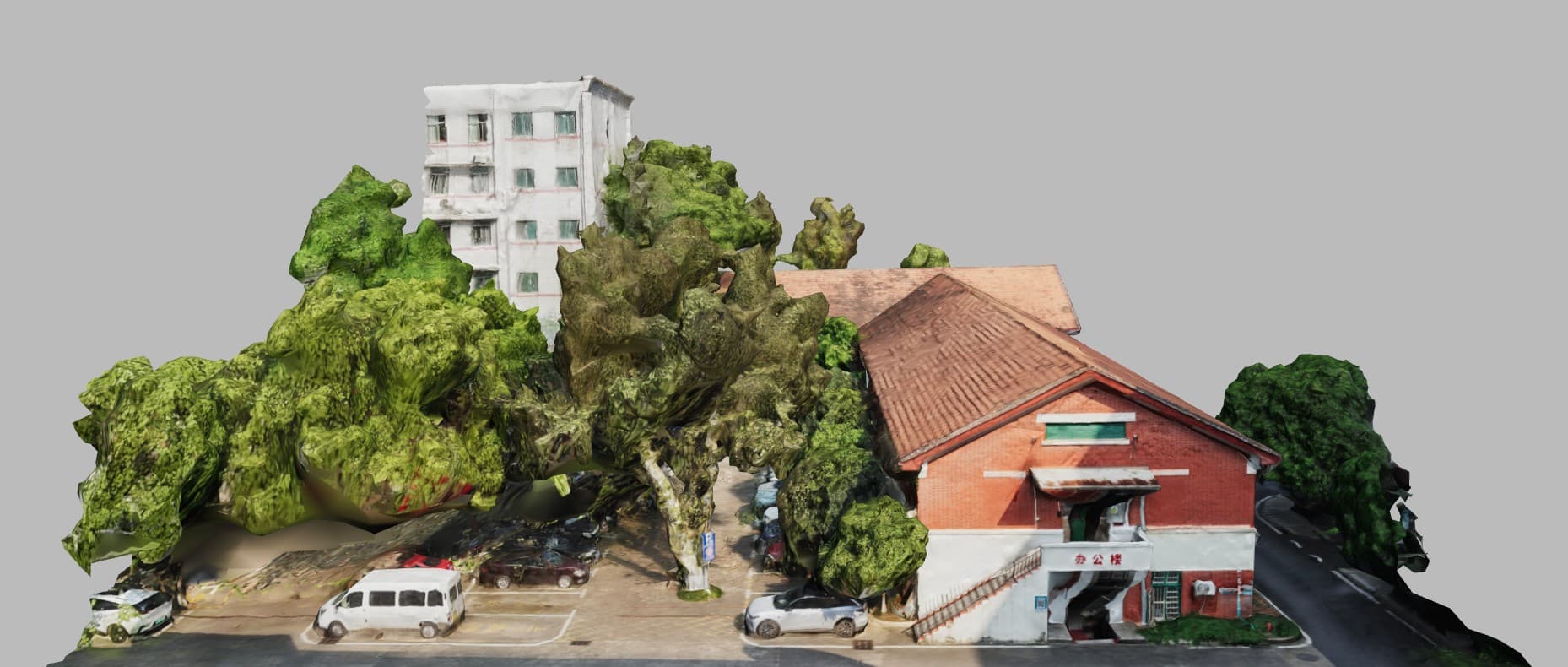
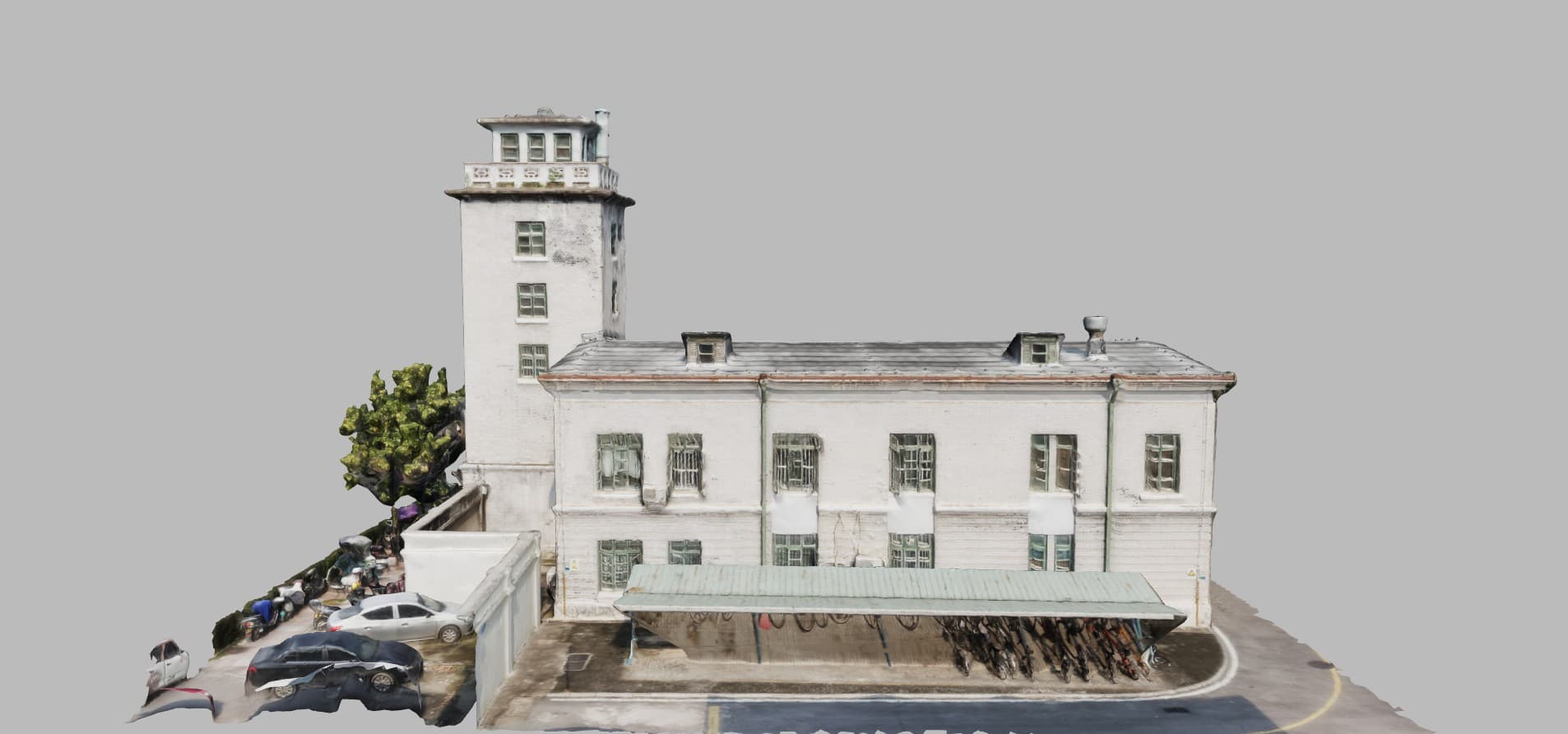
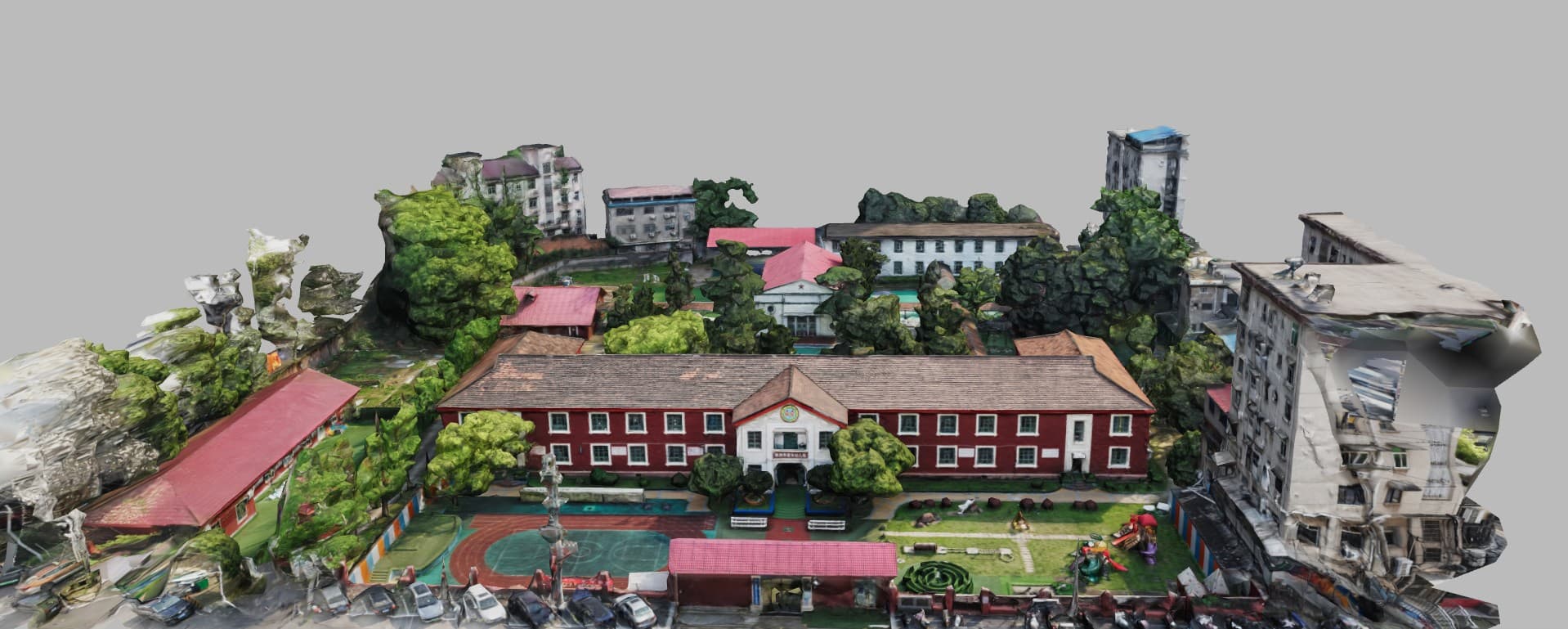
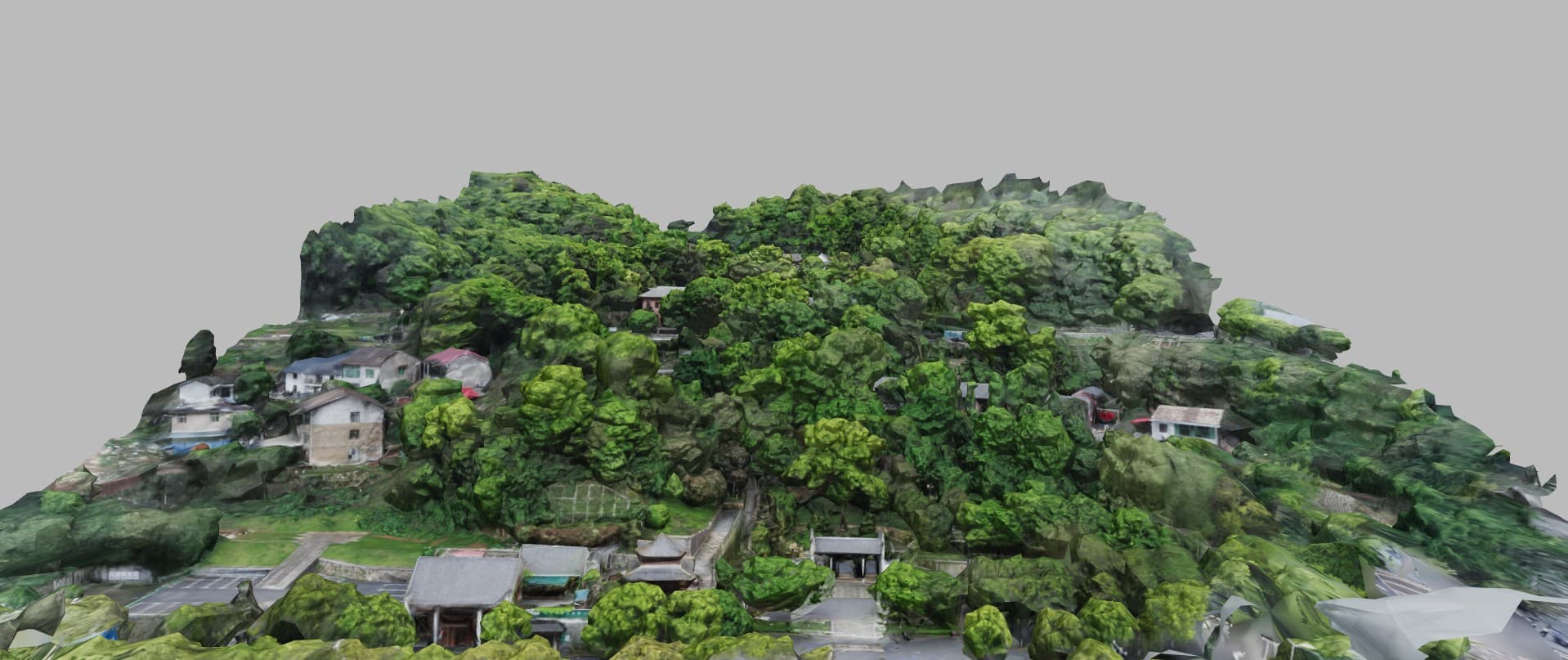
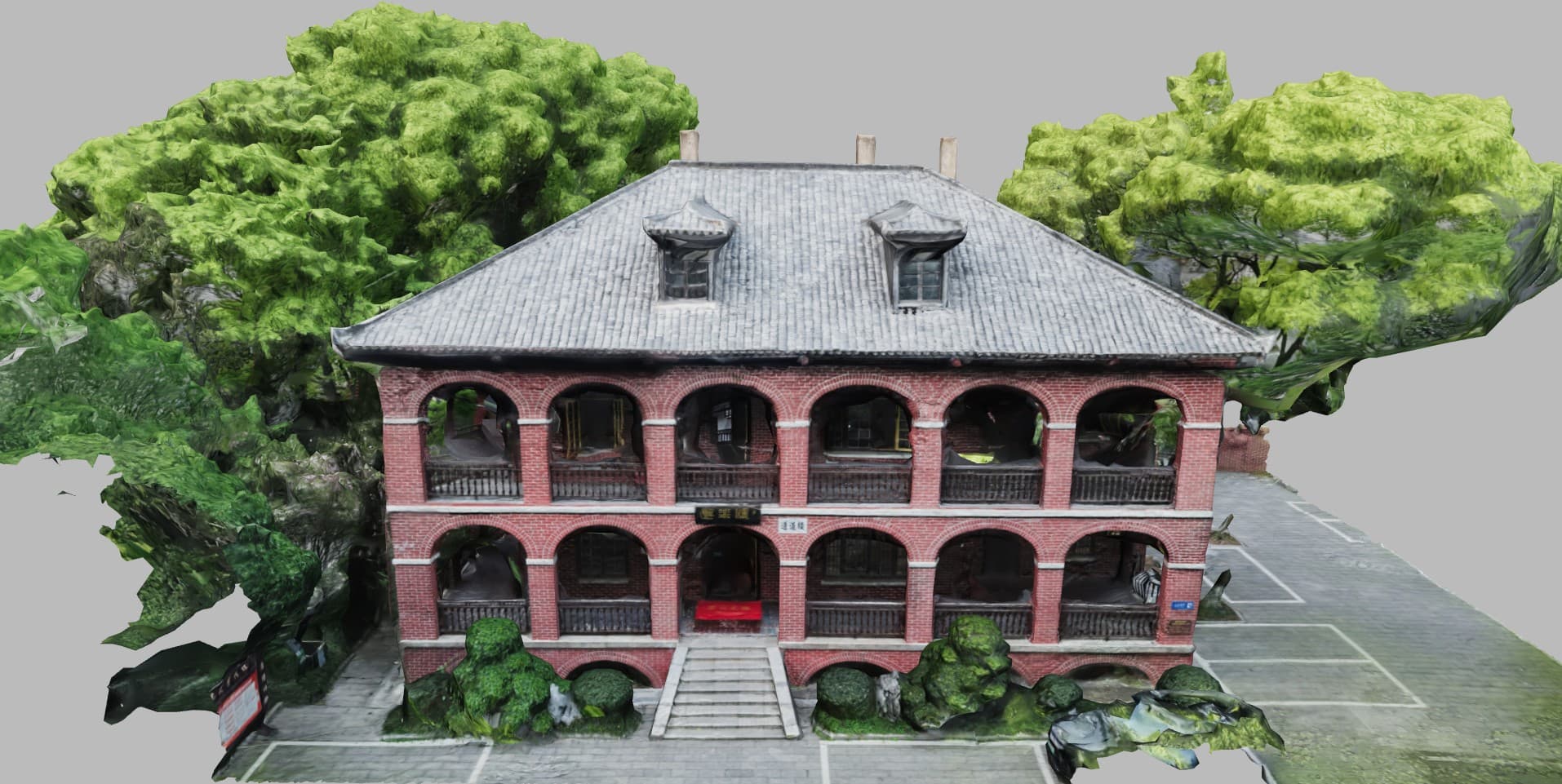
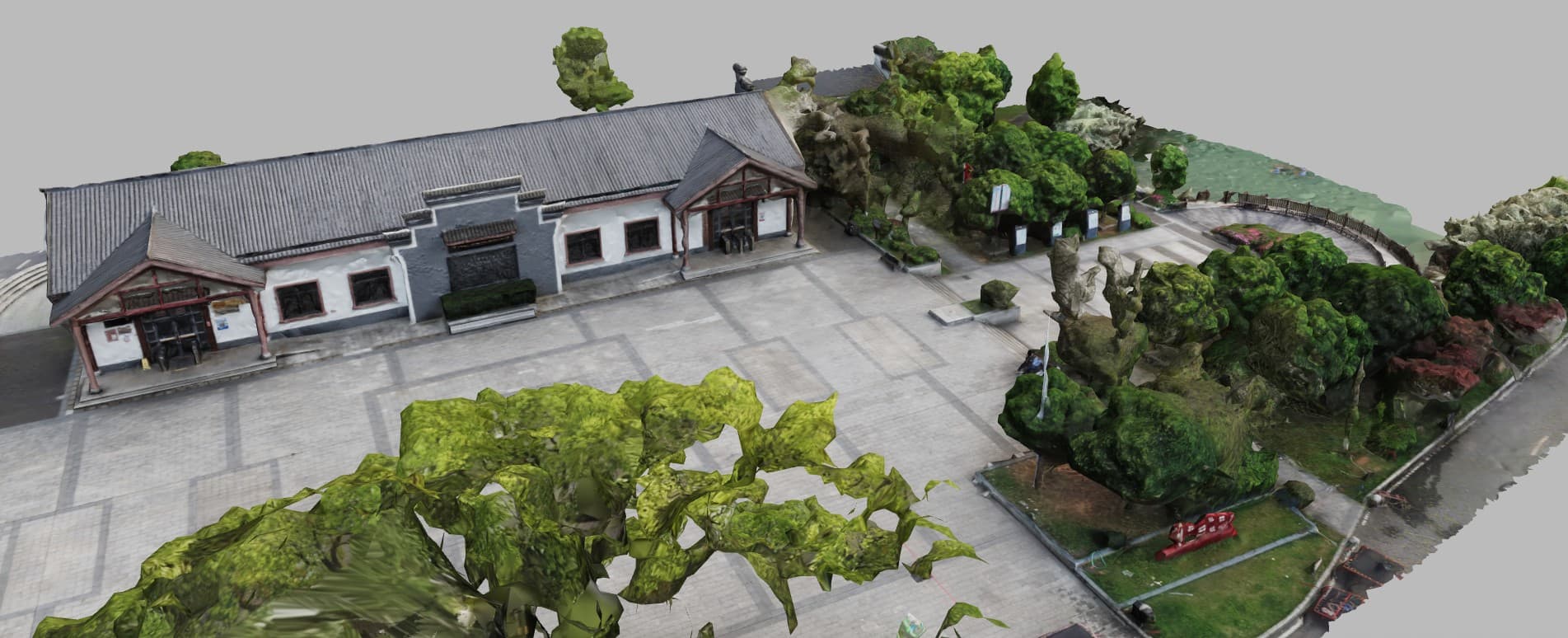
In 1948, workers in Zhuzhou completed a red-brick office building, rising from the ruins of wartime destruction. This structure, known locally as the Red Building, stands in the Tianxin Subdistrict of Shifeng District, Hunan Province. It represents the post-war resurrection of the Yuehan Railway Zhuzhou General Machinery Plant, an enterprise founded in 1936 under the leadership of directors Cheng Xiaogang and Mao Yixin. Japanese bombs had previously devastated the facility during the Second Sino-Japanese War, leaving a landscape of shattered brick and twisted steel.
The building's design merges traditional Chinese aesthetics with modern architectural utility. Its linear, "I"-shaped footprint stretches across the ground. The central section rises three stories high, sheltered under a red clay-tiled roof with overhanging eaves that cast long shadows in the afternoon sun. On either side, two-story wings project forward, finished with flat roof parapets and no eaves. Small, square glass windows puncture the facade, separated by deep red window spandrel walls that create clean, horizontal lines. A simple concrete canopy shelters the main entrance, anchoring the building to the earth.
In 2016, a comprehensive restoration project stabilized the aging masonry and preserved the original woodwork. The Hunan provincial government designated the building a provincial-level cultural relic in 2019. A year later, the Ministry of Industry and Information Technology listed it as a core component of the Fourth Batch of National Industrial Heritage. The red clay roof tiles still catch the light, serving as a physical link to the early days of Chinese railway engineering and the generations of workers who shaped the nation's industrial path.