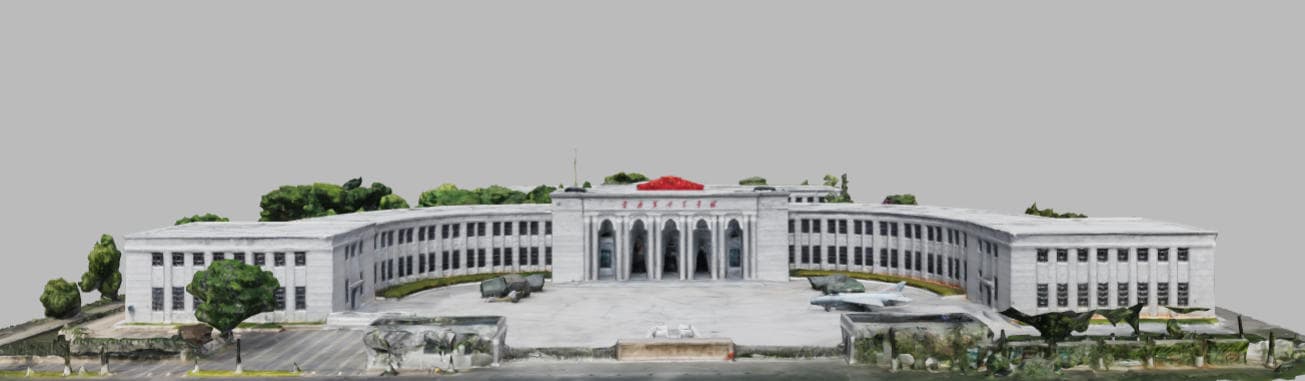
On the west bank of Kunming's Green Lake Park stands a massive, symmetrical fortress of ochre-yellow brickwork. This is the Yunnan Military Academy, established on September 26, 1909, during the twilight of the Qing dynasty. Conceived by provincial treasurer Shen Bing堃 in 1907 to train modern "New Armies," the school quickly became a breeding ground for revolution under the leadership of Li Gengyuan, a member of the anti-Qing Tongmenghui alliance.
The architecture reflects a unique cultural synthesis. The two-story, four-sided courtyard mirrors the local "one stamp" residential style, while French colonial accents and horseback corner towers shape its exterior. Visitors enter through elegant arched gateways set into thick walls of earth, wood, and stone. Inside, a central open-air drill ground spans nearly 10,000 square meters, once echoing with the commands of instructors trained in Japan. Above, a continuous covered corridor runs for 480 meters along the second floor of all four wings, making it one of the longest indoor corridors of its era in China.
Here, cadets wore wide-brimmed hats with red bands, earning them the nickname "the red-headed army." Their collar tabs signaled their specialties: red for infantry, yellow for cavalry, blue for artillery, and white for engineers. These young men studied rigorous manuals on tactics and fortification, preparing for conflicts that would reshape East Asia.
The academy produced leaders who altered the course of global history. Chinese Marshals Zhu De and Ye Jianying trained here; the museum still preserves Ye’s original twelfth-class graduation certificate. The school also trained international figures, including Lee Beom-seok, the first Prime Minister of South Korea, and Choe Yong-gon, a top North Korean military commander.
Today, the preserved 36,000-square-meter campus serves as a museum. Visitors can walk the long, shaded corridors, view historic weapons, and watch the daily ceremonial sentry guard changing drill. The rhythmic snap of boots on stone connects the quiet park of today with the revolutionary fervor of a century ago.