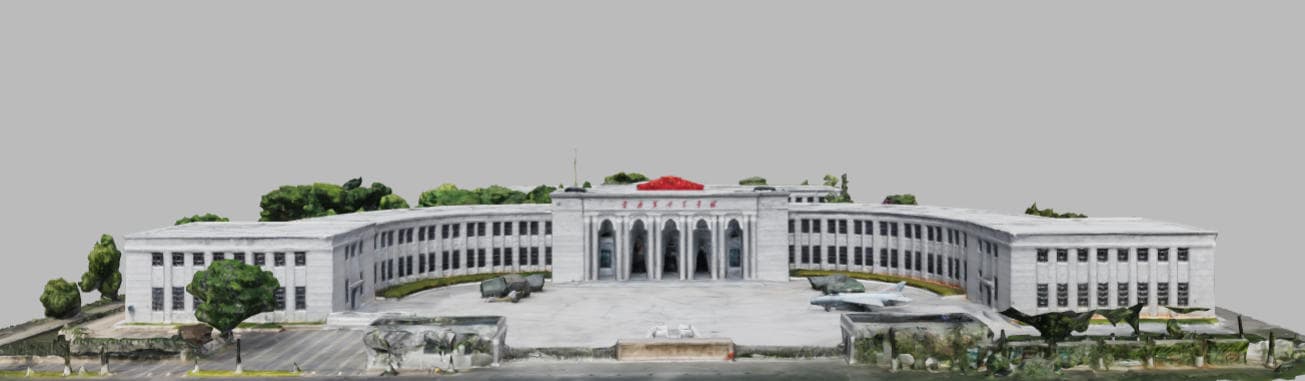
At No. 118 Wuyi Road in Kunming, a sixty-five-meter spire capped with a red pentagonal star rises above the city. Built between 1958 and 1962 as the Kunming Military Museum, this Soviet-style monument was one of Yunnan’s ten landmark buildings celebrating the tenth anniversary of the People's Republic of China. In 1961, Premier Zhou Enlai proposed transferring the structure to the Yunnan Provincial Museum, which opened its doors here in 1965. Decades later, in 2018, the building found its current purpose as the Yunnan Art Museum, following a low-intervention renovation by E-Creative Architects.
The exterior presents a bold convex facade. Twelve Roman-style stone pillars support a curved front portico, while retro red bricks and warm yellow linear details define the outer walls. Inside, the architecture shifts to a quieter elegance. Classic arched doorways and polished wooden window frames frame the galleries, illuminated by the soft glow of palace-style crystal chandeliers. The design team integrated traditional Yunnan wax-dyeing motifs into the public spaces, suspended like indigo clouds against the historic concrete.
Today, the museum houses 656 artworks across 3,000 square meters of exhibition space. The collection preserves the region's diverse creative history, containing 144 Chinese paintings, 134 prints, and 120 traditional woodblock prints. Visitors can examine over 300 pieces of minority ethnic silver jewelry, which catch the light alongside replicas of ancient murals. Under the leadership of director Luo Jiang, the museum serves as a living archive where historic architecture and local craftsmanship meet. Works by regional masters, such as Yuan Xiaocen’s paintings, hang in the quiet galleries, connecting the mid-century grandeur of the building with the delicate, tactile traditions of Yunnan's people.