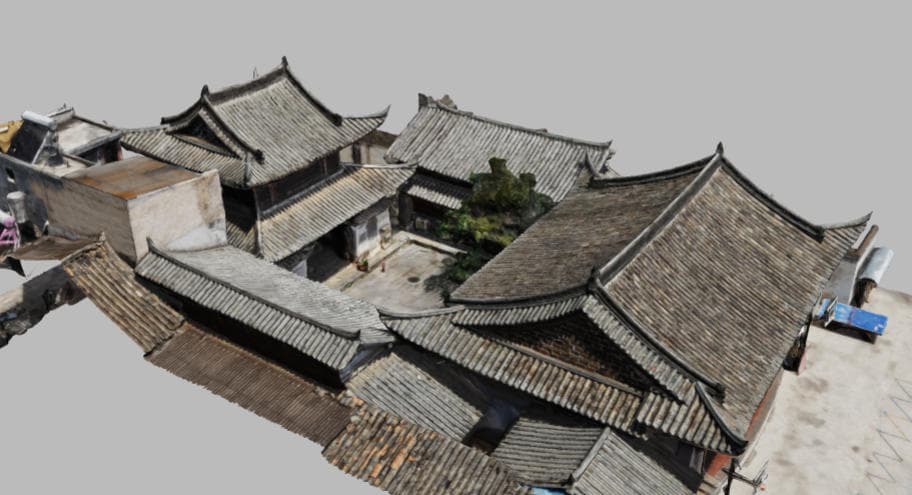
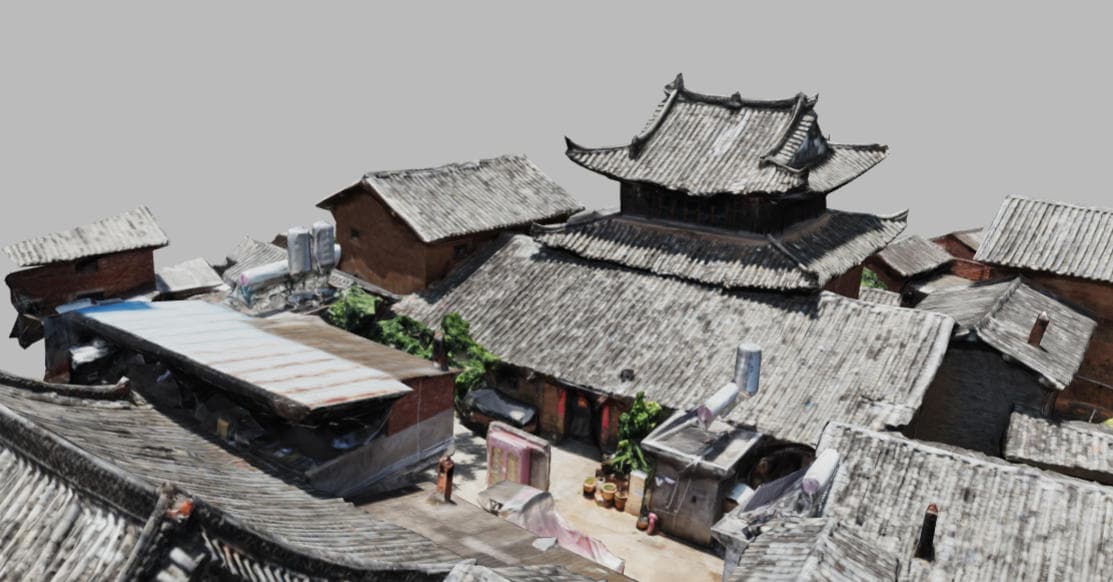
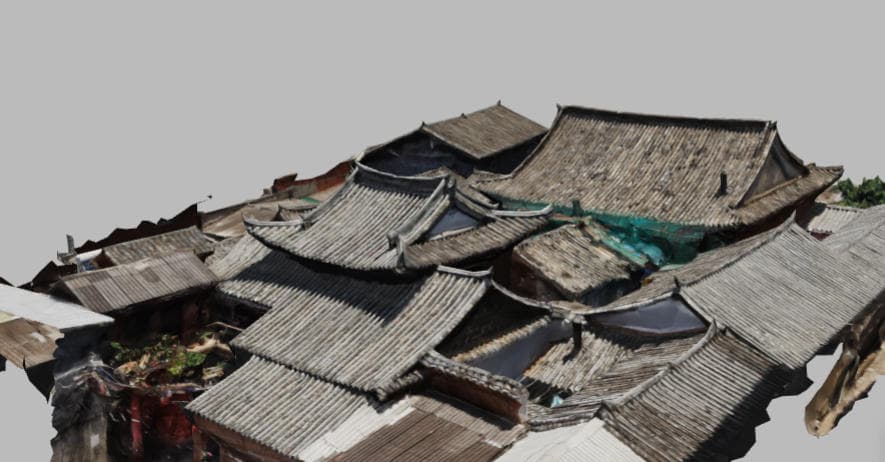
In the northwest corner of Nantun Street, within the ancient military garrison of Xin'an, stands the Zhutian Monastery. The site spans two thousand square meters, its layout defined by a mountain gate, a middle hall, a back hall, and two side wings.
The story of this sanctuary began with travelers from Jiaozhi, in northern Vietnam, who established its earliest foundation. In 1522, during the early Jiajing era of the Ming dynasty, local builders raised the heavy timber frames. Decades later, in 1563, a military commander named Li Fengheng, a centurion named Zeng Lun, and a local official named Lu Qi gathered to cast a copper bell. Today, this bell remains inside the temple, its cold metal surface carrying the names of those who forged it.
Time left physical marks across the courtyard. In the middle hall, which reflects early Qing dynasty styling, the rear exterior wall holds fragments of weathered murals, their pigments flaking from the plaster. Nearby, four ancient cypress trees stand beside a stone well, casting cool shadows over the stone courtyard. Between the middle and back halls, stone steles from 1696, alongside court decision markers from the Yongzheng and Qianlong eras, preserve records of land boundaries and legal disputes.
The back hall rises under a single-eave gable-and-hip roof. Here, anonymous stonemasons left deeply chiseled stone carvings of deer, ruyi, and rolling grass on the corner base stones. On the corner brackets, they carved dragons and phoenixes, placing the dragon above the phoenix. Heavy wooden bracket sets support the eaves.
The monastery survived the transitions of dynasties, undergoing major reconstructions in 1803 and 1842. In 2019, the Chinese government designated the temple as a national-level protected cultural site. Today, the restored halls serve as the administrative office for the local subdistrict. Clerks work beneath the ancient beams, their daily routines unfolding alongside centuries of military and spiritual history.