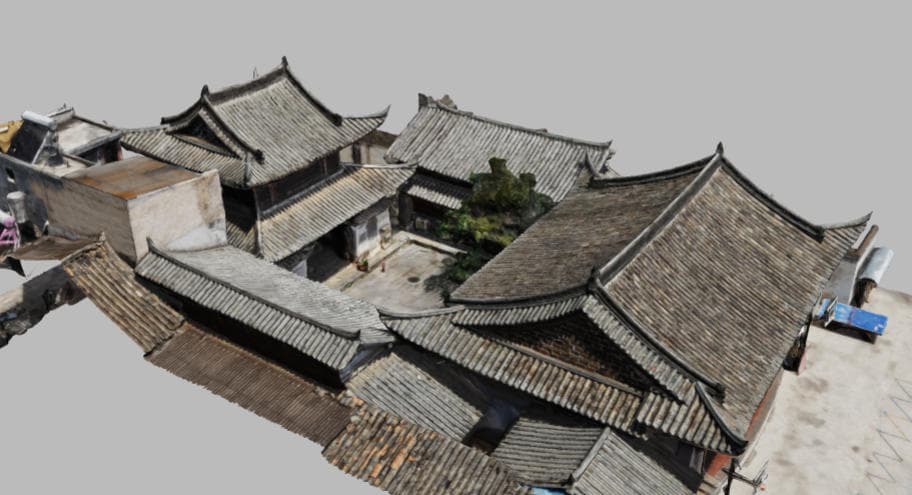
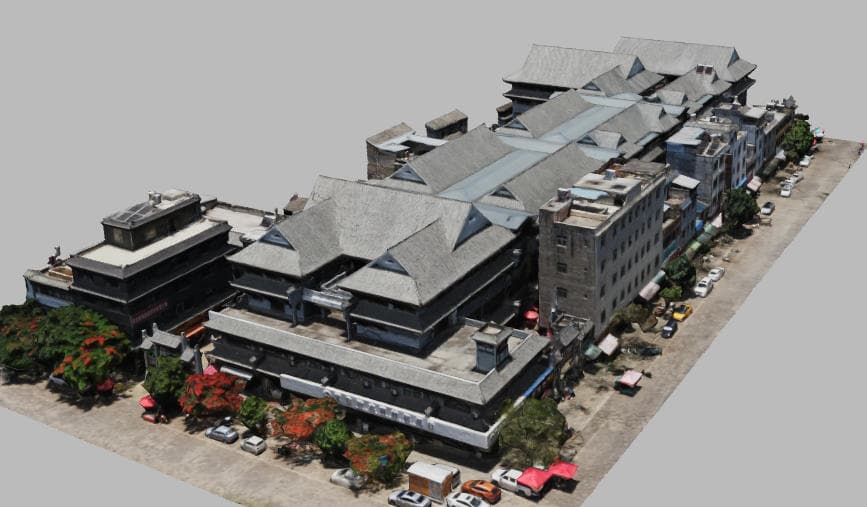
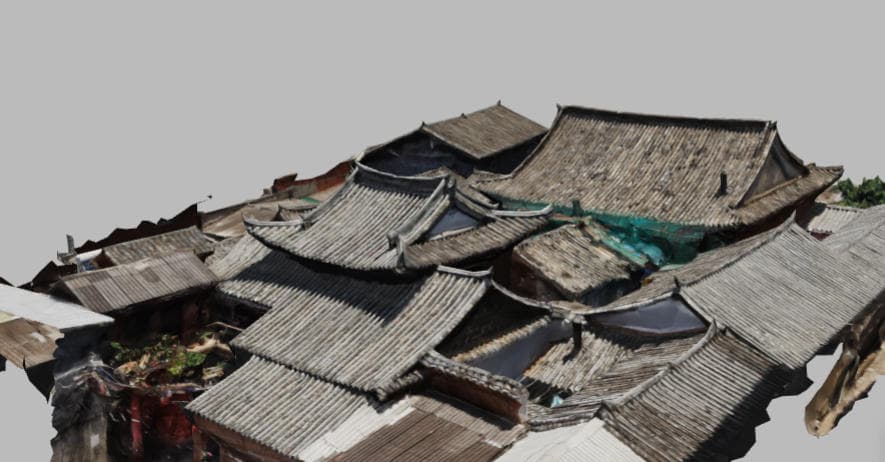
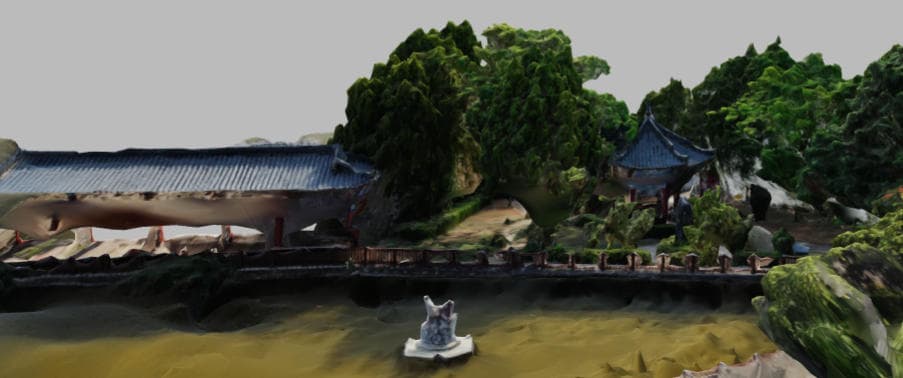
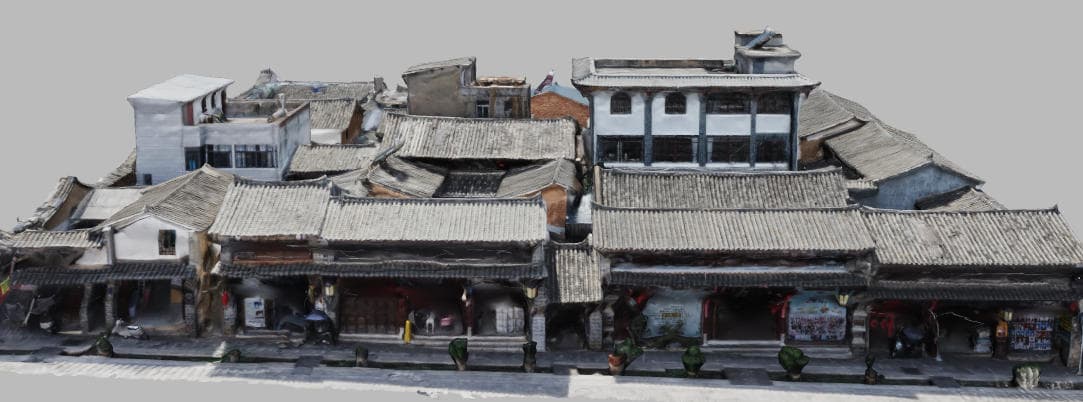
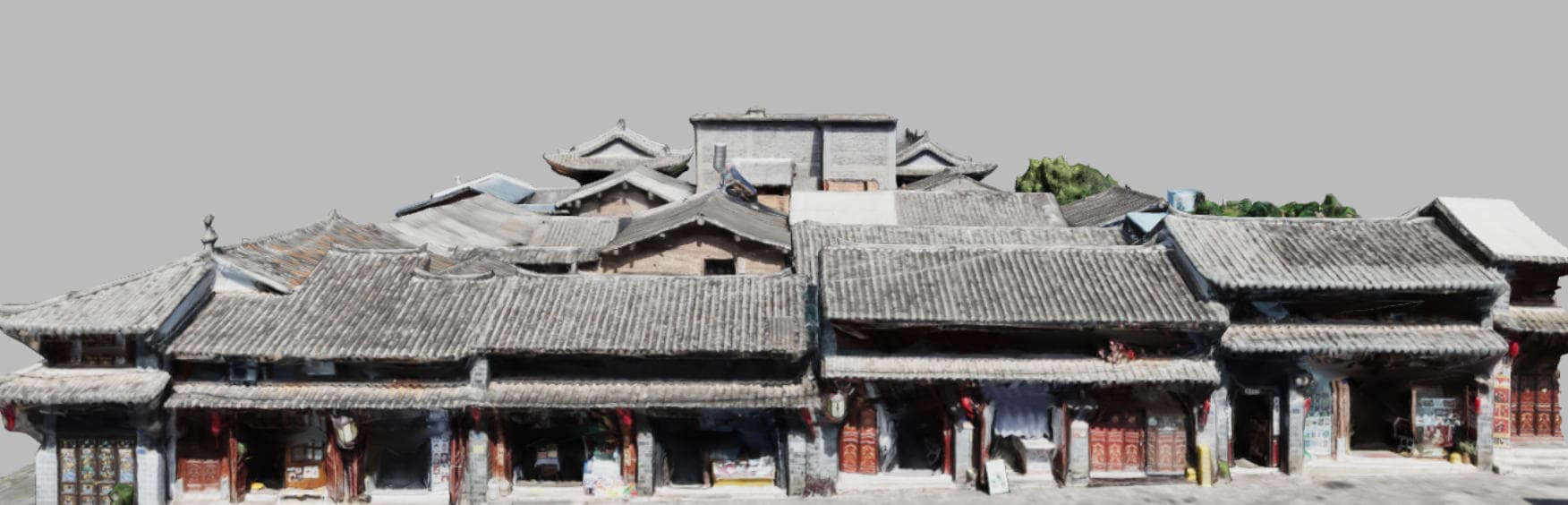
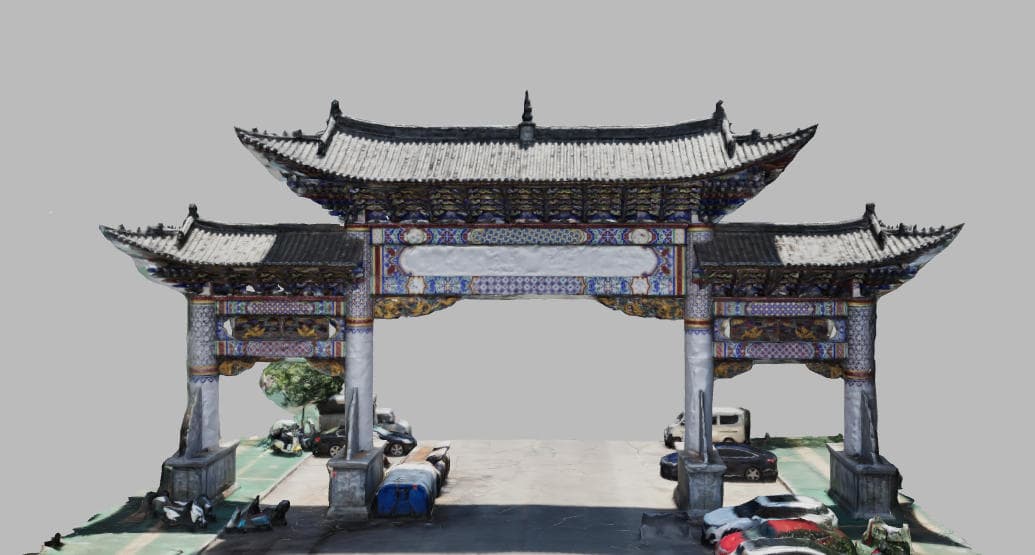
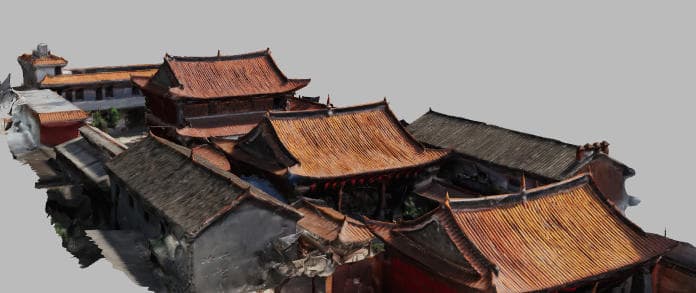
On Zhaxia Street in Mengzi City, the Xin'an Suo Guanyin Monastery stands facing east, its history written in layers of wood, brick, and daily life. Originally built in 1686 and rebuilt in 1762, this Qing Dynasty structure is a key part of the nationally protected Xin'an Suo Ancient Architectural Complex.
Time has reshaped the monastery. During the mid-20th-century land reform, the state redistributed the sacred halls to local families as private housing. In the late 1960s, residents mounted a physical plaque reading "Agriculture learns from Dazhai" onto the entrance gate, leaving a permanent political mark on the facade. Today, the middle hall is split directly down the center by a narrow public walkway. On the left wall, smooth white ceramic tiles cover the ancient surface. On the right wall, five electrical utility meters hum against the historic timber. Clotheslines stretch between ancient pillars, holding laundry that dries in the draft.
Above this domestic scene, the architectural genius of the past remains. A heavy "Baotou" beam is carved into a lifelike elephant with an upturned trunk, its wooden skin worn smooth by centuries of rising smoke and dust. Stacked layers of dougong brackets and horizontal architraves rest above the elephant, holding up the heavy, weathered gray tiles of the overhanging eaves.
Further inside, the Chongyin Pavilion rises with flying eaves and a multi-eave roof. Modern and historical residential brick walls press tightly against its wooden frame. A small rear door opens directly onto wide agricultural fields, letting the scent of damp soil and green crops drift into the dark interior.
In 2025, the local government launched a 1.63-million-yuan restoration project to repair the decaying structures. Yet, the monastery remains a living home. It is a place where the sacred and the ordinary exist together, preserved in the quiet rhythms of the families who sleep beneath its ancient roofs.