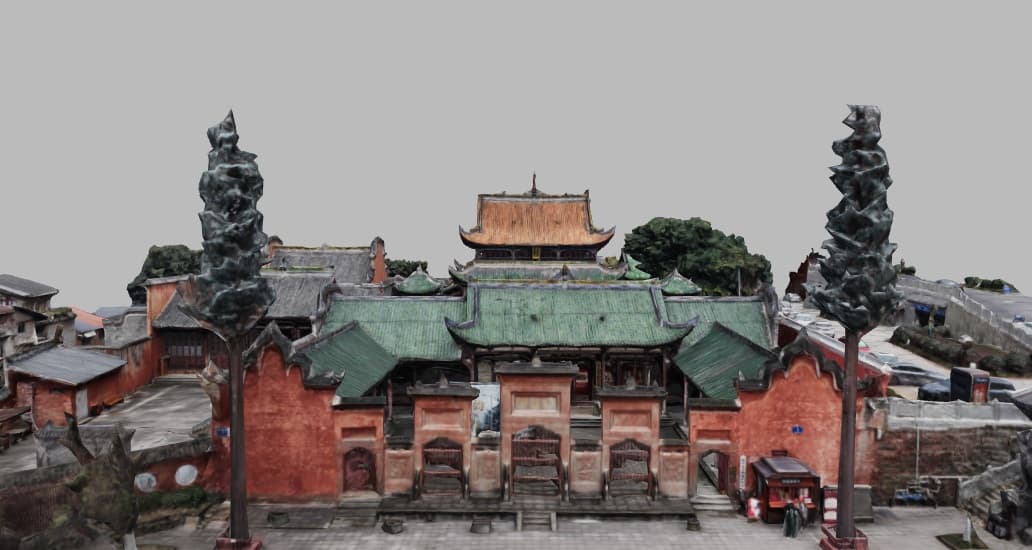
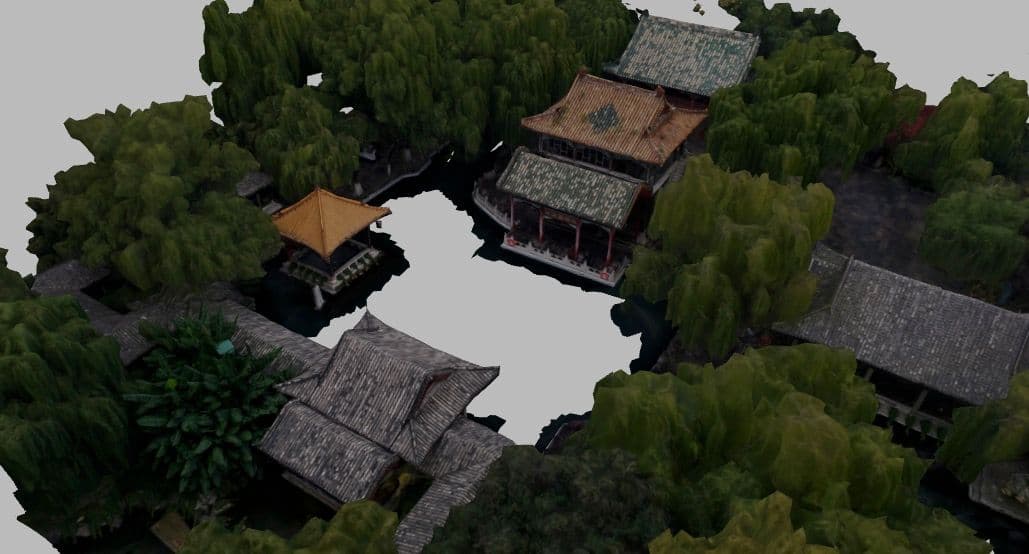
In the heart of Shiping Ancient City, a single wooden hall stands. Known today as the Lingxiao Pavilion, this structure rises over ten meters high, measuring twelve point nine meters wide and eleven point five meters deep. Its double-eave pyramidal roof tapers into a hexagonal upper tier, sheltering an open-timber frame built without a ceiling. Beneath these exposed rafters, the music of the guqin now drifts through the air, as the hall serves as a modern study space for traditional etiquette and music.
The physical fabric of the pavilion carries the direct marks of the community that sustained it. In the fifteenth century, during the Tianshun period of the Ming dynasty, local residents Wei Xuan and Wang Shi led a major reconstruction of the temple. Later builders restored the hall in 1575. When earthquakes and conflicts dismantled the surrounding complex—including the demolition of the mountain gate and front halls in 1941—the community saved what they could. Visitors can still touch the rough clay of surviving bricks stamped by local gentry between 1909 and 1919. One specific brick bears the mark of the local Pingtiao Bureau, funded by the profits of the public grain trade. Nearby, a heavy stone basin, carved with the words "Made for Zhutian Temple," once held water to protect the timber from fire.
For centuries, the monastery shaped the sensory life of Shiping. The scholar Yuan Jiagu studied in a nearby house, writing of the midnight bell that kept him company through his paper windows. The bell is gone, yet the surrounding neighborhood preserves these deep historical rhythms. Outside the hall, Zhutian Temple Street retains the oldest blue-stone pavement in the city, its worn blocks smooth underfoot. On market days, the alley transforms into a traditional herbal market, filling the air with the earthy scent of dried roots and wild mountain plants. Inside the pavilion, the exposed wooden beams remain, holding the memory of centuries of prayers, scholars, and survival.