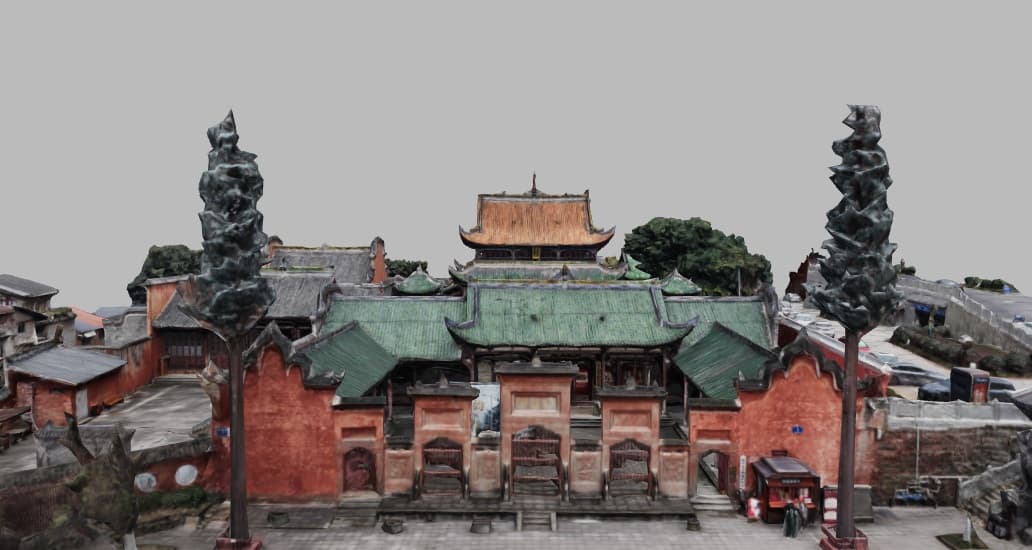
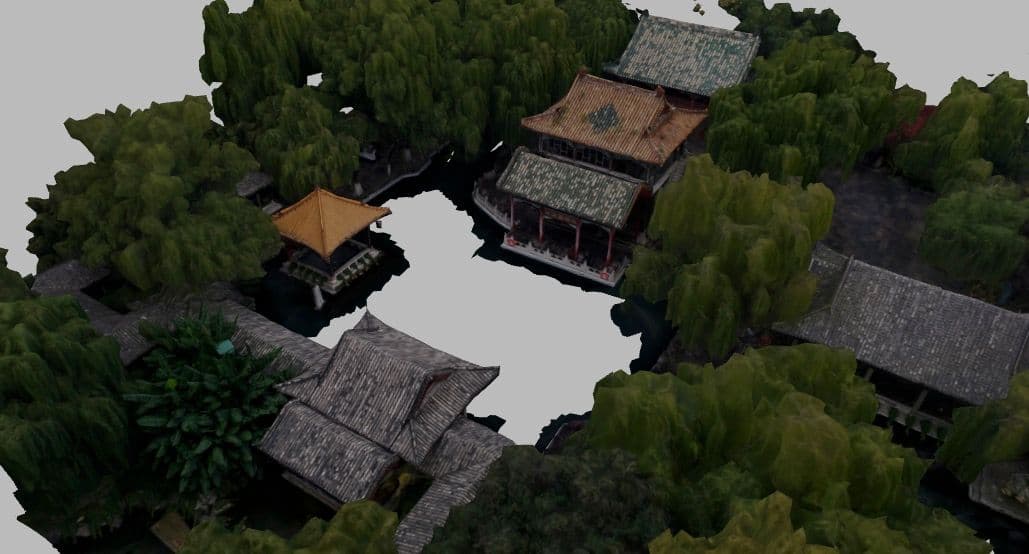
In the historic heart of Lin'an Town, on the east side of Beizheng Street, Jianshui Zhuge Temple stands as a physical record of survival and cultural adaptation. Originally built near the cool waters of the Zhuge Well to honor the strategist Zhuge Liang, a military mutiny in 1647 reduced the first shrine to ash. During the Jiaqing reign of the Qing Dynasty, builders resurrected the temple on its current south-facing site.
The architecture carries the weight of human loss. Inside the rear hall, once modified to worship the Baiyi Bodhisattva and renamed the Baiyi Building, families placed spirit tablets for soldiers who died in Zhuge Liang's ancient southern campaign. Later, after the bloody Xianfeng Bingchen Rebellion of 1856, the community expanded this hall into a three-story monument to honor their fallen local sons. During the Republican era, a Christian congregation occupied the space, leaving European architectural details on the exterior walls.
Today, visitors can touch the rough, chiseled stone railings of the Main Hall's elevated yuetai platform. The three-bay-wide hall retains its original timber lift-beam frame under a single-eave shaved gable roof. Overhead, the column heads and decorative brackets show the precise cuts of Qing-era woodcarvers. Behind it, the massive Baiyi Building spans seventeen and a half meters wide and nearly nineteen meters deep, supported by heavy timber pillars. Its glazed tile roof features sculpted dragons and Qilin that catch the southern Yunnan sun.
The temple remains a sensory space. The Front and Main Halls now house the Jinlin'an Tea House, filling the wooden galleries with the warm scent of roasting tea leaves. In the evenings, the quiet courtyard fills with the sharp rhythm of Hani drums, the clatter of the Yi tobacco box dance, and the high, clear melodies of Jianshui Xiaodiao folk songs. The building preserves these layers of faith, war, and art in its very wood and stone.