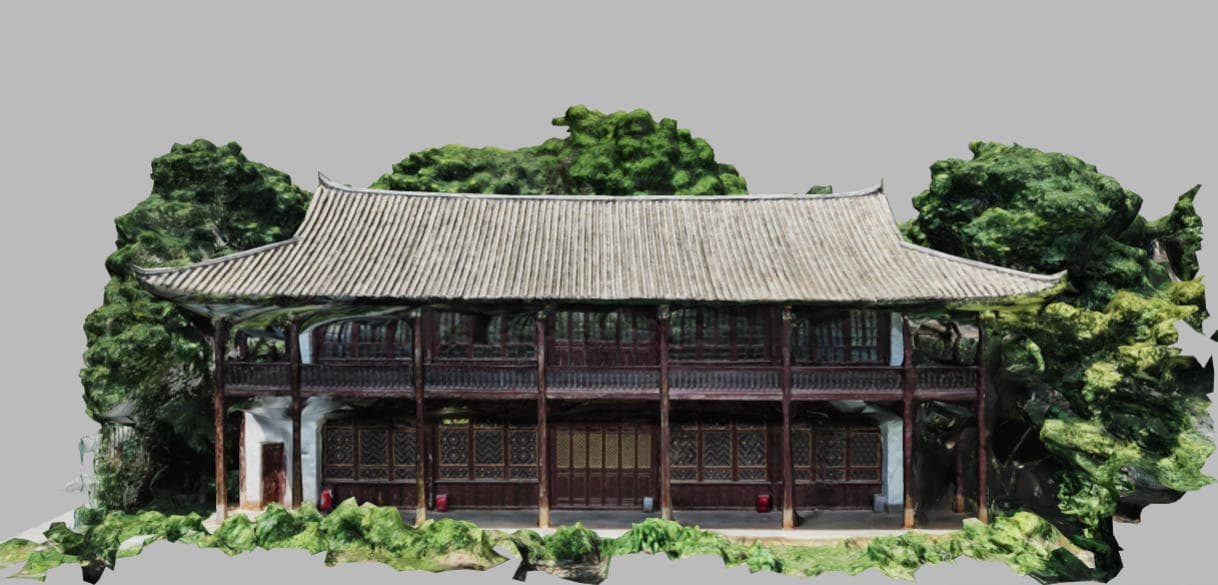
In 1903, Yuan Jiagu became the only scholar in Yunnan’s history to achieve the rank of Zhuangyuan, the top scorer in the imperial examinations. His journey began at No. 22 Nanzheng Street in Shiping County, inside a timber-frame courtyard home built by his father, Yuan Deyang, around 1883. This residence, now a public memorial hall spanning 695.8 square meters, preserves the quiet spaces where a young scholar prepared to reshape his province's intellectual future.
The structure faces south with its main entrance opening to the east, guiding visitors through three successive gateways. At the threshold, the main gate displays a red-and-gold vertical plaque reading "Economic Special Scholar," brushed by Grand Secretary Wang Wenshao. Beyond it, the second gate bears a black-and-gold plaque by Grand Secretary Sun Jianai, marking the home as the "Imperial Historical Academy." Inside, the central courtyard holds a mature pomelo tree. Its green leaves and seasonal blossoms fill the air with a clean, citrus scent, a living symbol of ancestral protection and education.
In the western wing stands the secluded study tower. Here, under the low timber ceilings, Yuan Jiagu spent his youth reading by lamplight. The quiet of this room contrasts with his later, public life. The main hall displays a formal portrait from 1909, showing Yuan in his official court attire as the Zhejiang Commissioner of Education. Nearby, the museum displays his personal belongings, academic manuscripts, and imperial civil service papers, part of a rich collection of 1,335 cultural relics.
Today, the memorial hall operates as a free-admission branch of Shiping's pan-museum cluster. Visitors can touch history directly. The museum houses 39 of Yuan’s personal seals, including his "Te Yuan" seal from his exam victory and his late-life "Yishou Louzhu" seal. By pressing ink onto paper, guests perform manual calligraphy rubbings, feeling the same stone edges that Yuan held a century ago. The rustle of paper and the damp scent of fresh ink bridge the gap between the Qing Dynasty and the present day, keeping a scholar's legacy alive in the very rooms where it was conceived.