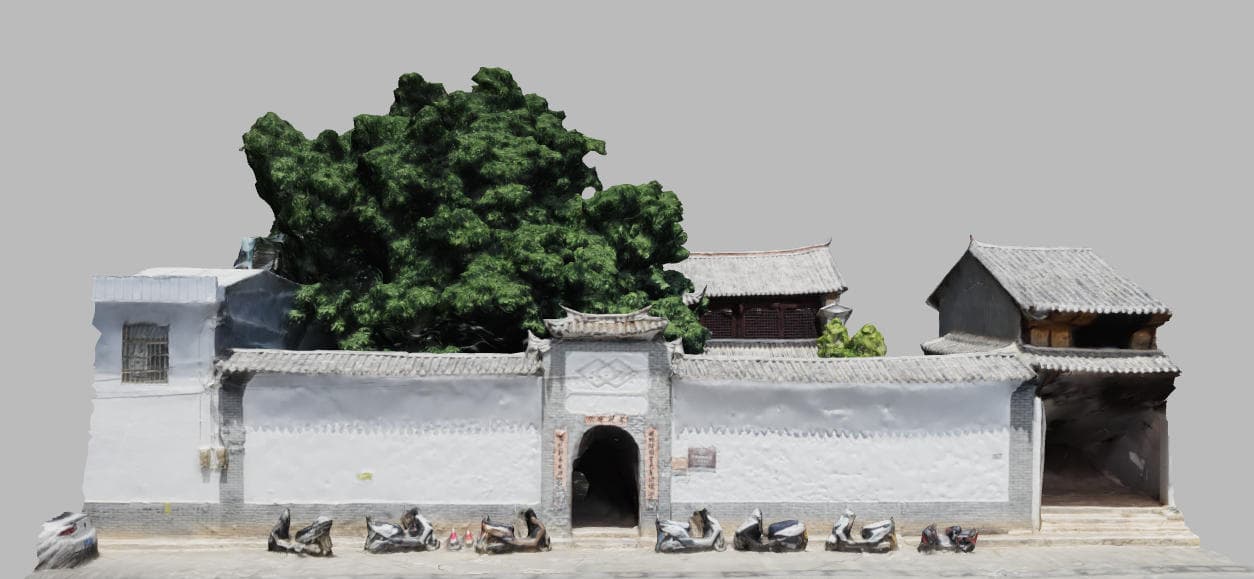
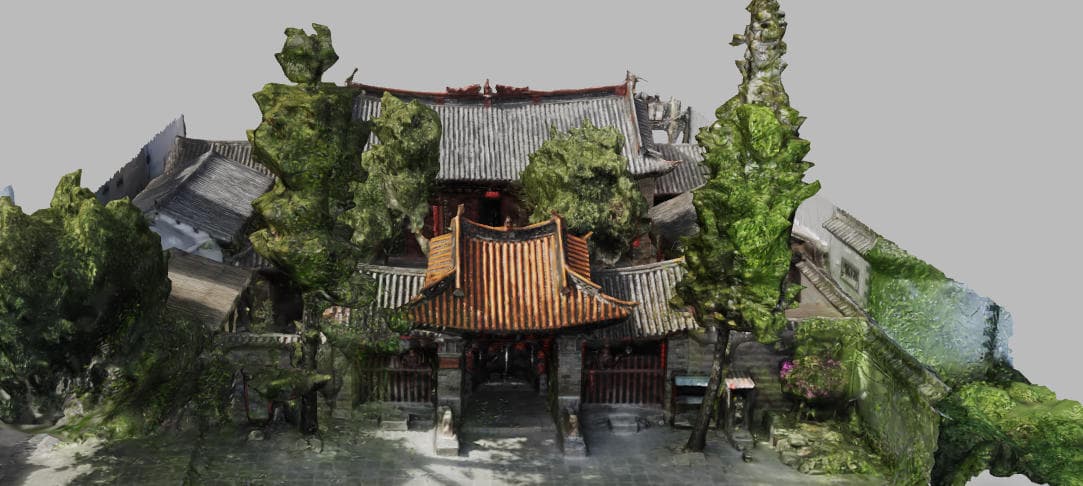
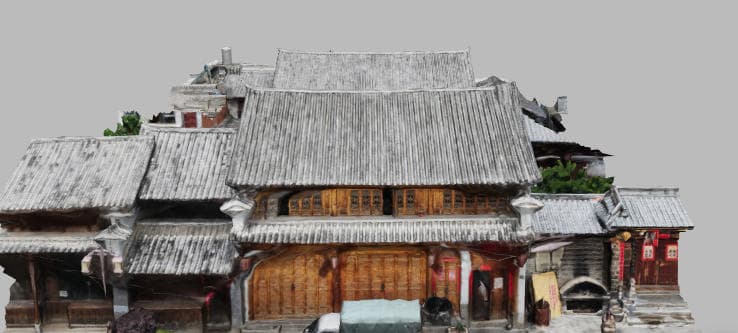
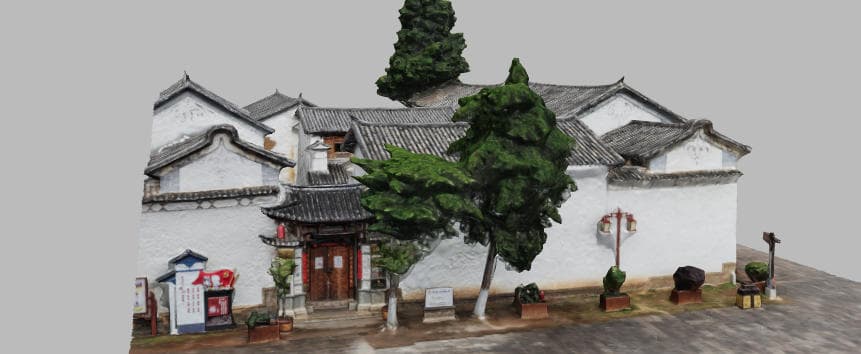
In 1945, at No. 119 Shiping Street, a businessman named Yang Ruxuan built a home shaped like a crescent moon on the outside and a perfect square on the inside. Yang, a relative of the powerful Xizhou Merchant Group leader Dong Chengnong, watched his peers navigate the volatile waves of mid-century commerce. Knowing that fortune is fleeting, he built a hedge against ruin. He wrapped his family's private life in a protective shield of street-facing wooden shops, ensuring that if his trade failed, the rent from the storefronts would sustain them.
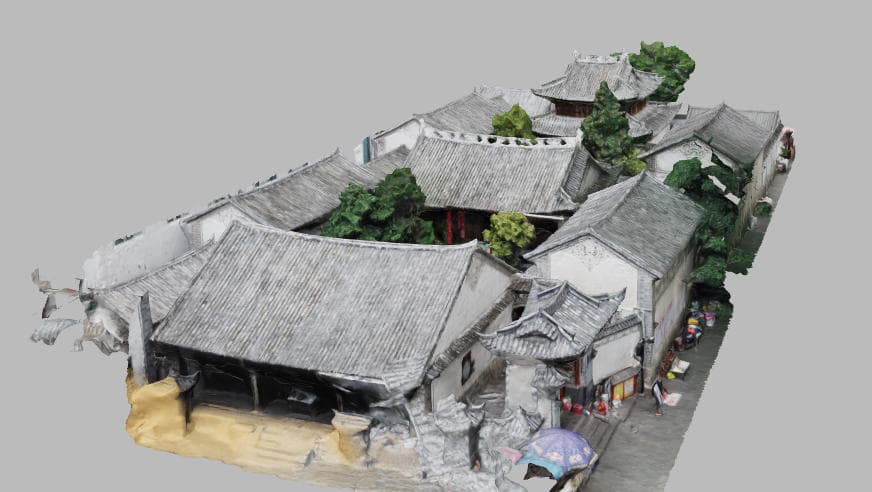
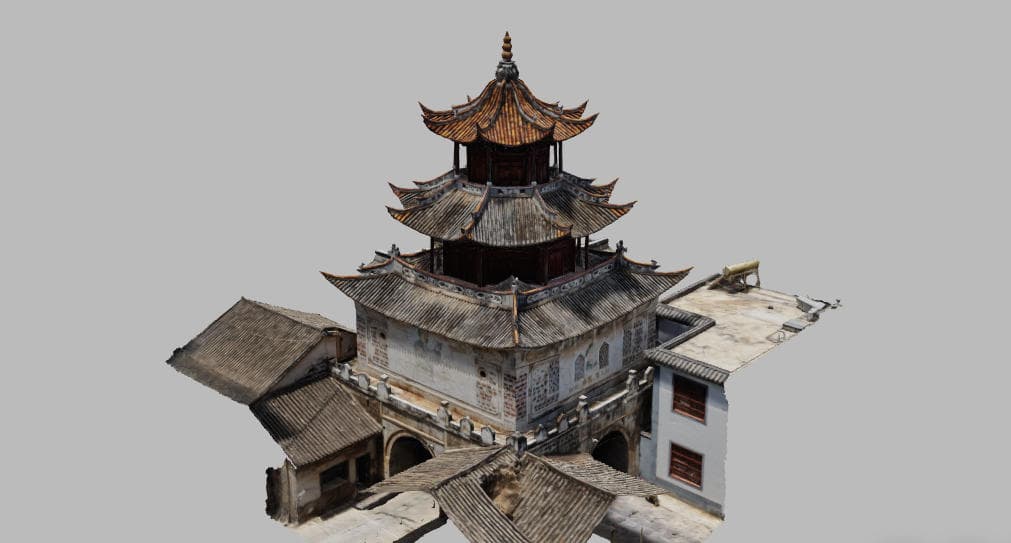
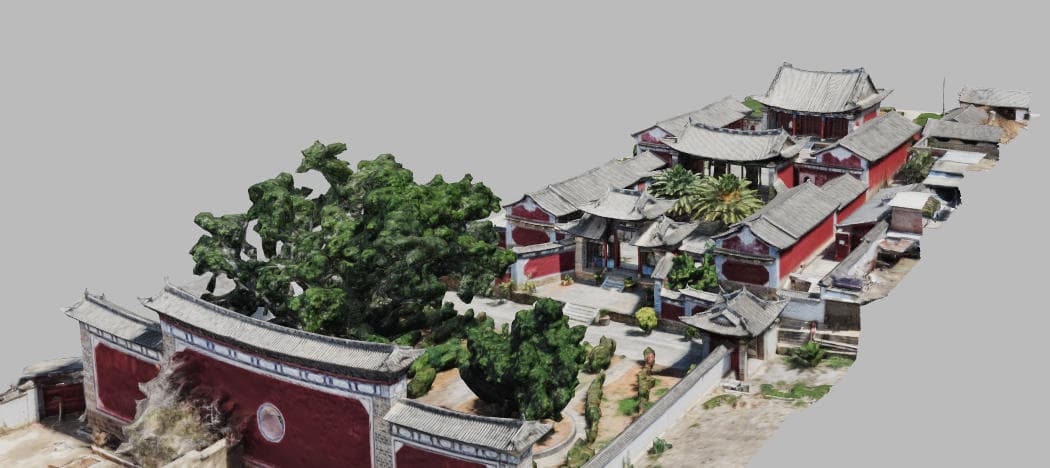
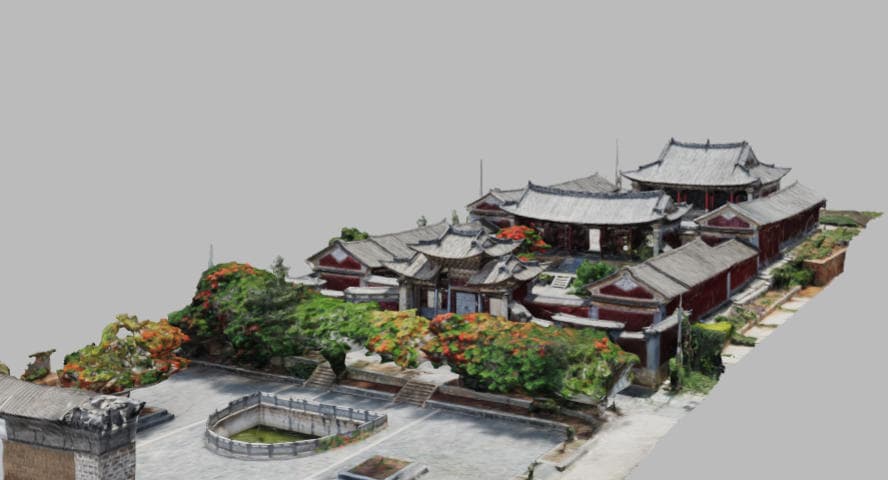
This "outer circle and inner square" design is a masterclass in architectural synthesis. On the street, a smooth, semicircular facade curves around the corner, fitted with Western-style windows and doors reminiscent of 1940s Shanghai. Step through the threshold, and the curve vanishes. Inside lies a rectilinear Bai courtyard following the "three courtyards and one screen wall" and "six-harmony spring" traditions. Here, local carpenters joined timber without nails, painted decorative murals on the plaster, and carved upturned eaves that reach toward the Yunnan sky.
After 1949, the state nationalized the property, turning it over to the military. It housed the PLA 60th Hospital and served as a dormitory for training instructors, whose daily presence shielded the timber from demolition. Following its 2017 restoration, the building transitioned into a cultural hub. Today, visitors step into the ground-floor Xizhou Photography Studio to pose for vintage portraits, or cool down with custom-shaped "Corner Tower" popsicles. Yang's anxious calculations produced an enduring landmark, where the click of modern camera shutters echoes through spaces shaped by a merchant's quest for permanence.