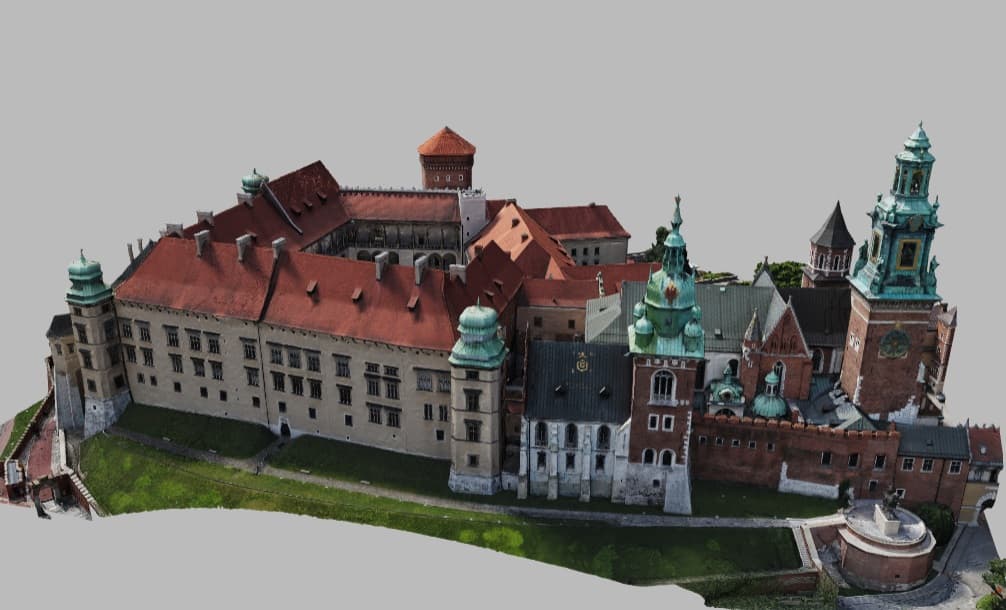
Above the Vistula River, Wawel Hill preserves centuries of Polish history in stone, brick, and silver. Before entering the three-nave Gothic basilica, visitors encounter a building shaped by successive periods of construction. Its exterior combines Gothic masonry with Renaissance and Baroque chapels, while the western entrance leads into a cathedral that served as the coronation church of Polish monarchs from 1320. The present structure is the third cathedral built on the hill, following earlier pre-Romanesque and Romanesque churches.
Inside, the Gothic nave contains royal tombs, chapels, and monuments accumulated over several centuries. Near the center stands the Confession of Saint Stanislaus, where a silver reliquary containing the remains of Poland's patron saint rests beneath an early-Baroque canopy. The monument occupies a prominent position within the cathedral, surrounded by the tombs of Polish rulers and members of the nobility. Stone and metal sarcophagi preserve the burial traditions of successive royal dynasties.
The present cathedral, consecrated in 1364, was constructed after a fire severely damaged its Romanesque predecessor in 1305. Yet beneath the floor, earlier architectural remains survive. St. Leonard's Crypt, dating from the eleventh century, preserves part of the former Romanesque cathedral. Here, Karol Wojtyła celebrated his first Mass in 1946, decades before becoming Pope John Paul II. Other crypts contain the tombs of Polish monarchs, military leaders, and prominent cultural figures, reflecting the cathedral's long-standing role as a national burial place.
Returning to the main level, visitors can find the Sigismund Chapel among the chapels surrounding the Gothic core. Designed by Italian architect Bartolomeo Berrecci between 1517 and 1533, its square interior is crowned by a gilded dome and decorated with marble reliefs and royal tombs. High above, the Sigismund Tower houses the bronze Sigismund Bell, cast in 1520 and weighing nearly eleven metric tons. Traditionally rung on major religious and national occasions, the bell remains part of the cathedral's ceremonial life, alongside its continuing functions as an active place of worship and a historic royal sanctuary.