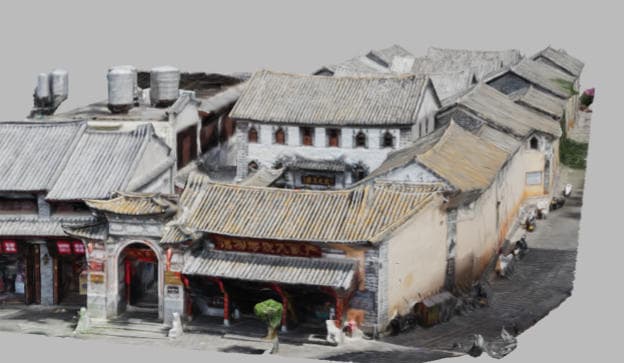
In 1798, during the Jiaqing era of the Qing Dynasty, Bai scholars in Shaxi raised an earth-and-wood tower to Kuixing, the Daoist god of examinations. They sought academic success, carving their hopes into a three-story structure at the eastern edge of Sideng Square. This building, the Sifang Street Stage, stands directly opposite the Ming-dynasty Xingjiao Temple along a shared central axis. This alignment historically divided the red-sandstone market square into northern and southern halves to organize trade.
The architecture uses a vertical layout: a ground-floor shop, a middle performance stage, and an elevated pavilion at the rear. To secure the building, local carpenters combined post-and-lintel and column-and-tie timber frameworks. Above, they raised a triple-eaved gable-and-hip roof with twelve soaring, upturned corners, employing the traditional Bai "Three Drops of Water" roofing technique.
Look closely at the facade. Jianchuan artisans spent months chiseling the three-tier wood carvings. The upper layer shows two dragons playing with a pearl. The middle layer depicts the Eight Immortals crossing the sea. The lowest layer displays quiet scenes of flowers, birds, and fish. Underneath the eaves, hollowed-out carvings and hanging decorative elements support the heavy brackets. Inside, a vaulted wooden cupola, painted with bold colors and Bai symbols, arches over the stage.
For centuries, horse caravans on the Tea Horse Road arrived to the sound of clanging copper bells. Traders bartered salt and tea on the worn sandstone below, while actors performed on the second-level stage to entertain both the merchants and the gods across the square.
By the early 2000s, the roof grew thick with wild weeds, and the timber frame began to sag. Swiss and Chinese conservationists, including architect Huang Yinwu, launched the Shaxi Rehabilitation Project to stabilize the structure. They preserved the original layout, ensuring the stage remained the center of local life.
Today, the stage still hosts the annual Prince Assembly on the eighth day of the second lunar month. Local residents gather in their finest clothing, playing dragon-head three-string lutes and singing traditional Bai folk songs. The building remains a protected national historical site, a monument where the echoes of ancient trade and living community rituals continue to meet.