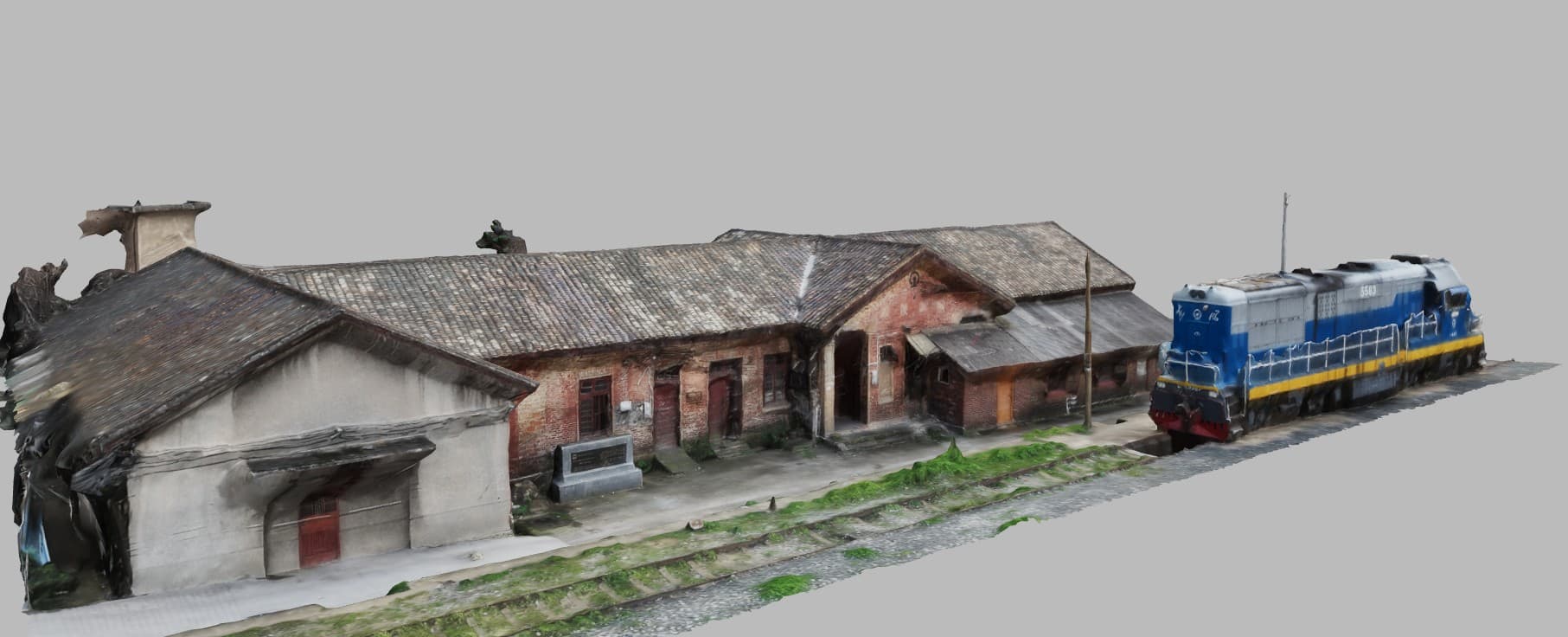
In the mid‑20th century, when steam locomotives still chugged along the railway lines connecting Hunan with neighbouring provinces, the Liling Railway Station Water Tower rose beside the tracks as an essential piece of infrastructure. Built with locally sourced red‑faced bricks, identical in colour and texture to the adjacent station building, the tower was part of a single construction phase that likely dated to the Republican period or the early years of the People's Republic.
Above the solid brick shaft, a riveted steel tank once held the water that fed the boilers of passing locomotives. Below, the brickwork was laid in a plain running bond, with no decorative corbelling or mouldings, reflecting the functionalist aesthetic of mid‑century industrial construction. Small rectangular ventilation slits were placed at regular intervals, allowing air to circulate and prevent moisture from accumulating within. But the tower's most striking feature is not its engineering but its political decoration: on the upper shaft, large white slogans extolling the national leader and the Communist Party were painted in bold script. The tower thus embodies a peculiar duality: it is at once a piece of railway infrastructure and a relic of political propaganda, its function and message intertwined in the landscape of mid‑century China.
Today, the Liling Railway Station Water Tower stands abandoned. The station ceased passenger service in the 1990s, and the steam locomotives for which it was built have long been replaced by electric and diesel engines. Weeds and overgrown tracks surround its base, and the steel tank shows advanced corrosion. Yet for now, its tall silhouette and faded slogans persist as a quiet monument. For those who pass by, the tower offers a tangible link to a vanished time, its weathered bricks and crumbling paint still echoing the sounds of steam and the voices of another age.