According to local accounts, a cat once saved the life of a man who would lead millions of Chinese workers. In his youth, Li Lisan, born Li Longzhi in 1899, stood in this courtyard speaking of labor rights. When assassins surrounded the yellow walls of Yuyuan, he fled to the rafters. A startled cat jumped, convincing the pursuers that the attic held only animals. Years later, on a train to Shanghai, he shed his complex birth name for 'Li Lisan'—three simple strokes that illiterate miners could easily write.
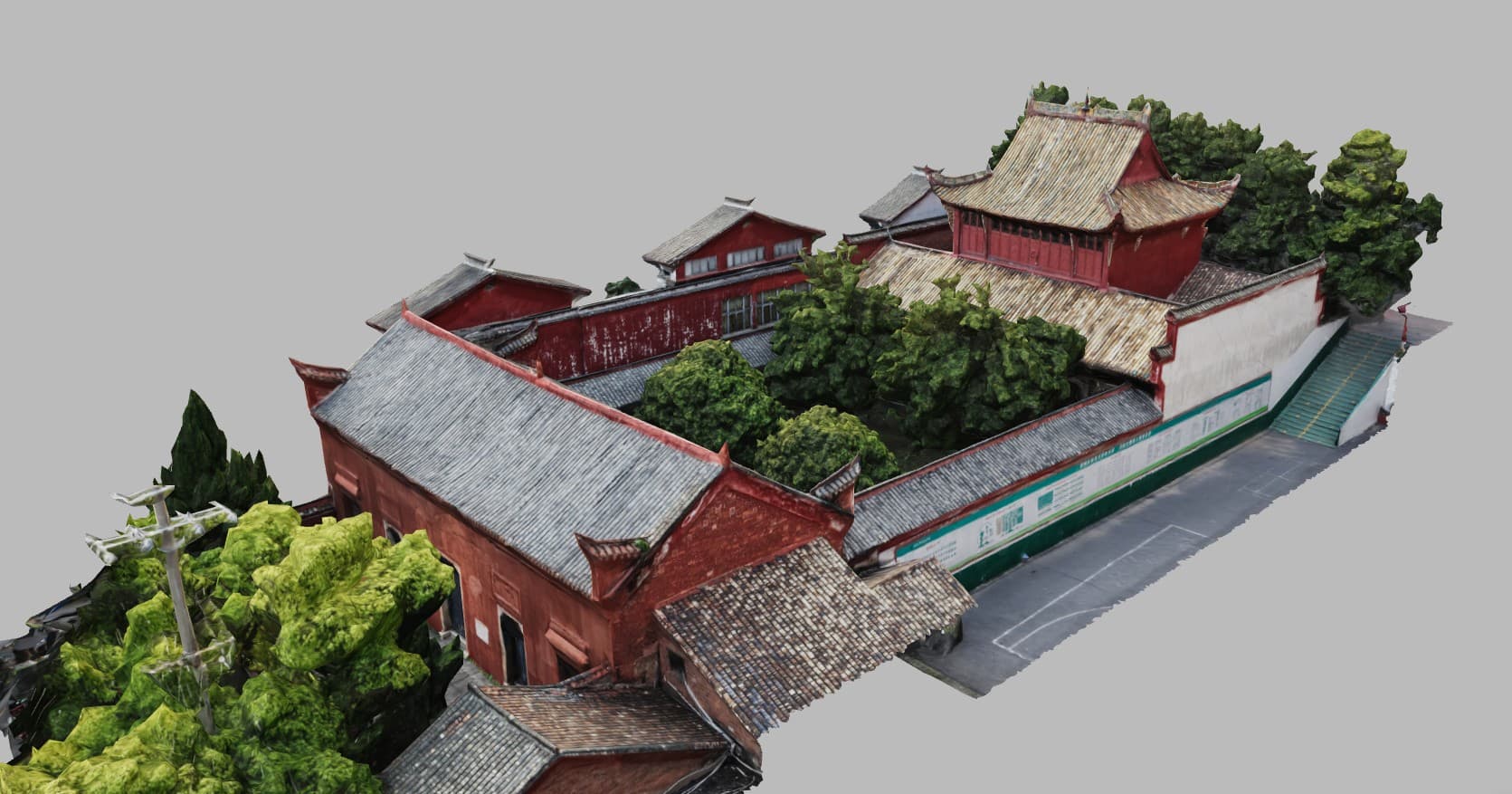
Built in the 1880s and purchased by his grandfather Li Yuanji in 1891, this single-story soil and wood estate spans 2,355 square meters. It sits east and faces west, a rectangular compound of thirty-two rooms designed in the traditional eastern Hunan style. Visitors pass through an asymmetrical rustic wooden gate, under a couplet wishing for rising suns and constant moons, to find a central courtyard where a cypress tree, planted by Li Lisan himself, still grows.
Today, the museum preserves these quiet spaces alongside his personal relics. In 1946, returning from exile under an alias, Li Lisan lectured on the errors of his own past political line. When an audience member asked how he knew the failed leader's mind so well, he replied, 'Because I am Li Lisan.' That same radical honesty lives in the quiet symmetry of Yuyuan, where the century-old cycad plants still stand, linking a family's scholarly past to the vast, turbulent movement of modern Chinese history.