On a gentle hillside northwest of the historic centre of Košice, a tree-lined path ascends towards the Church of Our Lady of Sorrows, the spiritual and architectural heart of Košice Calvary. Sixteen Rococo chapels punctuate the ascent, fourteen devoted to the Stations of the Cross and two to Marian devotion. Within these chapels, polychrome sculptures, reliefs and paintings translate biblical narratives into intimate scenes of suffering and sacrifice. Before the church stands a sculptural representation of Golgotha, where the crucified Christ is flanked by the two thieves. Together, these elements transform the natural topography into a sacred landscape, inviting pilgrims to experience the Passion through movement, contemplation and prayer.
The largest Calvary church in Slovakia, the Baroque sanctuary is distinguished by its two-storey arrangement. In the lower church, substantial masonry piers support cross-vaulted ceilings, while a late-Baroque baldachin altar dating from 1748 frames a polychrome Pietà. The upper level houses the Holy Stairs, inspired by the Sancta Scala in Rome. With sacred relics embedded within its steps, the staircase lends the physical act of ascent a profound spiritual significance.
The origins of Košice Calvary lie in the religious fervour of the eighteenth century. In 1736, Father Juraj Mihalóczi and the local Jesuits, supported by the municipality and private benefactors, initiated the establishment of a pilgrimage sanctuary. Construction of the church began in 1742 and was completed in 1758. Its sacred purpose, however, was subsequently interrupted following the suppression of the Society of Jesus in 1773. Between 1807 and 1817, the complex served as a military warehouse. Returned to ecclesiastical administration, it was restored and reconsecrated in 1820. Six years later, Pope Leo XII granted indulgence privileges to the sanctuary.
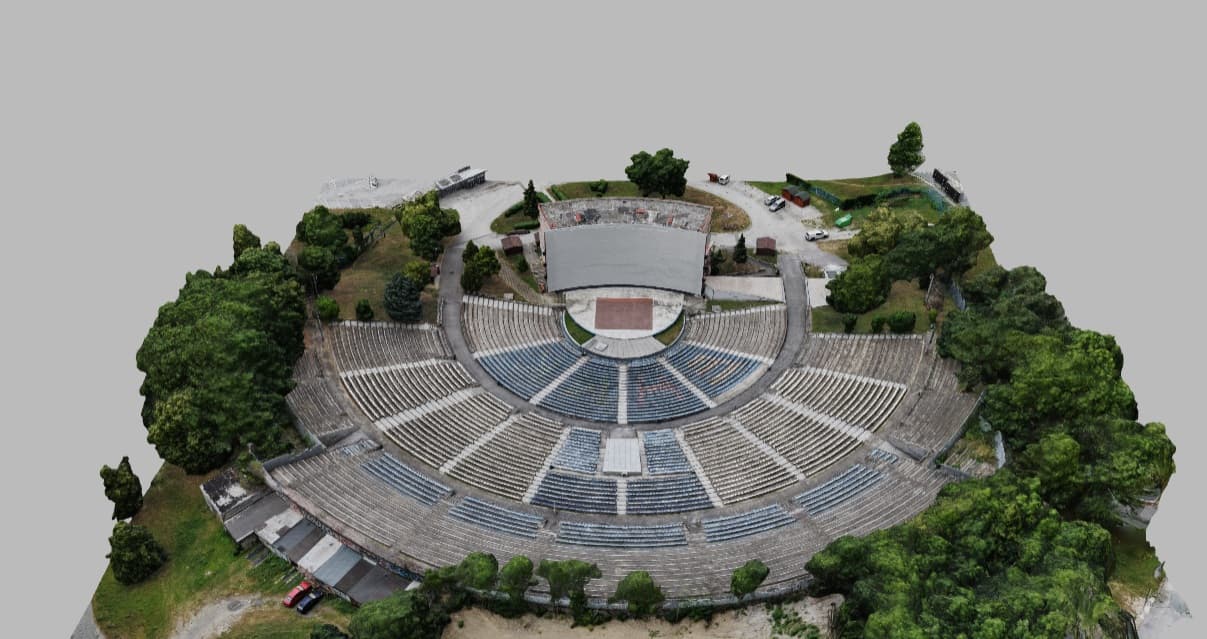
During the nineteenth century, the Calvary became increasingly intertwined with the city's collective memory. Prominent local families contributed to the restoration of its chapels in exchange for burial rights within underground crypts. In 1849, following a devastating cholera epidemic, a cemetery was established on the southern slope, becoming the final resting place of epidemic victims and soldiers. Decades later, part of this burial ground gave way to the construction of an open-air amphitheatre, illustrating the changing relationship between the sacred landscape and the expanding city.
Protected as a national cultural monument since 1963 and entrusted to the spiritual care of the Salesians of Don Bosco, Košice Calvary remains a living sanctuary. Ongoing conservation efforts seek to preserve a heritage shaped by centuries of devotion, adversity and renewal. Although the modern city has gradually encroached upon its once-secluded surroundings, the Calvary retains its contemplative character. The ascent remains more than a passage through sacred architecture: it is a quiet journey through the spiritual memory of Košice, where the sorrows of the past and the enduring promise of hope continue to find expression in the footsteps of each new generation.