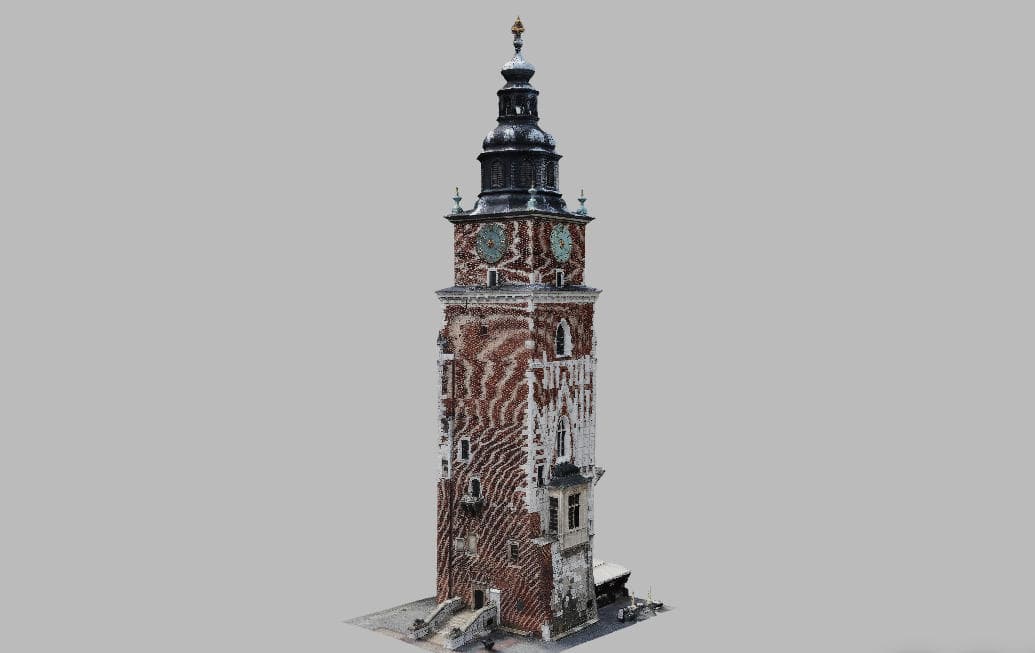
At Plac Wolnica 1, Kazimierz Town Hall marks the passing hours with its historic tower clock. Housed beneath an eighteenth-century Baroque cupola, the seventeenth-century mechanism is considered the oldest operational tower clock in Kraków.
Beneath the tower's distinctive double-bulb cupola stands a building shaped by centuries of reconstruction. King Casimir III the Great chartered the independent city of Kazimierz in 1335, establishing its central market square. An early wooden town hall occupied the site before being replaced by a stone building in 1414. Descending into the cellars reveals surviving fifteenth-century Gothic masonry and vaulted spaces, preserving some of the earliest structural elements of the former municipal building.
Fires damaged the structure in 1528, 1578, and 1623, followed by further destruction during the Swedish invasion in the mid-seventeenth century. Successive rebuilding campaigns gradually transformed its architectural appearance, introducing Renaissance elements and a decorative crenellated attic that conceals the roof behind its parapet.
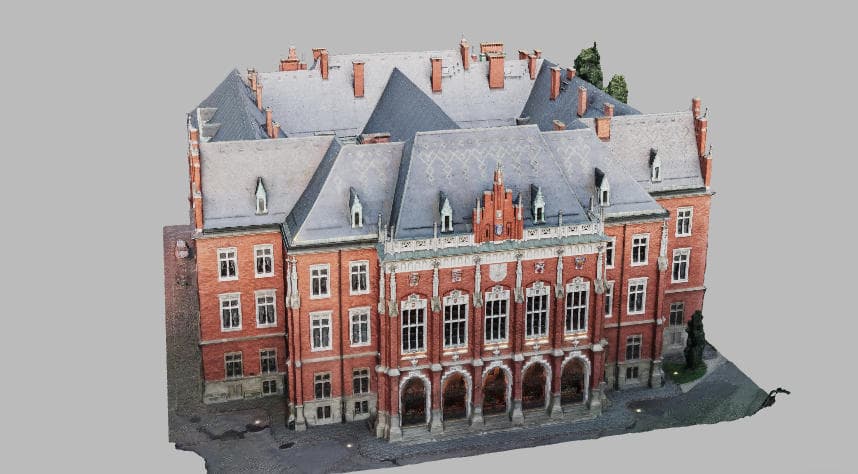
After Kazimierz was incorporated into Kraków in 1800, the building lost its municipal administrative function and narrowly escaped demolition. Renovations in the 1830s allowed the former town hall to be adapted for educational purposes. During the nineteenth century, it accommodated vocational education and later a public school for Jewish children. Architect Stefan Żołdani directed a major historicist reconstruction between 1875 and 1876, removing irregular northern additions, raising an upper floor, and establishing much of the building's present appearance.
Traces of the town hall's later history remain visible on its exterior. In 1911, a bronze relief plaque by sculptor Henryk Hochman was installed on the building, depicting King Casimir III the Great receiving Jewish settlers. The commemorative artwork recalls the historical relationship between the royal city of Kazimierz and its Jewish community.
Since 1947, the town hall has housed the Seweryn Udzielia Ethnographic Museum. Traditional costumes, woodcarvings, and historical craft collections now occupy rooms once associated with municipal administration and education. The building continues to serve as the museum's principal exhibition venue, preserving its historic architectural fabric while accommodating displays of Polish and European folk culture.