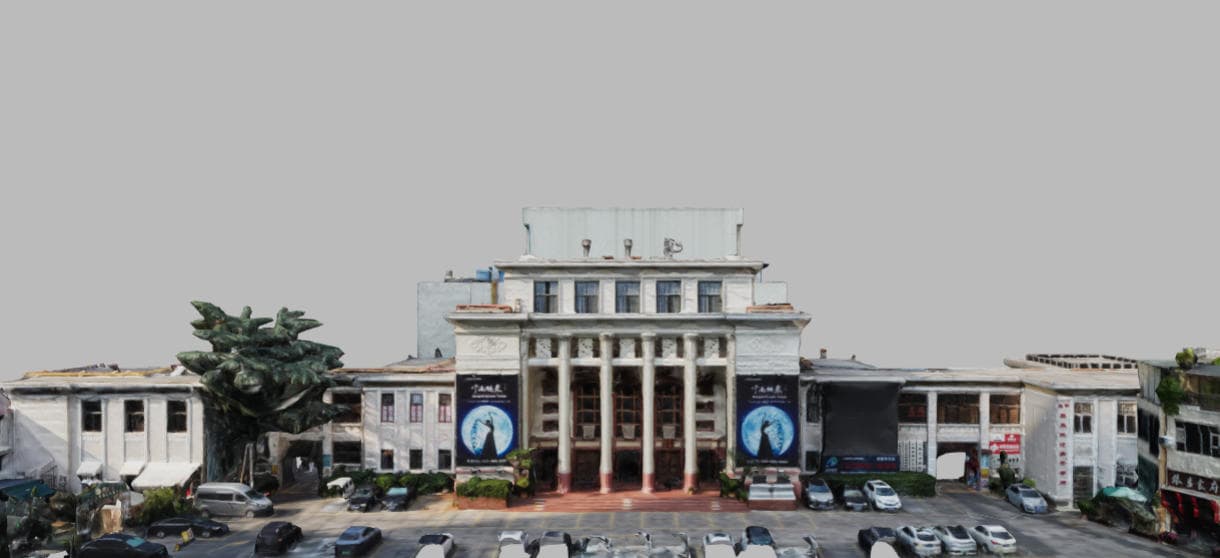
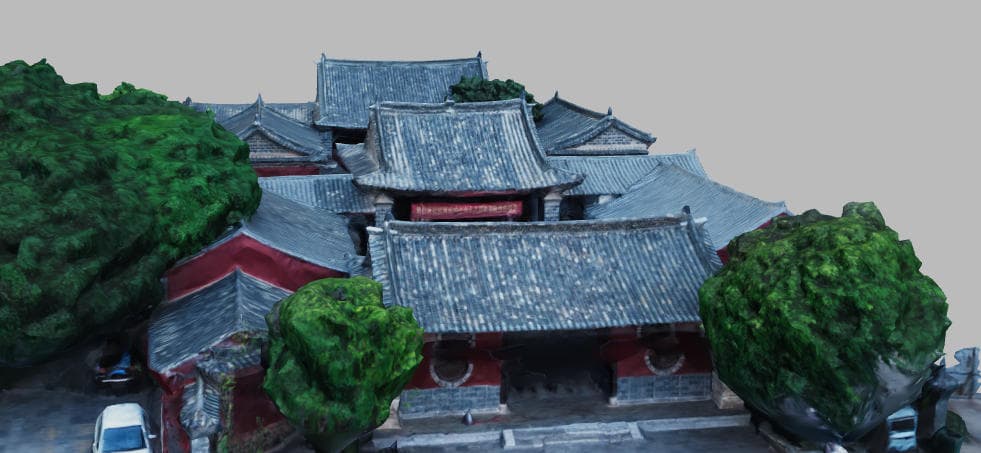
At No. 18, Cuihu North Road, in Kunming's Wuhua District, stands a three-story, 12-meter-tall brick-and-wood residence. Built during the early years of the Republic of China, this structure belonged to Zhou Zhongyue, a prominent scholar, calligrapher, and politician who served as the Minister of the Interior. Its design blends Chinese and Western styles in a concave layout. Two sturdy columns support an outer corridor across three central bays, while protruding wings on either side feature three-sided facades topped by semi-circular pointed roofs that merge into a traditional hard gable roof.
In late 1939, while Zhou served the government in Chongqing, he leased five rooms on the first floor to professors fleeing the war. Physics professor Wu Dayou and mathematics professor Cheng Yuhuai moved in with their families. For a year, the ground floor hummed with the voices of National Southwestern Associated University faculty. These rooms became a sanctuary where scholars debated equations and formulas, seeking normalcy amidst displacement.
This intellectual refuge was shattered on October 13, 1940, when a Japanese aerial bomb struck the building. The explosion tore through the brickwork and splintered the wooden beams. Following the war, workers repaired and reconstructed the damaged wings, restoring the eclectic facade.
Today, the building is preserved as part of the Green Lake museum cluster. It stands as a physical record of wartime education and modern political history, officially recognized as a Yunnan Provincial Protected Cultural Heritage Site in 2019. Visitors can walk along the outer corridor, touch the columns, and look up at the pointed roofs, connecting directly with the scholars who once sought shelter here.