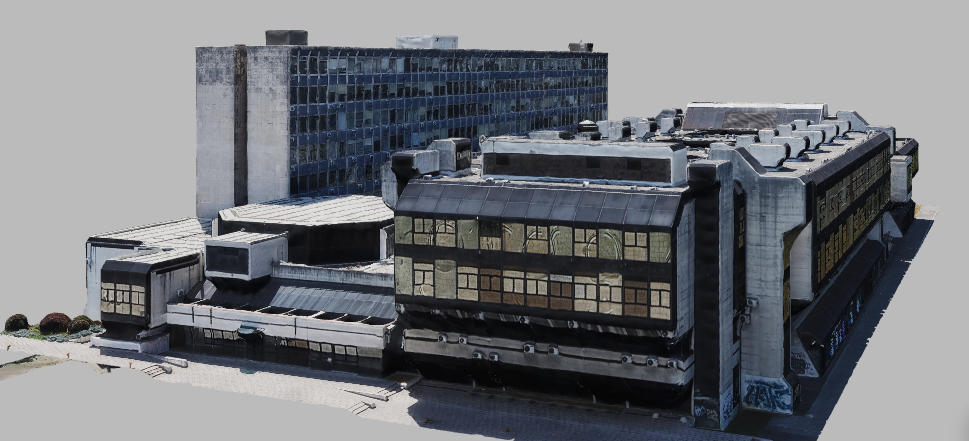
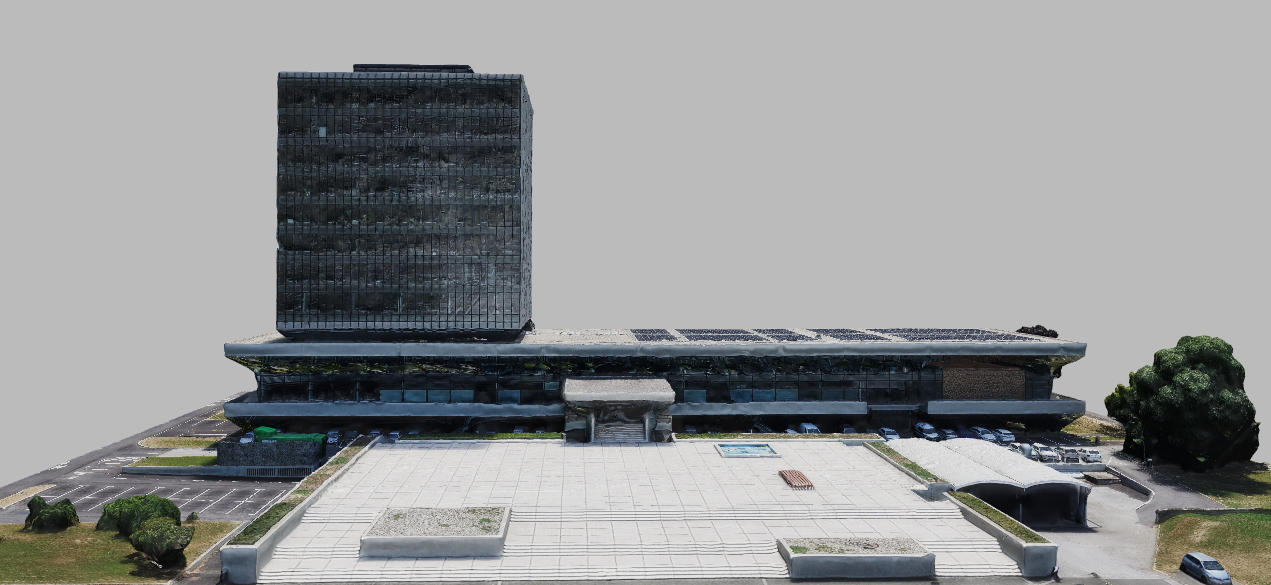
At Prisavlje 3 along Slavonska Avenue in Zagreb's Trnje district, the Croatian Radiotelevision (HRT) Headquarters occupies a late-modernist complex clad in metal panels and glass. Before construction began on April 2, 1975, broadcasting operations were scattered across more than twenty locations throughout the city, including Markov trg and Šubićeva Street. Architects Nenad Bach and Ratko Rausavljević developed a complex of interconnected building volumes, organizing television studios, radio facilities, technical spaces, and administrative offices within a unified broadcasting centre.
Inside, corridors connect specialized production spaces designed for different broadcasting requirements. Soundproof radio booths, recording rooms, and editing suites accommodate audio production, while larger television studios contain lighting equipment, cameras, control systems, and facilities for live broadcasts. The complex also includes sound stages, audiovisual storage areas, and technical rooms supporting continuous broadcasting operations. These spaces were gradually brought into use during the 1980s, with television services expanding in preparation for the 1987 Summer Universiade in Zagreb.
The building's history is closely connected to the development of Croatian public broadcasting. Initial facilities became operational in 1983, while major television and radio services were transferred to Prisavlje between 1988 and 1989. Subsequent construction introduced additional administrative and production spaces, including Block 30 and new television studios completed in 2005. Today, the complex accommodates the production and transmission of national television, radio, and digital media services.
Beyond daily news and television production, the headquarters also houses important collections of Croatian broadcasting history. In May 2012, its television, radio, and sheet music archives received official cultural property status from the Republic of Croatia. The collections preserve audiovisual recordings, radio programmes, and musical scores associated with decades of broadcasting and performance. The complex also provides rehearsal and production facilities for the HRT Symphony Orchestra, Choir, Jazz Orchestra, and Tamburitza Orchestra.
Metadata
Significance
Located at Prisavlje 3 in Zagreb, the Croatian Radiotelevision Headquarters is the main broadcasting and administrative centre of Croatia's national public broadcaster. Developed in the late-modernist style from 1975 onwards, the complex brings together television studios, radio production facilities, administrative offices, and rehearsal spaces for HRT's musical ensembles. In 2012, its television, radio, and sheet music archives received official cultural property status from the Republic of Croatia.
@misc{FUNES_croatian_radiotelevision_hrt_headquarters_2026,
  author       = {Fengze Cao, Yixuan Xie},
  title        = {{Croatian Radiotelevision (HRT) Headquarters (Hrvatska radiotelevizija) -- 3D Cultural Heritage Record}},
  year         = {2026},
  publisher    = {FUNES.WORLD},
  howpublished = {\url{https://funes.world/entities/croatian-radiotelevision-hrt-headquarters}},
  note         = {Technique: Photogrammetry; Format: .glb; License: CC BY-NC 4.0}
}
Academic References & Sources (9)
## Overview
The Croatian Radiotelevision (HRT) Headquarters (native: Hrvatska radiotelevizija, commonly referred to as Dom HRT-a or HRT dom) is the central administrative, production, and broadcasting complex of Croatia's national public service broadcaster. Located at Prisavlje 3 along Slavonska Avenue in the Trnje district of Zagreb, Croatia, the complex consolidates the operations of Croatian Television (Hrvatska televizija), Croatian Radio (Hrvatski radio), and HRT Music Production.
## Historical Development
The concept of a unified broadcasting center originated in the early 1960s to consolidate Radio-Television Zagreb (RTZ) operations, which were previously fragmented across more than 20 locations throughout Zagreb, including Markov trg, Dežmanov prolaz, and Šubićeva street. Following architectural competitions in the 1960s, construction on the Prisavlje site officially commenced on April 2, 1975.
Project designs were refined between 1978 and 1984 primarily by architects Nenad Bach and Ratko Rausavljević. The initial spaces became operational in 1983, and the relocation of main television services accelerated to support coverage of the 1987 Summer Universiade in Zagreb. Full-scale broadcasting operations from Prisavlje began between 1988 and 1989. Subsequent developments included the completion of Block 30 to house executive offices and major production suites, followed by the addition of modern television studios in 2005.
## Architectural Features
Designed in the late-modernist architectural style, the complex consists of interconnected structural volumes designed to segregate administrative, technical, and studio functions. The building's exterior features metal panel cladding and integrated glass elements. A prominent feature of the central building block is a small transmitter mast mounted on the roof structure.
The interior layout accommodates multiple large-scale television production studios, radio broadcast booths, control rooms, sound stages, editing rooms, and administrative offices, alongside specialized storage facilities for audiovisual media and music archives. Architects and urban planners involved in various phases of the building's design and spatial planning included Nenad Bach, Ratko Rausavljević, Branko Kincl, Andrija Mutnjaković, Dražen Juračić, and Zoran Gliha.
## Current Status
The Prisavlje complex serves as the operational hub for HRT's five national television channels, national and regional radio stations, and online digital media services. It also functions as the home venue and rehearsal facility for HRT's performing ensembles, including the HRT Symphony Orchestra, HRT Choir, HRT Jazz Orchestra, and HRT Tamburitza Orchestra.
In May 2012, the extensive television, radio, and sheet music archives housed within the headquarters were granted official cultural property (kulturno dobro) status by the Republic of Croatia. The facility undergoes continuous technical upgrades and ongoing structural maintenance to support modern digital broadcasting standards.
# Hrvatska Radiotelevizija
Croatian Radiotelevision (Hrvatska Radiotelevizija) is the main radio and television provider in Croatia. Founded in 1926 and starting television broadcasts in 1956, it was formerly part of the JRT (Yugoslav Radio Television), where it was known as RTZ and was the first to broadcast in the country. After 1990, where Croatia split from Yugoslavia, it was renamed to HRT and became a full member of the EBU. There are currently 5 main channels: HRT 1 (Founded in 1956), HRT 2 (Founded in 1972), HRT 3 (Founded first in 1989 as Z3, then HTV Z3 before it went off for 3 years after an air raid struck its transmitter. Relaunched in 1994 as HRT 3, before going off the air again and returning in 2012.), HRT 4 (Founded in 2012, currently the international channel since 2015), and HRT 5 (Founded in 2018). Unlike most other public providers, HRT doesn't have any active HD channels.
Visuals: On a black background, three copies of the 1990-2000 HRT logo ("HRT" in a grey Arial-like font with the "T" having two red blocks make up its bottom stem, with the blocks in a 2x2 cube configuration.) come in from all sides of the screen before fusing into a red/silver line. The line then rotates around to reveal that channel's number, with the blocks attached to it as well (HRT2 has its number zooming in quickly and slowly dropping down. The blocks also had a different movement pattern). The number then stops moving as the blocks give one last rotation.
Technique: CGI.
Audio: A quiet, but powerful orchestral fanfare.
Hrvatska Radiotelevizija
Games Apps Movies & TV Books Kids google_logo Play Games Apps Movies & TV Books Kids Gift Cards none search help_outline Sign in with Google play_apps Library & devices payment Payments & subscriptions reviews My Play activity redeem Offers redeem Gift cards Play Pass storefront Third-party app stores Personalization in Play settings Settings Privacy Policy • Terms of Service Games Apps Movies & TV Books Kids Hrvatska radiotelevizija Visit HRT apps for trusted latest news, live and on-demand TV and radio programme, and much more. HRTi OTT Hrvatska radiotelevizija Contains ads HRTi application for viewing and listening HRT's television and radio channels 3.6 star 14.5K reviews Teen info 1M+ Downloads Install Teen Diverse Content: Discretion Advised Learn more HRTi application for viewing and listening HRT's television and radio channels More by Hrvatska radiotelevizija HRTvijesti HRTi OTT 3.6 star HRT radio HRT Teletekst HRT METEO 4.2 star Juhuhu Additional Information Developer Visit website Report Flag as inappropriate
# Croatian Radiotelevision
You can help expand this article with text translated from the corresponding article in Croatian. (June 2021) Click [show] for important translation instructions.
Type
Terrestrial radio, state media, propaganda and online
Country
Availability
National; International (via HRT International and hrt.hr)
Founded
15 May 1926
TV stations
Radio stations
- Revenue
€192.89 million (2024)[1]
- Headquarters
Prisavlje 3, 10000 Zagreb
- Broadcast area
Croatia
- Owner
Government of Croatia
- Key people
Robert Šveb
- Launch date
15 May 1926 (Radio)
15 May 1956 (Television)
- Former names
Radio Televizija Zagreb (1956–1990)[2]
- Affiliation
European Broadcasting Union
- Former affiliations
Yugoslav Radio Television
- Official website
www
- Language
Croatian
Hrvatska radiotelevizija (abbr. HRT), or Croatian Radiotelevision, is a Croatian public broadcasting company. It operates several radio and television channels, over a domestic transmitter network as well as satellite. HRT is divided into three joint companies – Croatian Radio (Hrvatski radio), Croatian Television (Hrvatska televizija) and Music Production (Glazbena proizvodnja), which includes three orchestras (Symphony, Jazz, and Tamburitza) and a choir.
The founder of HRT is the Republic of Croatia which exercises its founder's rights through the Croatian Government. Croatian Radio (then Radio Zagreb) was founded on 15 May 1926. This date is considered the date on which HRT was founded and is observed as the "HRT's Day" (Dan HRT-a).[3] Television Zagreb (today Croatian Television) began broadcasting on 7 September 1956. By the law enacted by the Croatian Parliament on 29 June 1990, Radio Television Zagreb was renamed Croatian Radiotelevision.
HRT operates as a provider of public broadcasting services, and Croatia provides funding by the Croatian Radiotelevision Law[4] and the State Aid Rules for Public Broadcasting Services.
On 25 May 2012, HRT's archive of the television and radio program and its collection of musical production was given the status of Croatian cultural heritage.
## History
[edit]
Croatian Radiotelevision is the direct successor of Radio Station Zagreb (Radio stanica Zagreb) that started broadcasting on 15 May 1926, the second radio station to broadcast in Southeast Europe.[5] The station was initially a private company, before Radio Zagreb was nationalized on 1 May 1940. During the Independent State of Croatia, the station was known as Hrvatski krugoval. After World War II, it began to operate as a state-owned radio station.
At the end of the first year of operation, Radio Zagreb company had a little over four thousand subscribers.
On the 30th anniversary of the establishment of Zagreb Radio Station, on 15 May 1956, the first television programme was broadcast from the transmitter built at Sljeme. Television Zagreb's first live broadcast aired on 7 September 1956, making Croatia the first Yugoslav republic to have television.[6] For the next two years this was the only television broadcasting service in the southeast European area. Colour television broadcasts began in 1972. In 1970s, Radio Zagreb Correspondence Center and to a lesser extent Zagreb TV were the main coordinators of cooperation with other units of the Yugoslav Radio Television in production of media content for numerous Yugoslav citizens abroad.[7] The program was aired by Radio Cologne, Frankfurt, Free Berlin, Zurich, Vienna, Paris, Liege, Luxembourg, Hilversum and Stockholm while the second program of the German public television aired Zagreb made "Good Morning Yugoslavia" show.[7]
In May 1990, following Franjo Tuđman's election victory, he and his ruling Croatian Democratic Union party began a transition of radio and television stations from Yugoslav to Croatian hands.[8] In June 1990, the Croatian Parliament renamed the company from Radio Television Zagreb (Croatian: Radiotelevizija Zagreb) to Croatian Radiotelevision (Croatian: Hrvatska radiotelevizija). The HDZ-majority Croatian Parliament soon appointed new staff at the top managerial and editorial positions on the broadcaster.[9] The film director Antun Vrdoljak, a Tuđman appointee who was tasked with overseeing the changes, pledged to make HRT into the "cathedral of the Croatian spirit".[9] On 16 September 1991, 300 employees at HRT were fired for "security reasons".[9] Miljenko Jergović, writer for the Feral Tribune satirical magazine, called this dismissals "purges" of "independent-minded, respected and thus dangerous" journalists.[9]
On 1 January 1993, HRT was admitted as a full active member of the European Broadcasting Union (EBU).[2]
The television channels were aired under the name Croatian Television (Croatian: Hrvatska televizija) between 1990 and 1993. Since then, the current name has been used. The radio broadcast unit is referred to as Croatian Radio (Croatian: Hrvatski radio).
Following Tuđman's death and the 2000 election in Croatia which brought Stjepan Mesić to power, HRT started changing its editorial policy and staffing, aligning with more liberal views.[10]
## Funding
[edit]
In 2014, more than 85%[11] of HRT's revenue came from broadcast user fees with each household in Croatia required to pay 79 HRK (~€10) per month for a single television set, with the remainder being made up from limited advertising.[12]
## Television
[edit]
### Channels
[edit]
- HRT 1 (or Prvi program): HRT's first TV channel, previously known as TVZ 1. This is a general channel with daily news around the world, documentaries, religious programmes, series and movies.
- HRT 2 (or Drugi program): HRT's second channel, previously known as TVZ 2. It is primarily used for sports broadcasts and entertainment programmes. The channel is known for its extensive footage of vintage films. It also broadcasts educational programmes.
- HRT 3 (or Treći program): HRT's third channel, primarily used for culture, films, children's shows and documentaries. It was relaunched in September 2012.[13]
- HRT 4 (or Četvrti program): HRT's fourth channel, broadcasting news programmes, started airing in December 2012.[14]
- HRT International, formerly HRT 5 (or Peti program): HRT's fifth and international channel, broadcasting a wide range of programmes from its domestic channels for the Croatian diasporas in Europe, North America, South America, Australia and New Zealand.[15]
In the 1980s, there was a third channel called Z3 and later HTV Z3. It was taken off-air on 16 September 1991 when its main transmitter, the Sljeme TV tower, was damaged in an air raid. On 7 November 1994, the channel came back on the air, this time called HRT 3. The channel was later shut down with its frequency de-nationalized and put up for lease in a public tender in 2004 and it has been used by RTL Televizija ever since. It was replaced by satellite channel HRT Plus until its relaunch in 2012.
### Regional TV channels
[edit]
- HRT Čakovec-Varaždin (HRT regionalni centar Čakovec-Varaždin)
- HRT Osijek (HRT regionalni centar Osijek)
- HRT Rijeka-Pula (HRT regionalni centar Rijeka-Pula)
- HRT Split-Dubrovnik (HRT regionalni centar Split-Dubrovnik)
- HRT Zadar-Šibenik-Knin (HRT regionalni centar Zadar-Šibenik-Knin)
### Streaming
[edit]
In October 2015, HRT Launched HRTi, an over-the-top streaming service free to all registered users. HRTi offers a live stream of HRT's television and radio channels, as well as access to select catalogue of HRT's original and acquired programming.[16]
### Programming
[edit]
- Dnevnik HRT (lit. 'Daily News'), popular midday, evening and midnight news program
- Dobro jutro, Hrvatska (lit. 'Good Morning, Croatia'), mosaic morning show from 7:00 to 9:00 am
- Dobar dan, Hrvatska (lit. 'Good Afternoon, Croatia'), mosaic afternoon show
- Nedjeljom u dva (lit. 'Sunday at Two O'Clock'), weekly talk show
- Transfer, show about the alternative culture and arts (visual arts, music and web culture)
- TV kalendar (lit. 'TV Calendar'), long-running daily historical documentary television series, narrating about historical events, birth/death of people or their discoveries on the same date
- Tko želi biti milijunaš? (Who Wants to Be a Millionaire?), quiz show
- Zvijezde pjevaju (lit. 'Just the Two of Us'), big Saturday singing show
- Lijepom Našom (lit. 'Our Beautiful'), a show focused on Croatian cultural heritage
- Otvoreno (lit. 'Openly'), daily political talk show
#### Former shows
[edit]
- Dan za danom (lit. 'Day After Day'), mosaic afternoon show
- Kviskoteka (quiz show), hosted by Oliver Mlakar, aired in the 1980s and 1990s, later briefly aired on Nova TV.
- Male tajne velikih majstora kuhinje (lit. 'Small Secrets of Big Chefs')
- Motrišta (lit. 'Points of View'), political informative magazine aired in the 1990s
- The Pyramid, weekly show hosted by Željka Ogresta, winner of Rose d'Or, aired 2004–2008; 2014
- Slika na sliku (lit. 'Frame On Frame'), political magazine aired in the 1990s
- Upitnik (lit. 'Question Mark'), quiz show hosted by Joško Lokas, aired in the 2000s, later briefly aired on Nova TV, taken off-air in 2004
- Turbo Limač Show (lit. 'Kids' Saturday Show'), hosted by Siniša Cmrk
- Željka Ogresta i gosti (lit. 'Željka Ogresta and Guests') (talk show), aired in the start of the 1990s and in the start of the 2000s
- Ples sa zvijezdama (Dancing with the Stars), Saturday dancing show
## Radio
[edit]
The Croatian Radio (Hrvatski radio) runs three national and eight local (county-level) stations.[17]
### National stations
[edit]
The three national stations are available on FM, DAB+, throughout the country and are streamed live via the Internet.
- HR 1 – The primary national-level station, mainly serious programming. News every full hour with oldies and local pop music.
- HR 2 – Entertainment programming including popular music, with news followed by traffic reports at the half-hour mark
- HR 3 – Classical music and radio drama
### Regional stations
[edit]
- HR Dubrovnik – based in Dubrovnik, covers the Dubrovnik-Neretva County
- HR Knin – based in Knin, covers the Šibenik-Knin County
- HR Osijek – based in Osijek, covers the Osijek-Baranja County
- HR Pula – based in Pula, covers the Istria County
- HR Rijeka – based in Rijeka, covers the Primorje-Gorski Kotar County
- HR Sljeme – based in Zagreb, covers the city and the counties of the Northern Croatia
- HR Split – based in Split, covers the Split-Dalmatia County
- HR Zadar – based in Zadar, covers the Zadar County
The mediumwave transmitter at Zadar was at one time one of the most powerful in Europe and at nighttime could be heard throughout most of the continent with JRT (Yugoslav) and later HR (Croatian) programming from Zagreb and Pula. However it was badly damaged during the Serbian shelling of the city in the early 1990s, and has operated on somewhat reduced power since on 1134 kHz. Transmitter was rebuilt in 2004. It consists of 4 masts, every is 132 meters high.[18] It was taken off the air on 1 January 2014.
### International service
[edit]
- Voice of Croatia (Glas Hrvatske): Airs programming for Croatians living abroad, Croatia's minority groups and the international community. While mostly in Croatian, the station also features short news and segments in English, German, Italian, Hungarian, and Spanish at different times of the day.
The Voice of Croatia broadcasts 24 hours a day via the following satellites; in Europe, North Africa, the Middle East on the Eutelsat 13C at 13°E and Eutelsat 16A at 16 degrees east for Central and East Europe.[19][20]
## Logos
[edit]
- 1956–1990
- 1990
- 1994–1999
- 1999–present (black strips)
- 1999–present (white strips)
## See also
[edit]
## References
[edit]
- ↑ Cite error: The named reference
```
Plan2024
```
- was invoked but never defined (see the help page).
- Jump up to: 1 2 "The Evolution of Croatian Radio and Television". hrt.hr. Croatian Radiotelevision (HRT). 10 January 2009. Archived from the original on 5 March 2016.
- ↑ "Kostadinov o "Zabranjenom koncertu": Treslo nas je cijelo vrijeme". HRT Magazin (in Croatian). Croatian Radiotelevision (HRT). 21 April 2026.
Ususret Danu HRT-a, 15. svibnja, kada ćemo proslaviti veliku obljetnicu naše kuće - 100 godina Hrvatske radiotelevizije, prisjećamo se trenutaka koji su obilježili povijest ove zemlje, ali i naše radiotelevizije.
- ↑ "Zakon o Hrvatskoj radioteleviziji" [Croatian Radiotelevision Act] (PDF). hrt.hr (in Croatian). Croatian Radiotelevision (HRT).
- ↑ Malović, Stjepan; Selnow, Gary W. (2001). The People, Press, and Politics of Croatia. Greenwood Publishing Group. p. 55. ISBN 978-0-275-96543-3.
- ↑ Lisičar, Hrvoje; Turudić, Marko (2019). Media Law in Croatia. Kluwer Law International B.V. ISBN 978-94-035-0782-8.
- Jump up to: 1 2 William Zimmerman (1987). Open Borders, Nonalignment, and the Political Evolution of Yugoslavia. Princeton University Press. p. 120. ISBN 0-691-07730-4.
- ↑ Kurspahić 2003, p. 66.
- Jump up to: 1 2 3 4 Kurspahić 2003, p. 67.
- ↑ Kurspahić 2003, pp. 185–188.
- ↑ "Izvješće o poslovanju HRT-a za 2014. godinu" [HRT Business Report for 2014] (PDF). Croatian Radiotelevision. 29 July 2015. Archived from the original on 18 October 2017. Retrieved 13 March 2020.
- ↑ Circom-regional.org, Funding Arrangements
- ↑ "Novi program HRT 3 s emitiranjem počinje u subotu 15. rujna 2012". mvinfo.hr. 14 September 2012.
- ↑ "Na Badnjak kreće HRT 4". www.057info.hr. 19 December 2012.
- ↑ "How to Access New TV Channel for Croatians Abroad". croatiaweek.com. 14 January 2018.
- ↑ "Što nudi HRTi putem mobilnih platformi". glasistrenovine.hr (in Croatian). Glas Istre. 22 October 2015. Retrieved 10 October 2024.
- ↑ List of radio programme content providers Archived 2018-11-08 at the Wayback Machine, Croatian Post and Electronic Communications Agency, retrieved 2011-10-25
- ↑ "Navršava se 25 godina od napada na važni odašiljač Grbe". 15 September 2016.
- ↑ "Eutelsat 16A". Odašiljači i veze d.o.o. (in Croatian). 2020. Retrieved 25 February 2021.
- ↑ LyngSat Network (ed.). "Glas Hrvatske". lyngsat.com. Retrieved 11 July 2021.
### Sources
[edit]
- Kurspahić, Kemal (2003). Prime Time Crime: Balkan Media in War and Peace. U.S. Institute of Peace Press. ISBN 978-1-929-22338-1.
## External links
[edit]
- Official website (in Croatian)
- Croatian Radiotelevision
- Broadcasting in Croatia
- 1926 establishments in Croatia
- Publicly funded broadcasters
- Radio stations in Croatia
- Television networks in Croatia
- European Broadcasting Union members
- Multilingual broadcasters
- Organizations based in Zagreb
- Mass media in Zagreb
- Radio stations established in 1926
- Television channels and stations established in 1956
- State media
- Government-owned companies of Croatia
- Companies based in Zagreb
- Modern history of Croatia
- Croatian news websites
Zgrada Hrvatske radiotelevizije, Prisavlje 3 /Slavonska avenija, sagrađena je 1985./1986. prema projektu Nenada Bacha i Ratka Rausavljevića. Iako fizički i sadržajno zatvorena, zgrada TV doma uspjela je uspostaviti primjeren odnos unutar same sadržajne strukture koja je izrazito komplicirana. Stoga su ju artikulirali u nekoliko korpusa, povezujući ih međusobno i naglašavajući ih tornjem malog odašiljača na središnjem korpusu. I oblikovanje i primijenjena tehnologija metalne obloge arhitekture pridonijeli su stvaranju strukture koja je i nadalje ostala zatvorena u svoj sadržaj i koja ne djeluje animirajuće u gradskoj strukturi. Vjerojatno je takav sadržaj trebalo locirati na neko drugo mjesto. (Ivo Maroević -3, 1992:240)
22.09.2021. održana je vođena šetnja kojom su se šetači, njih 37, zajedno s voditeljem, Vanjom Radovanovićem, prošetali trasom podzemnog toka potoka Kuniščaka u dijelu od Trešnjevačkog trga do njegovog utoka u Savu. Potok na tome dijelu teče ispod Šetališta Jurija Gagarina sve do Slavonske avenije, potom prolazi ispod te magistralne prometnice u blizini Marohnićeve ulice (nedaleko bivšeg Hypo Centra). U nastavku njegov podzemni tok prolazi završetkom ulice Prisavlje južno od zgrade HRT-a, stiže do ulice Trnjanska struga i kluba Močvara iza kojega skreće na istok. Trasa potoka potom vodi paralelno uz savski nasip uz ulicu Trnjanski nasip sve do kućice ustave uz kuću i autolimarsku radionicu (Auto limarija Tomo) na kućnom broju 50. Nakon ustave potok ponovo skreće, ovoga puta prema Savi, u koju utiče u blizini najzapadnijih zgrada Savice, kod Novske ulice.
Šetači su prošli cijelom navedenom trasom potoka, sve do ušća u Savu, a šetnja je završena razgovorom uz pivice i kavice u lokalu “Ti i ja” na uglu zgrade u Novskoj ulici, na zapadu naselja Savica. Jedna od glavnih tema šetnje, održane u sklopu Europskog tjedna mobilnosti, bila je i korištenje koridora potoka Kuniščaka kao jednog od glavnih pješačkih i biciklističkih smjerova za povezivanje Trešnjevke i Trnja.
Razgovor o korištenju trase podzemnog toka Kuniščaka za uređenje pješačko-biciklističke staze. [DF 2021.]
Na samome Trešnjevačkom trgu, na njegovom sjeveroistočnom kutu, neposredno iza semafora za desno skretanje u Krapinsku, u potok Kuniščak (koji do trga stiže ispod Krapinske ulice) utiče potok Jelenovac koji do trga stiže podzemnim tokom ispod Trakošćanske ulice. Ti su potoci u svoje podzemno carstvo stigli tokom 50-ih godina kada su ukopani na svojem cjelokupnom toku na području Trešnjevke.
Šetnja je počela razgovorom o Trešnjevačkom trgu, kaotičnom prometu po ulicama oko njega te neugodnosti prostora trga čiju glavninu zauzima Tržnica Trešnjevka. Gradskim natječajem provedenim 2020. godine zatraženi su prijedlozi za preuređenje tržnice i njene okolice s naglaskom na osuvremenjivanje prostora tržnice i veću kvalitetu i ugodnost tog prostora (djelomično natkrivanje, mogućnost izgradnje podzemne garaže za zakupce i, dijelom, i posjetioce). Prijedlozi su trebali sadržavati i elemente uređenja okolice uz mogućnost polivalentnog korištenja prostora tržnice i nakon njenog radnog vremena, uz poseban naglasak na zelene površine i prostore za pješake i bicikliste. Trešnjevački trg je prometno središte Trešnjevke i nalazi se na križanju nekoliko prometnih smjerova, a preko njega prolazi i tramvajska pruga koja vodi do jedne od dvije gradske remize. U sklopu preuređenja je predviđeno i da se u nekoj doglednoj budućnosti izvede i proširenje Ulice grada Vukovara koja bi sa svoje južne strane imala i prostor predviđen za tramvajski promet (linija 3 bi tim putem skratila svoj put od Ljubljanice do Ulice grada Vukovara, ali bi tim putem postojala i brža mogućnost izlaska i povratka tramvaja prema Remizi). S druge strane, predviđeno je i preuređenje i Tratinske ulice koja bi u idealnom slučaju postala pješačka ulica kojom bi i nadalje vozio tramvaj, odnosno, u nekom prijelaznom razdoblju bi imala samo jednu prometnu traku za promet automobila i jednu za parkiranje, dok bi ostatak bio prepušten tramvaju, pješačko-biciklističkom prometu te zelenilu (drvored i klupe).
Prema svim trenutačnim prometnim studijama budućnost zagrebačkog javnog prometa, osobito brzog, leži u razvoju i boljoj integraciji željezničkog prometa s već postojećim tramvajskim i autobusnim linijama te davanju prednosti pješačkom i biciklističkom prometu pred motornim. Trešnjevka sa svojim položajem i “okvirom” od željezničkih pruga sa sjevera i istoka ima sve predispozicije za dobro povezivanje s ostalim gradskim dijelovima baš željeznicom. Trešnjevački trg bi se mogao priključiti željeznici s dvjema pješačko-biciklističkim koridorima – jedan bi vodio preuređenom Trakošćanskom ulicom koja bi se mogla urediti kao pješačko-biciklistička ulica do Doma sportova otkuda bi se novom podzemnom ili nadzemnom vezom moglo doći do Zapadnog kolodvora kao najbliže željezničke stanice na smjeru koji povezuje zapad i istok grada.
Od Trešnjevačkog trga do Doma sportova je 800 metara, a do Zapadnog kolodvora još dodatnih 200 metara – dakle, ukupno je to 1 kilometar, udaljenost koju se uobičajenim hodom može prijeći za 15-20 minuta. Uzimajući u obzir potencijalnu atraktivnost tog koridora (manja buka i zagađenje zbog izostanka motornog prometa, ugodnost budućeg uređenja, možda čak i uz ponovni povratak potoka Jelenovca na površinu, prisustvo trgovine i kafića) to je udaljenost koju bi mnogi rado prelazili pješice. S druge strane, ljudi koji nisu u nemogućnosti prelaziti takve udaljenosti pješice mogli bi se do Zapadnog kolodvora prevoziti linijom minibusa koji bi vozio Novom cestom.
(treba napomenuti da je od Zapadnog kolodvora do Ilice samo 400 metara udaljenosti kroz Park dr. Franje Tuđmana čime se taj cijeli pješački potez produžuje na čak 1,5 kilometar)
Veliko poboljšanje situacije na tom dijelu za pješake i bicikliste bi se moglo postići izgradnjom veze (nathodnikom ili pothodnikom) između Trga Krešimira Ćosića i Zapadnog kolodvora. Prijedlog rješenja nathodnikom se može npr. naći u diplomskom radu Maje Pavičić, “Urbanistička studija dijela Zagreba oko Zapadnog kolodvora” izrađenom 1994. kojeg možete u cijelosti pogledati ovdje.
S druge strane, južne, u smjeru pruge koja centar grada povezuje s Novim Zagrebom, Remetincem, Jastrebarskom i Karlovcem odnosno Velikom Goricom i Siskom, upravo trasa potoka Kunišćaka nudi ugodnu pješačko-biciklističku poveznicuaa Trešnjevačkim trgom. Dapače, na tome je smjeru ona već i djelomice uređena pa bi se vrlo lako mogla spojiti s novouređenim prostorom trga. Ono što na toj strani nedostaje je željeznička stanica na prostoru između Ulice grada Vukovara i Šetališta Jurja Gagarina, uz Ulicu Florijana Andrašeca. Ta je željeznička stanica već predviđena u planu zahvata na željezničkoj mreži grada još od 70-ih godina prošloga stoljeća i imala bi izuzetnu važnost za uklapanje željeznice u gradski promet, zajedno s također istim planom predviđene stanice Savski most i Trnsko. Udaljenost od Trešnjevačkog trga do nove željezničke stanice je 500 metara, a teže pokretne osobe bi ponovo mogle koristiti spomenuti prijevoz minibusom – kružna linija koja bi spajala obje stanice s Trešnjevačkim trgom bi mogla prometovati od Trga Novom cestom prema sjeveru, potom do Adžijine, zatim skretanjem u Brozovu i nastavkom u Andrašecovu do stanice kod Ulice grada Vukovara kojom bi se minibusevi vraćali na početnu stanicu.
Iz svega dosad navedenoga možemo zaključiti da trase potoka Kuniščaka i Jelenovca nude odlične poveznice prema budućim zamišljenim stajalištima brzog gradskog prijevoza. S druge strane, tim se trasama, osobito potoka Kuniščaka, u smjeru sjeverozapada prema Črnomercu i budućoj biciklističkoj magistrali trasom “Samoborčeka” prema zapadu, te u smjeru istoka i jugoistoka prema Trnju, Novom Zagrebu, Savskom nasipu i Bundeku, kao centrima rekreacije, Trešnjevački trg može odlično povezati sa ostalim dijelovima grada te povezati i prema prigradskoj mreži biciklističkih staza (Zaprešić i Samobor preko “Samoborčeka”, Jastrebarsko i Velika Gorica preko Trnja i Novog Zagreba.
No, vratimo se u sadašnjost – početak trase potoka i Šetališta Jurija Gagarina je vrlo neugledan, sakriven iza kioska i parkiranih automobila, dobro bi mu došlo proširenje. Isto tako, dio koji izlazi na Novu cestu, uz štandove na kojima se prodaje odjeća i kamione s krumpirom i zeljem, u radno vrijeme tržnice služi i kao parkiralište te predstavlja ružan prizor i mjesto guranja s automobilima.
Dobrotom jedne od pratiteljica Facebook profila “Mapiranja Trešnjevke” saznali smo i da su se na prostoru sadašnjeg parkirališta uz Novu cestu, a i stambenog bloka u kojem se nalazi knjižnica “Tin Ujević” nekad nalazile male kućice sa svojim vrtovima. Posljednja od njih srušena je oko 2017. nakon što je nekoliko godina stajala napuštena na uglu s Ulicom grada Vukovara.
Spomenuti stambeni blok sagrađen je oko 1990., a knjižnica se preselila u njega iz prostora u kojem je radila niz godina, u Novoj cesti, malo ispod bivše pekare “Klara”.
S druge se strane šetališta nalazi nedovršeni stambeni blok plavoga krova koji je izgrađen također oko 1990., ali bez građevinske dozvole, na mjestu gdje je bio predviđen park. Na sreću, za planirani park je preostao prostor prema Vrandučkoj ulici i Dužicama koji je još uvijek neizgrađen.
Krenuli smo dalje u smjeru jugoistoka. Na potezu Šetališta Jurija Gagarina od Nove ceste do Savske ceste nalazi se cijeli niz važnih javnih ustanova: Tik uz Novu cestu je Osnovna škola Jurja Klovića te odmah iza nje Umirovljenički dom Trešnjevka i iza njega Studentski dom Ante Starčevića (“Šara”). S druge strane šetalištanalazi se Dječji vrtić “Potočnica”, a u bivšoj zgradi “industrogradnje”, tik do Savske ceste, je Ministarstvo branitelja.
Evo i nekoliko riječi o tim ustanovama:
- Osnovna škola Julija Klovića sagrađena je 1961. i nazvana po narodnoj heroini Kati Dumbović (ispred škole se nalazila i njezina bista). Škola je preimenovana 1993.
- Objekt Umirovljeničkog doma u Drenovačkoj je sagrađen 1950., a od 1956. je u funkciji u današnjem obliku. Prvi objekt te namjene na Trešnjevci sagrađen je 1928., u Selskoj cesti, gdje se nalazila ustanova za zbrinjavanje starijih i nemoćnih.
- Studentski dom Ante Starčević je sagrađen 1961., prijašnje mu je ime bilo Studentski dom Šarengradska, po nekadašnjoj adresi. Dom je renoviran 2003. i sada ima 1237 kreveta.
(od šetača Tomislava koji je živio u tom domu u vrijeme studiranja saznali smo da je dom nekad imao zajedničke kuhinje i sanitarije što je pogodovalo razvoju društvenog života i dom je bio poznat po tulumima koji su se održavali na terasi. S podizanjem komfora i dodavanjem sanitarnih čvorova i kuhinjica svakoj sobi nestalo je živahne studentske atmosfere.)
- Dječji vrtić Potočnica je otvoren 1965. Na njegovom se mjestu prije toga nalazio vrlo lijep i njegovan trešnjevački vrt s voćkama, kestenima, stogodišnjom lipom, malim bazenom i obiteljskom vilom u kojoj su do tada živjele sestre Jarmila i Zara. 1964. je taj prostor adaptiran za potrebe smještaja djece jasličke dobi, kada je sagrađeno i nisko zdanje s četiri boravka za djecu vrtićkog uzrasta, kuhinjom, kotlovnicom i ostalim popratnim prostorima površine 500 m2. U dvorištu je bilo nekoliko sprava za dječju igru, ljuljačka i tobogan, a sve smješteno među trešnjevačkim prizemnicama, sakriveno iza visoke zgrade Naftaplina.
To je bio novi „Dječji centar“, kako se tada nazivalo dječje vrtiće, poklon Grada Zagreba djeci Trešnjevke, uzrasta od šest mjeseci do polaska u školu. Službeno je otvoren 1965. godine, a prozvan imenom Marice Pataki, zagrebačke antifašistkinje ubijene 1945. godine u Lepoglavi. „Dječji centar“ prvobitno je bio zamjena za jaslice, do tada smještene u krugu ZET-ovih radionica i spremišta tramvaja na Ljubljanici.
Iako je službeno otvoren 1965. godine, još nedovršen u jesen 1964. godine primio je prve majke s djecom i pružao im potrebnu skrb za vrijeme poplave koja je tada preplavila velik dio Zagreba. Svakako treba spomenuti osobu zaslužnu za osnutak vrtića na današnjoj lokaciji, prvu ravnateljicu Ružicu Štajduhar.
Ali, uz sve važne kvartovske i gradske ustanove uz šetalište se nalazi i nekoliko vrlo mirnih kutaka: bivši Željezničarski rasadnik i dječje igralište uz željezničku prugu. Kroz razgovor sa šetačima potvrđeno je da je to šetalište i jedno od najugodnijih mjesta u središtu Trešnjevke, zbog mira i tišine, odmaka od prometne vreve koja caruje na području Trešnjevačkog trga. Pozornost nam je privukla i pomalo sakrivena željezničarska kućica koja se nalazi s istočne strane pruge.
Razgovarajući sa šetačima promatramo i pogodnost šetališta za hod i zadržavanje pješaka te vožnju bicikla. Veselila nas je spoznaja što je rubnjak kod prilaza Studentskom domu napokon spušten, nakon 60 godina njegova odolijevanja pješacima i biciklistima. No, primjećujemo da je rampa kojom se izlazi prema Savskoj cesti preuska za potrebe prolaska svih onih koji radije prolaze rampom nego stepenicama.
Treba napomenuti da je budućnost tog mirnog predjela upitna. Naime, ta se oaza mira u urbanističkim planovima (donesenim prije više desetaka godina) križa s planiranom produženom Šarengradskom ulicom koja bi se trebala pružati od Jadranskog mosta, preko postojeće zgrade osnovne škole Horvati, autodroma na Knežiji i uz Studentski dom prema Ulici grada Vukovara. Prema tom bi se planu novom bi se cestom (zapadno od pruge), paralelnom sa Savskom cestom, odvijao individualni motorni promet dok bi Savska cesta (koja se nalazi istočno od pruge) bila rezervirana za tramvaje, bicikliste i pješake. Time bi se izgubio mir zapadne strane željezničke pruge, no tada bi Savska cesta postala neusporedivo mirnija i ugodnija te brža za prolazak tramvaja. U svakom slučaju, pitanje je da li će ta velika intervencija ikada biti izvedena.
Izlazak na Savsku cestu. [DF 2021.]
Jedna od priča vezanih uz trasu potoka Kuniščaka je i ona o lokaciji između Savske ceste, Ulice grada Vukovara i željezničke pruge na kojem je do 60-ih godina prošlog stoljeća bila Ženska kaznionica. Ona je sagrađena 1877. godine, u doba bana Ivana Mažuranića, kada je ta ustanova preseljena sa Zrinjevca (u njenu se zgradu uselio sud) na novu lokaciju koja je tada bila na rubu grada. S vremenom je kaznionica mijenjala namjene – u Drugom svjetskom ratu je to bio zatvor Ustaškog redarstva, a nakon njega je kroz kaznionicu ponovo prošao veliki broj zatvorenika, sumnja se da je dio njih i smaknut na toj loaciji i pokopan u dvorištu Učiteljskog fakulteta. Na tom su mjestu pronađeni posmrtni ostaci 25 osoba, dok se sumnja da bi ukupni broj tamo pokopanih mogao biti i do 300.
Zgrada kaznionice je napokon srušena 1960. i iza nje je uz slobodan prostor ostao samo drvored, čiji se tragovi vide i danas, u vidu krugova ograđenih granitnim kockicama koji se vide na pločniku zapadne strane Savske ceste. Na tom je prostoru 1970. sagrađen prepoznatljivi objekt trgovine Slovenijales, arhitekta Luje Schwerera, koja je zbog svoje smjele kružne forme bila zgrada o čijoj se gradnji pričalo naširoko, a iza nje su, uz manje pompe i konzervativniju izvedbu, sagrađene zgrade Zagrebačke banke, Geofizike i Industrogradnje (Savska cesta 66) arhitekta Grozdana Kneževića. U toj je zgradi sada Ministarstvo branitelja.
Osvrćemo se na željezničku prugu koja je, nakon Savske ceste, najstariji objekt u tom dijelu Trešnjevke, sagrađena je 1865.
Prešli smo bučnu Savsku cestu i po ponovo preuskoj rampi ponovo uronili u mir i zelenilo, ovoga puta s trnjanske strane. Sa sjeverne nas strane prati kompleks Učiteljske akademije koja je sagrađena neposredno pred Drugi svjetski rat. Gradile su je Sestre milosrdnice za svoju Žensku realnu gimnaziju. Tijekom ratnih godina zgrada je služila kao bolnica, a nakon rata je škola ponovno preseljena na tu lokaciju i dobiva naziv IX. gimnazija. 1962. godine se IX gimnazija preselila u novosagrađenu zgradu u Dobojskoj ulici u zgradu u Savskoj 77 se uselila XI. gimnazija pedagoškog smjera iz Medulićeve 33. Ona je bila sljednica II. učiteljske gimnazije, a u Savsku se preselila na temelju projekta za stvaranje školskog pedagoškog centra s Pedagoškom akademijom i Vježbaonicom pa je od 1977. do 1991. bila dio Pedagoško-obrazovnog centra „Bogdan Ogrizović“, u čijem su se sastavu nalazile još i današnja V. i VIII. gimnazija. Nakon 1991. godine školi se vraća stari naziv (XI gimnazija), a postupno se u zgradu useljava i Učiteljski fakultet te Osnovna škola Davorina Trstenjaka koja je imala burnu povijest stalnih selidbi.
S druge strane šetališta se nalazi Dječji vrtić Vrbik. Započeo je s radom 1963. godine. Sedamdesetih godina, otvaranjem objekta na Prisavlju proširuje se obuhvat djece koji će svoj puni kapacitet doseći početkom osamdesetih, otvaranjem objekta na Gagarinovom putu gdje je danas centralni objekt i uprava Vrtića.
Iza vrtića je lijepo sportsko igralište s jednim od najugodnijih (hladovina!) košarkaških terena u gradu, a nešto dalje je i veliko dječje igralište s možda najvećim pješčanikom u gradu te metalnom lokomotivom za igru djece.
S druge strane Zelenog trga se nalazi bivše sjedište nekad poznate građevinske tvrtke Hidroelektra. Prvotna adresa je bila Leskovačka ulica (ulica je dobila ime po Hrvatskom Leskovcu!), potom Dakićev trg (po crnogorskom narodnom heroju Radoju Dakiću po kojem je nosila ime i industrija građevinskih strojeva u Titogradu/Podgorici). Dodatne informacije o tvrtci Hidroelektra možete naći ovdje i ovdje.
Nastavljamo šetnju nailaskom na Poljičku ulicu (dio nekadašnje Cvjetne ceste) došli smo i do utoka potoka Kraljevca u Kuniščak. Točna lokacija tog ušća nije ni na koji način označena i možemo samo nagađati gdje se ono nalazi.
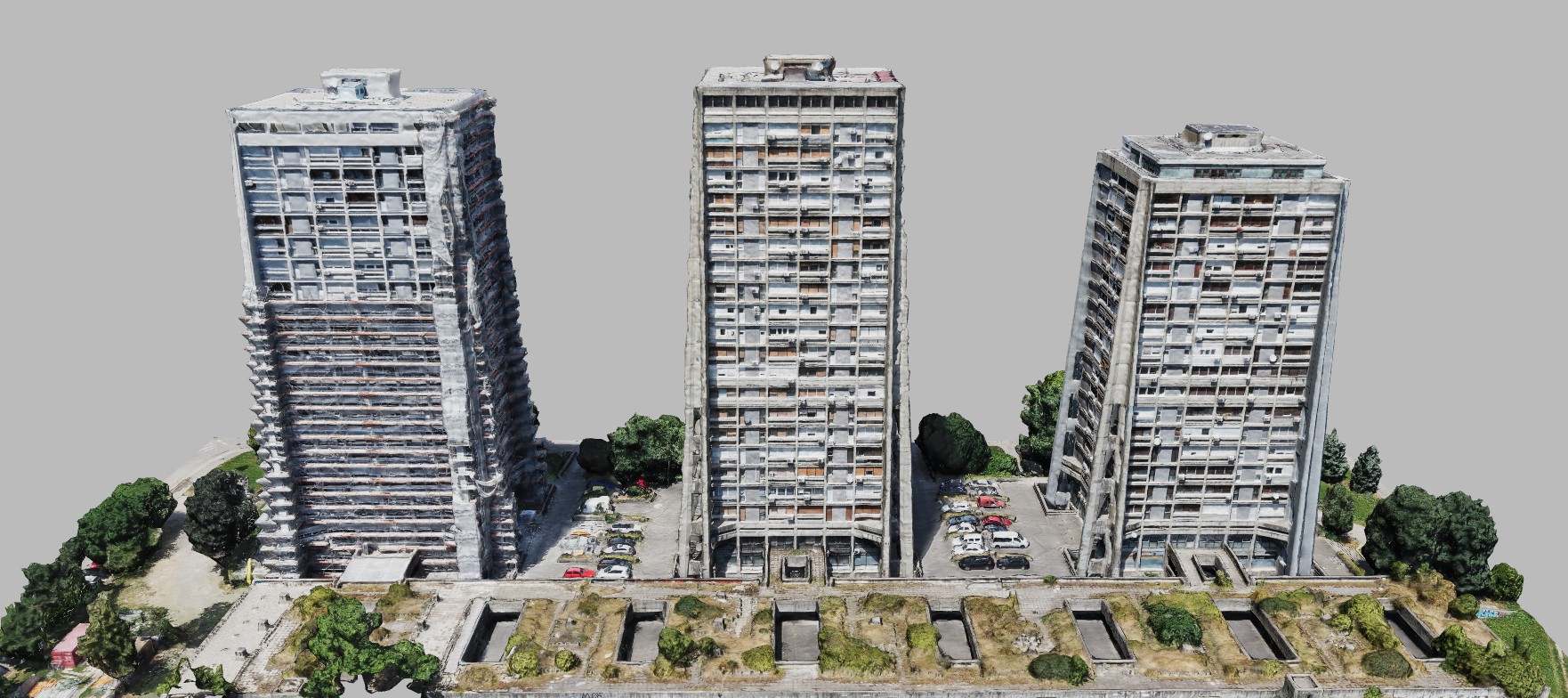
Slijedeća postaja šetnje bile su “Rakete”, stambene zgrade koje su građene tokom 60-ih godina prema projektu studija Centar ’51 arhitekata Berislava Šerbetića, Ljube Ivete, Vjenceslava Richtera i Olge Korenik. Izgradnja nebodera bila je završena 1968. godine. Prvotni projekt je nakon potresa u Skoplju 1963. bio modificiran kako bi zgrade izdržale potencijalni potres na svom području. Najviša od tri zgrade visoka je 70 metara. U početku su sva tri nebodera trebali biti iste visine, ali je uočeno kako dva vanjska presjecaju put TV i radio-odašiljačima, pa su sagrađeni do primjerene visine. Rakete plijene pažnju ne samo svojom visinom već i zanimljivim imenom (koje prikladno opisuje njihov izgled). Pri tome valja uočiti da šetalište Jurija Gagarina (prvog čovjeka koji je zakoračio u svemir) završava upravo kod njih, a incijativom stanara lokalnog mjesnog odbora novouređeni park s južne strane zgrade je nazvan Lajka prema prvom psu koji je putovao u svemir.
Jedna od manje poznatih strana Raketa je njihova terasa koja se nalazi s južne strane i izuzetno je zanimljivo mjesto svojim kolažem otvora za ventilaciju, stepenica i poludivljeg raslinja među kojima se nalaze ugodna mjesta za kavu, razgovor s prijateljima, igru s djecom …
Stigli smo i do Slavonske avenije, nekadašnjeg “Autoputa” odnosno Avenije bratstva i jedinstva, građene krajem 40-ih i početkom 50-ih godina. S južne strane se nalazi Cvjetno naselje arhitekta Vladimira Antolića, jedan od najboljih primjera naselja obiteljskih kuća moderne arhitekture. Naselje se počelo graditi 1939. godine, a dovršavalo se u godinama nakon Drugog svjetskog rata. To je prava oaza ugodnog stanovanja s obiteljskim kućama višeg standarda na mirnoj lokaciji usred gradske buke i prometa.
Nedaleko od potoka se nalazi i poslovni centar nekad znan kao Hypo centar (nazvan po Hypo banci koja je financirala njegovu gradnju, međutim došla je na loš glas malverzacijama u koje je bio umiješan i tadašnji Predsjednik vlade Ivo Sanader), potom kao City plaza centar, a danas kao HoB centar. Sagrađen je 2007 po projektu arhitekta Thoma Maynea koji je uz ovaj centar projektirao i slična u Klagenfurtu, sjedištu već spominjane Hypo banke.
Iza zagrade nalazi se SRCE, Sveučilišni računski centar, zgrada je sagrađena 1974. po projektu arhitekta Aleksandra Dragomanovića. S njegove južne strane, gdje se danas nalazi parkiralište, je nekad bilo košarkaško igralište.
Usputno smo pogledali “Kockicu”, poslovnu zgradu koja je 1968. sagrađena za sjedište centralnih komiteta Saveza komunista Hrvatske i Saveza omladine Hrvatske te Glavnog odbora Socijalističkog saveza radnog naroda Hrvatske. 1961. bio je raspisan natječaj za projekt, na kojemu nije dodijeljena prva nagrada, nego dvije druge, od kojih je Ivo Vitić (autor izgrađene zgrade) dobio “prvu drugu”, a Boris Čipan i Petar Muličkovski iz Skopja “drugu drugu” nagradu. Realizacija se odužila zbog poplave Save 1964. godine. Umjetničke intervencije u reprezentativnom dijelu zgrade (predvorje, konferencijska dvorana itd.) koordinirao je Raoul Goldoni, zadužen i za staklo i za staklene elemente. Tapiseriju je radila Jagoda Buić, metalnu tapiseriju Dušan Džamonja, metalne reljefe Stevan Luketić, mozaike Edo Murtić i Zlatko Prica. Danas su u zgradi smješteni Ministarstvo pomorstva, prometa i infrastrukture i Ministarstvo turizma Republike Hrvatske. Zgrada je zaštićena kao kulturno dobro Republike Hrvatske.
Slijedimo i dalje tok potoka Kuniščaka koji je prolazio rubom nekadašnjeg savskog rukavca po kojem je taj cijeli dio Trnja nazvan Vrbik, a pogledom na karti se još uvijek uočava tipičan polukružni smjer pružanja ulica koje je prekinuo Autoput.
Voditelj šetnje Vanja uz pumpu za vodu (“Železni Francek”) na Trnjanskoj strugi, iza zgrade HRT-a. [SMK 2021.]
Šetnju smo nastavili pješačkim asfaltiranim putem koji prema urbanističkim planovima prolazi zamišljenim nastavkom ulice Prisavlje (nekada Šetalište Marxa i Engelsa), uz rub jedne od preostalih zelenih oaza Trnja, područja između tog puta i savskog nasipa u kojem se nalaze mnogi vrtovi.
Zgrada Hrvatske radiotelevizije je jedan od najmarkantnijih objekata tog dijela Trnja. Gradnja je započeta 2. travnja 1975., a sa stalnim radom se započelo 1988. kada je počelo i eksperimentalno emitiranje trećeg TV programa(Tv i radio su prije toga radili ua neadekvatnim objektima U Dežmanovom prolazu i Šubićevoj ulici. Doba gradnje nove zgrade upamćeno je kao razdoblje velikih projekata, poput Konferencije Pokreta nesvrstanih u Colombu 1976. i Mediteranskih igara u Splitu 1979. Već od 1983. postupno se dijelovi programa i tehnike sele u novi Dom na Prisavlju. Od sportskih događaja osamdesetih ostali su upamćeni prijenosi natjecanja na Zimskim olimpijskim igrama u Sarajevu 1984. i Univerzijade u Zagrebu 1987.
Nakon HRT-a stižemo do ulice Trnjanski nasip koja označava ulazak u Staro Trnje, najstariji dio Trnja u kojem se još mogu opaziti ostaci seoskog karaktera toga dijela grada. Jedini veći tvornički pogon u tom dijelu Trnja bio je pogon Tvornice alata Jedinstvo u čijem se prostoru veću duži niz godina nalazi klub Močvara, jedno od vodećih alternativnih mjesta za izlazak u gradu Zagrebu. U doba najvećeg razvoja industrije poslije Drugog svjetskog rata tvornica Jedinstvo je bila i jedan od pokretača za izgradnju stambenog naselja Gajnice (više pročitajte ovdje).
Močvara svoj nastanak duguje Udruzi za razvoj kulture (URK) koja je osnovana 1995., a tokom 1997. i 1998. godine djeluje utorkom (tzv. Urktorak) u Klubu studenata filozofskog fakulteta “Rupa”. Taj program je tada, unatoč nepovoljnom terminu od 18 do 22 sata i oskudnim produkcijskim uvjetima, bio neko vrijeme jedini prostor u Zagrebu gdje su se mogli čuti koncerti mladih alternativnih rock bendova. Dana 16. travnja 1999. otvorena je Močvara, u prostoru preuređenog zapuštenog diskonta pića u Runjaninovoj ulici, koji je udruga iznajmila. Već slijedeće godine, 2000., Močvara se seli u sadašnji postor koji joj je dodijelio vlasnik prostora Grad Zagreb.
Šetnja se nastavila prolaskom preko betonske “stepenice” koja markira podzemnu trasu potoka, a zatim smo prošli ispod Mosta slobode (sagrađen 1959.) i uz sportske terene Društva za športsku rekreaciju Trnje (nekad Partizan Trnje, osnovan 1958.) nastavili hod ulicom Trnjanski nasip koja je u to doba bila zatvorena radi građevinskih radova.
Na ne osobito uočljivom mjestu uz tu ulicu (pored kućnog broja 50) nalazi se neugledan objekt Ustave Kuniščak u kojem se nalazi ustava kojom se regulira tok vode koja stiže podzemnim tokom potoka. U slučaju visoke vode Save ustava zatvara tok vode prema rijeci kako bi spriječila povratni tok vode koji može uzrokovati poplavu u objektima uz potok prije ustave, a voda se skreće prema podzemnom toku otpadnih voda. Međutim, u slučajevima kao što je bio onaj 2020. kada je zbog jake kiše naglo ojačao tok potoka i naišao na zatvorenu ustavu (iako razina Save nije bila visoka) tada je to uzrokovalo poplavu u mnogim objektima koji se nalaze uz podzemni tok potoka Kuniščak i njegovih pritoka (npr Kraljevca koji je prouzročio poplavu u Dječjoj bolnici Klaićeva i Tehnološkom fakultetu). Više o tom slučaju pročitajte OVDJE i OVDJE.
Nakon ustave šetnja je krenula prema svojoj završnoj točci, ušću potoka, koje se ne vidi sa savskoga nasipa međutim do njega vodi ugažena stazica koja se odvaja niz nasip kod odmorišta s pumpom za vodu kod prvih zgrada Savice. Razina vode Save je bila u doba šetnje vrlo niska tako da smo mogli ući u početak cijevi kojom inače teče voda Kuniščaka i u kojoj se tada nalazilo samo blato. A puno je ljepši prizor predstavljao pogled niz i uz Savu, na život rijeke i svjetla velegrada oko nje.
Ušće Kuniščaka u Savu u ljetnom sušnom periodu. [VR 2021.]
Iako tokom šetnje niti u jednom trenutku nismo prošli nekom od ulica nazvanih po rijekama treba znati da se nekad na području Trnja nalazilo čak 67 ulica nazvanih po rijekama Hrvatske i okolnih krajeva (više o tome pogledajte u OVOM tekstu!). Zanimljivo je da prostorom Trnja u stvarnosti teku tek 4 stvarna potoka (Kraljevec i Kuniščak zapadno te Medveščak i Laščinčak istočno), sva 4 podzemnim trasama … ali, tu je i rijeka Sava!
Šetnju smo završili prigodnim razgovorom uz pivu u caffe baru “Ti i ja” u zgradi koja se nalazi na krajnjem zapadnom dijelu Savice. Kroz razgovor s vlasnikom čuli smo razne priče koje su vezane uz njegov lokal kojeg je otvorio u doba neposredno nakon gradnje te zgrade u kasnim 80-ima.
Mjesto završetka šetnje, kafić u najzapadnijoj zgradi Savice.. [SMK 2021.]
(Vanja)
Vezani tekstovi:
In a world in which development and technological growth prevails, radio and television have come to be the ultimate media sources.
Croatia was among the first countries in Central and Eastern Europe to establish a radio station - to be more precise - on 15 May 1926 . Croatian television made its appearance on the same date thirty years later and, at the time, it was perceived as quite the phenomenon.
The Beginnings
The earliest beginnings of the radio originated in America and Western Europe. In 1906, numerous tests were carried out throughout the United States and the first commercial radio station, KDKA in Pittsburgh, began scheduled regular broadcasts on 2 of November 1920.
Six years later, scheduled broadcasts were introduced in Canada, Great Britain, Australia, the USSR, France, Belgium, Czechoslovakia, Germany, Spain, Finland, Italy, Japan, Mexico, Norway, Poland, and in Croatia where Radio Zagreb was the first radio station to broadcast in Southeast Europe.
"Halo, halo! Ovdje Radio Zagreb!" were the first words broadcast live on the air on 15 May 1926, marking the beginning of radio broadcasting in Croatia.
22 April 1925 marks the first successful transmission of live pictures on television, although the fete was carried out at a distance of only a few meters. The transmission took place at a house in London where rather primitive, but, at the same time, sensational portable equipment was used to broadcast the first image ever on television.
By the mid 1940's there were 23 television channels. Although TV broadcasting was brought to a standstill during World War II, the development of television resumed immediately after the war ended. The 1950's saw tremendous progress in TV broadcasting, both in Europe and worldwide.
One of the veterans of Croatian television vividly described the beginning of television, notably in his hometown of Zagreb , as an "array of pictures whirling in the air above Europe". They traversed the skies over France, England, Italy, the USSR, but were invisible and unattainable to those who had no technical means of bringing them to the TV screen.
In the evening of May 15 1956, an image reached Zagreb from Vienna via Graz and Slovenia. The emergence of television was seen as a phenomenon on Croatian soil. All that was needed at the time was a transmitter repeater on the top of Mount Sljeme and a TV set at home. A daring creative spirit, the essential knowledge in radiophonics, minimal technical resources for the production of images and sound and the pure determination of the staff of Radio Zagreb ultimately led to the establishment of Television Zagreb. These TV pioneers relied on the modest output of radio transmitters and rudimentary basic equipment installed at the Tomislav Dom Hotel on Mount Sljeme just north of Zagreb.
Significant Years in HRT History
1924
In March 1924, a group of radio devotees from Zagreb formed the Zagreb Radio Club and elected Dr. Oton Kučera, an astronomer and physicist, as their first president.
One month later, the Radio Club began publishing a magazine called "Radio Sport". The magazine played an important role in promoting radio in Croatia. By then, the club had 136 members from Zagreb and other parts of Croatia.
The management of the Zagreb Radio Club sent a petition to the Government of the "Kraljevina Srba, Hrvata i Slovenaca (the Kingdom of SHS - Serbs, Croats and Slovenes) in Belgrade asking permission to "immediately set up a broadcasting station in Zagreb".
1926
The Government passed a statutory declaration for shareholder's rights in Radio Zagreb in March, after having granted the concession to a group of members of the Zagreb Radio Club (1925).
The convention of the newly found shareholder's company- Radio Zagreb was held in May. A board of directors consisting of 13 members was elected with Šandor A. Aleskander as President and Velimir Stiasny, an engineer, as Vice-President. The Managing Committee consisted of Dr. Ivo Ražem, Dr. Ivo Stern, Dr. Rudolf Rodanić, and Eng. Dragutin Joachimsthal .
At 8:30 p.m. on 15 May 1926, beginning with the sounds of the Croatian National Anthem and an announcement read by Božena Begović, followed by a speech by Dr. Stern, Radio Zagreb was heard for the first time on the frequency MW 350 m. That night, the listeners were able to hear the radio station's official bulletin, music by L.v. Beethoven, J. Haydn, F. Chopin, J. Ph. Rameau, and C. Saint-Saens, concluding with a 15-minute news program.
The first on-site broadcasts began in the autumn, while the first live coverage took place at the unveiling of J.J. Strossmeyer's monument in November. Later that month, two more live broadcasts of the operas, "The Sea" and "The Rusalka" were aired from the Croatian National Theatre. It continued with broadcasts of the masses from St. Mark's and other churches.
By December, Radio Zagreb was among the first radio stations in Europe to invite public participation in the creation of original manuscripts for radio plays.
1927
International cooperation and exchange of programs with different radio stations began in February 1927. Radio Zagreb retransmitted a program from the USA, which was transmitted by a short-wave radio station at Schenectady. In March, based on a contract with the Management Board of RAVAG, Radio Zagreb linked up via telephone cables to broadcast Radio Vienna's gala concert to commemorate the centennial anniversary of Ludwig van Beethoven's death. The same concert was broadcast by Radio Prague and Radio Warsaw.
Radio Zagreb established good relationships and maintained intensive cooperation with Radio Prague, Radio Warsaw, Radio Budapest, and Radio Berlin.
In April, the first Croatian radio drama "The Fire", by Ivo Šrepel was broadcast by Radio Zagreb. The first live broadcasts of football matches began in the summer, followed by motor races and other sporting events.
1928
Radio Zagreb's first broadcast outside of Zagreb was aired from the city of Varaždin with "Miss Peotica", by B. Širola. A broadcast from Osijek followed, as well as broadcasts from other Croatian towns and regions.
At a conference in Lausanne, at the beginning of June, Radio Zagreb became a full member of ITU (the International Telecommunication Union).
1931
A gala concert to celebrate the fifth anniversary of Radio Zagreb was held in May 1931 at the Croatian Music Hall in Zagreb. The concert was broadcast live by Radio Budapest, Czechoslovakian radio stations, Radio Ljubljana, which began broadcasting in 1928, and Radio Belgrade, which began broadcasting in 1929.
1934
The radio transmitter from the Upper Town of Zagreb was relocated to the shores of the river Sava, where Radio Zagreb had already erected a new system of antennae and a new building. Meanwhile, at an adapted concert studio in the centre of town, the first recordings were made on "soft records" using Philips technology.
1940
The Government nationalized the property of the shareholder's company - Radio Zagreb, and a new Managing Board led by Vladimir Kovačević took over the radio station. The Government authorities of what was then the Banovina of Croatia, made it possible for the radio station to acquire new equipment and to move into a new, considerably larger premises at the beginning of November.
During the year, the number of employees rose significantly. The members of the Orchestra doubled in number and, at the same time, the members of the Tamburitza Group and Dance Orchestra became full-time employees of the radio station.
1942
The transmitter in Zagreb was upgraded to 10 kW. Local radio stations Dubrovnik, Sarajevo, and Banja Luka also began broadcasting.
1943
A local radio station in Osijek started broadcasting.
1945
Radio Split began broadcasting in April, while Radio Rijeka went on air in September. Radio Zagreb 2 also started broadcasting.
1949
A 135 kW Radio Zagreb transmitter at Deanovac was put into operation.
1950
The local Radio Zagreb 2 stopped broadcasting.
1951
Radio Zagreb moved into its new premises at 4, Jurišićeva Street.
1953
Radio Sljeme began broadcasting in the Zagreb region.
1954
The world famous string ensemble "Zagreb Soloists" began performing under the leadership of Antonio Janigro.
1956
On 15 May, which marked the 30 th anniversary of Radio Zagreb, the first TV transmitter began operating from the Tomislav's Dom Hotel on Mount Sljeme. It retransmitted RAI UNO programs.
The first live TV broadcast from the gala opening of the Zagreb Fair was aired on 7 September, while the first test programmes of Television Zagreb were broadcast on 29 November.
1957
In May, the first live TV coverage of a sports event took place from the stadium at Maksimir Park. A soccer game between Italy and Yugoslavia was successfully broadcast. It was the first time a Marconi OB van equipped with three cameras and image and sound transmission equipment was used.
The first radio transmitter on Mount Sljeme also began broadcasting radio programs.
1958
The very first Croatian TV play, "The Search", by Krešo Novosel was broadcast in January.
The TV studios moved to new premises at 20, Šubićeva Street.
1961
Radio Pula began broadcasting on New Year's Day.
1962
A large TV studio was set up in the Worker's Hall.
Transistor technology was introduced and a part of a foreign satellite program was retransmitted by Radio Zagreb for the first time.
1964-1965
Radio Zagreb underwent programming and organizational restructuring, which created three separate radio channels: Radio Zagreb 1, Radio Zagreb 2, and Radio Zagreb 3. Each channel had separate editorial boards.
During this and the following year two new TV OB vans were acquired.
1966
A 10 kW VHF TV transmitter was set up on Mount Sljeme and Channel 2 of Television Zagreb began test broadcasts with occasional programs in color. Radio Zagreb and Television Zagreb, respectively, celebrated their 40th and 10th anniversaries.
Programs produced by Radio Zagreb and other local stations were broadcast by 38 SW transmitters with a total power output of 254 kW, and by 13 transmitters and translators with a total output of 90 kW.
On the other hand, TV programs were being broadcast by 15 transmitters and translators with a total output of 52 kW.
1967
In line with a decision adopted by the European Broadcasting Union, the Zagreb TV Centre became the Eurovision Technical Centre for the entire JRT - an umbrella organization of Radio-Televisions in the Socialist Federative Republic of Yugoslavia.
1968
Radio Zadar began broadcasting, while Television Zagreb transmitted a pop music concert from the sea resort of Opatija - live and in colour for the first time.
1972
Channel 2 of Television Zagreb began permanent broadcasting.
1975
Television Zagreb programming was aired in colour and the TV Center in Miramarska Street (SBF) was put into operation. The year was also marked by the beginning of daily news broadcasts. "The Chronicle" and "The Zagreb Panorama" brought coverage of regional, communal, and urban life in Zagreb, Osijek, Rijeka, Split, Varaždin, Bjelovar, Sisak, Karlovac, and Gospić.
1976
Radio Zagreb 1 began broadcasting around the clock and new TV studios were opened in Rijeka and Osijek. The 50 th anniversary of radio and the 20 th anniversary of Television were celebrated.
Radio Zagreb programs, along with those of local radio stations were now being broadcast by 39MW transmitters with a total power output of 626 kW and 22 VHF transmitters and translators with a total power output of 158 kW. By this time, 75 transmitters and translators with a total output of 174 kW were transmitting Television Zagreb programming. By July a project to modernize regional TV studios was well underway. The studio of Radio Rijeka was the first to undergo reconstruction for the needs of television and radio broadcasting.
1977
Television Zagreb introduced an electronic news gathering system (ENG), and a new TV studio was built in Osijek.
1979
A local TV studio was opened in Split.
1983
The first TV production studio was installed at 3, Prisavlje.
1986
A new MW transmitter with an output of 1200 kW began broadcasting in Zadar.
1988
The new Broadcasting Centre at 3,Prisavlje became a permanent domicile for the entire radio and television production, although parts of some programs had been produced there since 1983.
Channel 3 of Television Zagreb began broadcasting.
1990
On the occasion of the Eurovision Song Contest in Zagreb, the EBU transmitting/receiving satellite earth station, as part of the Eurovision Satellite Transmission Network, was set up at 3, Prisavlje.
Teletext was introduced as a permanent TV service.
In June, the Croatian Parliament adopted an act to rename Radio-Television Zagreb to Croatian Radio-Television (Hrvatska radiotelevizija: HRT ).
1991-1992
The period from July 1991 to February 1992 was marked by a brutal aggressive war waged against Croatia. During the war, 80% of Croatia's transmitters and more than 30 TV translators were either occupied or damaged - some were totally destroyed. The TV transmitter on Mount Sljeme was hit by a missile at 4:10 p.m. on 16 September 1991. Although the majority of transmitters were damaged, they continued to transmit with reduced power from reserve locations until they were repaired in 1992 - something that makes HRT proud of its technical staff.
1993
As one of the successors to the former Yugoslav Radio-Television (JRT) umbrella organization, the HRT gained full "active" membership in the European Broadcasting Union (EBU).
1994
In October, Croatian Radio News was aired from the HRT Broadcasting Centre at Prisavlje.
1995
In February, the main controls room at Å ubićeva Street was relocated to the new main controls room at Prisavlje. This meant that all three channels of Croatian Radio, alongside Radio Sljeme, were aired from the new HRT Broadcasting Centre. On 4 May Radio Okučani began broadcasting, less than two days after the Croatian military operation 'Flash' liberated this occupied town.
Following the Croatian military operation 'Storm' on the 4 of August, Radio Knin and TV Marjan Express began broadcasting at 5 a.m. on the 6 of August. Other stations in the former occupied territory, such as Slunj and Korenica, also began transmitting programs after the military operation 'Storm'. A number of RTV buildings and translators were repaired, as well as transmitters on Ćelavac and Lička Plješevica.
1996
In February, Croatian Radio-Television took over the (until then occupied) transmitting facilities in Belje in Croatia's eastern region of Slavonia.
1997
In January, Radio Sljeme brgan broadcasting around the clock; in October Channel 2 of Croatian Radio, and in December Channel 3 of Croatian Radio.
In September, Croatian Radio began test broadcasts of all three of its programs using digital technology simultaneously via a T-DAB 800 W transmitter installed on Sljeme.
The first satellite earth station at Prisavlje was put into operation in November for broadcasting all three Croatian TV channels and Channel 1 of Croatian Radio, on the Eutelsat Hot Bird 3 satellite, covering Europe and the Middle East.
1998
Channel 2 of Croatian Television began using panoramic cameras to air tourist destinations.
The EBU satellite earth station for program exchange was upgraded to digital technology. This was done concurrently with the rest of the EBU-TV membership. The new TV OB van RK8 became operational and was used to broadcast the visit of Pope John Paul II to Croatia.
1999
In October, all three channels of Croatian Television began broadcasting around the clock.
2000
The construction of the new Block 30 building at Prisavlje was completed. The building's main features include the offices of the HRT's Senior Management and large state-of-the-art studios.
2001
HRT celebrated it 75 th anniversary of radio broadcasts and 45 th anniversary of television broadcasts.
2002
In line with a decision adopted by the Croatian Government in April, the HRT was divided into two entities - the public broadcasting organization HRT and the trading company OIV (Network & Transmitters). In this process, the HRT lost its Channel 3. However it retained and expanded programming on the 3rd satellite channel under the name HRT PLUS.
2003
In May, "Voice of Croatia", a radio program for Croatians abroad in Croatian, English and Spanish, began airing around the clock. The program began airing in 2001, but in a more condensed form.
Later in the year, coinciding with the third Papal visit to Croatia, Croatian Television began using its first SNG vehicle.
"Picture of Croatia", a 24-hour TV program (3 x 8 hours) for North and South America, Australia, and New Zealand, went on the air in September. This program was launched in 2001 as a 3-hour broadcast to North America only.
2004
Apart from fully equipping its new recording studio and obtaining two modern (multi-track) digital OB vans, Croatian Radio also built an integrated system for the acquisition, production and broadcasting of 5 channels - something that included the digitalisation and unification of the existing sound & archive libraries.
Croatian Television equipped two large digital production studios, obtained two modern digital OB vans and completely digitalized acquisition, production and broadcasting in the News & Current Affairs Department.
2005
At the beginning of 2005, HRT introduced Project IPIS, an integrated computerized business system, designed to reorganise administrative, financial, and production processes at all organizational levels.
Both of the two new large studios housed at Block 30 became fully operational.
By the end of the year, the Technical Departments of Croatian Radio and Croatian Television had fulfilled most of their five-year Modernization & Digitalisation Projects (begun in 2001).
HRT Today - at the age 80 (radio) and 50 (television)
The HRT is a national public service broadcaster, mainly financed by viewer/listener license fees and advertising. It has well exceeded a million radio and television listeners/viewers. Its headquarters, alongside Croatian Radio, Croatian Television and Music Productions, are housed at the new building complex at 3, Prisavlje, on the bank of the river Sava, just south of the centre of Zagreb.
The HRT has seven regional radio stations and five regional TV centres. It has three national and seven regional radio channels, two terrestrial TV channels and one satellite TV channel broadcasting in Croatian. Since 1997, HRT radio and television programs have been also broadcast digitally via satellite throughout Europe. The two international programs, "Voice of Croatia" on radio and "Picture of Croatia" on television, are broadcast throughout Europe and overseas, notably in countries with large Croatian communities, such as Australia and the Americas.
The HRT Music Productions Department together with the Symphony Orchestra, Choir, Big Band and Tamburitza Orchestra play an important role within the organisation.
The good reception of radio and television programs (viewer/listener surveys) is enabled by a combined system of transmission networks and terrestrial transmitters supported by a diverse and comprehensive infrastructure.
Since January 1993, Croatian Radio-Television has been an active member of the European Broadcasting Union (EBU) - the largest organisation of Public Service Broadcasters in the world.
Significant achievements, which need to be remembered on the occasion of the 80 th anniversary of radio and the 50 th anniversary of television, include the following major projects: the European Figure Skating championships - Zagreb 1974, Colombo 1976, the Mediterranean Games-Split 1979, World Cup Gymnastics 1982, the Winter Olympics in Sarajevo 1984, the University Games-Zagreb 1987, the European Basketball Championship 1988, the Eurovision Song Contest - Zagreb 1990, the European Athletics Championships 1990, the Papal visits to Croatia in 1994, 1998, and 2003, two Central and South-East European summits in Zagreb in 2000 and 2005 and two World Skiing Cup competitions near Zagreb in 2005 and 2006.
The HRT also boasts success in its programming, supported by the numerous international radio and television awards its has received. Over the years, the Croatian Radio's Drama Program alone won 30 awards at reputable festivals such as PRIX ITALIA, PRIX FUTURA, PRIX JAPON, PREMIO ONDAS, PRIX CIRCOM and Croatia's own international festival PRIX MARULIC.
However, the most memorable contribution made by the HRT (radio and television) was its coverage of Croatia 's War of Independence at the beginning of the decade. Several journalists, cameramen and other radio and television employees were killed or wounded while filing their reports from the battlefields in occupied Croatian territory. Even the HRT Broadcasting Centre in Zagreb was under enemy fire at one stage.
Dnevnik HRT (Diary HRT) is the main news programme of the Croatian public broadcasting company Hrvatska radiotelevizija (HRT). Earlier this month, and broadcast daily at 19:00, the programme moved to a new studio in Zagreb’s Prisavlje. To coincide with the move, the format of the show has been revamped.
The hosts of the new Dnevnik are Marta Šimić Mrzlečki and Đurica Drobac – both well respected presenters in Croatia. They are joined by journalist Vlatka Kalinić.
“Studio 12 is a modern studio that meets the latest world standards, and is located on the famous television square, where generations of journalists and presenters have met every day,” explains Igor Medić, Public Relations Officer for HRT. “We wanted to open the new studio not only to modernise the look of the flagship programme, but also deliver news and current affairs in a superior quality for our audience. Something that is, of course, important to a public service broadcaster.”
The new studio has been under construction for three years, and covers an area of more than 320 square metres, which is five times larger than the old one. It has been designed by Nenad Borgudan, who combines award-winning architecture with being the lead guitarist of the group Detour.
The installation, which was carried out by HRT’s own technical department, includes two AOTO video walls measuring 20 and 22 square metres.
“We have also included LED lighting in order to be more ‘green’ friendly,” states Medić.
He goes on, “There are four Sony HDC-3500 cameras, plus a Sony HDC-50 on Spidercam in the studio. We are utilising a Stype tracking system and two VizRT graphics engines. Although the equipment is new for Studio 12, this combination of Stype, spidercam and VizRT was used with great effect earlier this year for coverage of the Croatian elections.”
In the production gallery, a Grass Valley Karrera vision mixer has been installed. The communication system is Riedel Artist.
“At a time when news from around the world is more necessary than ever, this new facility will enable HRT to bring the details to its viewers in a way that is both informative and, through the use of modern technology, easy to illustrate,” says Medić.
Posjet Hrvatskoj radioteleviziji (HRT) u sklopu akcije “Tura kultura” održan je 24.02.2023., a vodila ga je Nada Chedid, djelatnica Radne jedinice Marketing i komunikacije, uz sudjelovanje Dražena Polančeca iz odjela Upravljanje poslovnim objektima. Za posjet je osobito zaslužna Ira Karlović, urednica u redakciji “Dobro jutro Hrvatska”, koja je dala početnu ideju za posjet i sudjelovala u organizaciji na čemu joj se posebno zahvaljujemo. Posjetu je prisustvovalo 33 posjetitelja.
Posjet je započeo zajedničkom fotografijom posjetitelja ispred Mramorne porte na južnoj strani HRT-a i susretom s voditeljicom posjeta koja je dala osnovne podatke o HRT-u.
S doživljajne strane, televizija kao medij (pa tako i HRT) kreira privid savršenog svijeta. Televizijski studiji su “nesavršena mjesta” prepuna kulisa iza kojih stoje goli betonski zidovi, nosači scenografije, kamere i kamermani, osvjetljivači, snimatelji zvuka, scenografi i kostimografi, novinari, spikeri i voditelji, režiseri, gomila elektronske opreme, kablova … Hodajući kroz televizijski studio sa svojim pomalo oštećenim rubovima scenografskih elemenata, električnim žicama zalijepljenim za pod ljepljivom trakom, hrpom reflektora koji vise odasvud teško je vjerovati da u njima nastaju onako besprijekorni interijeri kakve gledamo svaki dan u informativnim, obrazovnim, kulturnim i svim drugim emisijama. Emisije poput središnjeg Dnevnika, “The Voice”, “Zvijezde plešu”, “A strana”, “Volim Hrvatsku”, “Milijunaš”, prigodne novogodišnje emisije, sve izgledaju kao da se dešavaju u ogromnim prostorima beskonačnih dimenzija prepunim gledatelja, zvukova, svjetla, atmosfere … no, stvarnost je drukčija. Iz tih nesavršenih studijskih prostora i elemenata mnogobrojni televizijski djelatnici osiguravaju da televizijski signal prema svim gledateljima nosi “savršeni svijet” glamura, obaviještenosti, bezbrižnosti i zabave. To je magija TV industrije koja stvara iluziju savršenosti i luksuznog dekora. Ovaj je posjet bio idealno mjesto da dokučimo svijet s druge strane ekrana i razumijemo kako on postaje ono što svakoga dana gledamo na malim ekranima.
Sudionici posjeta HRT-u u sklopu akcije “Tura kultura” 24.02.2023. [VR 2023.]
S organizacijske strane, Hrvatska radiotelevizija je javna ustanova koja za svoj rad odgovara Saboru i njegovom Odboru za elektroničke medije. HRT je jedina televizijska kuća koja se financira iz TV pretplate (još od 1961.), u skladu s principom financiranja koji vlada i u drugim zemljama EU, ali i jedina koja mora slijediti stroga pravila javnog servisa i garantirati zastupljenost svih vrsta sadržaja: informativnog, zabavnog, kulturnog, školskog, dječjeg, programa za treću dob i branitelje, religijskog, poljoprivrednog, regionalnog. Za razliku od toga, komercijalne TV kuće mogu u svojim programima proizvoditi/emitirati programe koji će im prvenstveno donositi dobit.
Kako bi vam posredovali potpunu informaciju citiramo dio teksta sa web stranice HRT-a:
Djelatnost, funkcija i sadržaj javnih usluga, financiranje, upravljanje, nadzor i način rada uređuju se Zakonom o Hrvatskoj radioteleviziji i propisima donesenim na temelju toga Zakona. Osnivač Hrvatske radiotelevizije jest Republika Hrvatska, a osnivačka prava ostvaruje Vlada Republike Hrvatske.
Hrvatska radiotelevizija obavlja djelatnost pružanja javnih radiodifuzijskih usluga te joj Republika Hrvatska za to osigurava samostalno i neovisno financiranje sukladno Zakonu o Hrvatskoj radioteleviziji i pravilima o državnim potporama za javne radiodifuzijske usluge.
U obavljanju svoje djelatnosti Hrvatska radiotelevizija neovisna je o svakome političkom utjecaju i komercijalnom interesu. Na Hrvatsku radioteleviziju primjenjuju se i odredbe Zakona o elektroničkim medijima.
Tijela Hrvatske radiotelevizije su: Glavni ravnatelj HRT-a, Ravnateljstvo HRT-a, Nadzorni odbor HRT-a i Programsko vijeće HRT-a.
Hrvatska radiotelevizija ima tri nacionalne radiopostaje (Prvi program Hrvatskoga radija (HRT – HR 1), Drugi program Hrvatskoga radija (HRT – HR 2) i Treći program Hrvatskoga radija (HRT – HR 3)), osam regionalnih radiopostaja (HRT – Radio Dubrovnik, HRT – Radio Knin, HRT – Radio Osijek, HRT – Radio Pula, HRT – Radio Rijeka, HRT – Radio Sljeme, HRT – Radio Split, HRT – Radio Zadar) i osam regionalnih centara, četiri zemaljska televizijska programa (Prvi program Hrvatske televizije (HRT – HTV 1), Drugi program Hrvatske televizije (HRT – HTV 2), Treći program Hrvatske televizije (HRT – HTV 3) i Četvrti program Hrvatske televizije (HRT – HTV 4)). Od 1997. nacionalni radijski i televizijski programi Hrvatske radiotelevizije također se emitiraju u digitalnoj tehnici preko satelita za cijelu Europu.
Dva međunarodna programa, program HRT – Glas Hrvatske i HRT Int. – Program za Hrvate izvan RH, dostupni su putem satelita u cijeloj Europi, a putem multimedijske usluge HRTi u cijelome svijetu.
U svojemu sastavu Hrvatska radiotelevizija osim televizije, radija i internetskoga portala ima i Simfonijski orkestar HRT-a, Jazz orkestar HRT-a, Tamburaški orkestar HRT-a i Zbor HRT-a. Simfonijski orkestar HRT-a postao je zaslužni promicatelj hrvatske kulture u svijetu. Jazz orkestar HRT-a djeluje bez prekida već više od 60 godina, što je rijetkost u svjetskim razmjerima u povijesti velikih orkestara. Tamburaški orkestar HRT-a ima vrlo važnu ulogu u promicanju glazbene i kulturne prepoznatljivosti Hrvatske u svijetu. Zbor HRT-a osobitu pozornost posvećuje njegovanju hrvatske glazbene baštine.
25. svibnja 2012. arhiva televizijskoga programa, arhiva radijskoga programa i zbirka notnih zapisa glazbene proizvodnje dobili su status kulturnoga dobra, što s još jednog aspekta pokazuje veličinu i vrijednost Hrvatske radiotelevizije.
Treba napomenuti da se prihodima iz pretplate ne financira samo HRT već i tvrtka Odašiljači i veze koja se brine o distribuciji programa putem odašiljača ne samo za HRT već i za sve druge radijske i televizijske programe. Dugi niz godina ta je tvrtka bila dio HRT-a i tvrtke prethodnice Radio televizije Zagreb (RTZ). Pristupanjem Hrvatske Europskoj uniji i promjenom zakonske regulative ona je izdvojena kako bi svi proizvođači TV programa bili u ravnopravnom položaju na tržištu distribucije TV signala. Iz pretplate se također izdvaja dio prihoda u Hrvatski audiovizualni centar (HAVC) koji financira odabrane projekte na području filma (igranog, dokumentarnog, animiranog).
Sudionici posjeta HRT-u sa voditeljicom Nadom Chedid za uvodne riječi na početku gostovanja. [VR 2023.]
Nakon uvodne prezentacije pogledali smo 20-minutni dokumentarni film “Vremeplov: Adresa Prisavlje 3” autorice Anamarije Ganza Habjan koji prikazuje povijest HRT-a kroz prizmu prostora u kojima se proizvodi TV program. Nekad su se radijski i televizijski programi pripremali, snimali i emitirali iz različitih prostora smještenih diljem Zagreba, na Markovom trg, Bundeku, Dežmanovom prolazu, Jurišićevoj ulici, Šubićevpj ulici te na Fakultetu strojarstva i brodogradnje. Već u 60-im godinama prošloga stoljeća počelo se razmišljati o objedinjavanju svih službi na jednome mjestu, na lokaciji gdje se HRT nalazi i danas, na Prisavlju. Međutim, zbog niza nesretnih okolnosti (ekonomska kriza 70-ih, promjene planova, promjene u tehničkim zahtjevima za zgrade toga tipa) do početka gradnje došlo je tek u ranim 80-im godinama prošloga stoljeća. Prvi prostori bili su osposobljeni za rad 1983, a većina TV službi se preselila na Prisavlje za Univerzijadu 1987. godine.
Dokumentarni film na izuzetno je zanimljiv način prikazao epopeju izgradnje zgrade na Prisavlju. Naime, tijekom prvih godina priprema odabrani su arhitekti posjećivali strane televizijske kuće i učili na primjerima njihovih objekata. Sukus njihovih iskustava može se sažeti u činjenicama da su najuspješniji objekti kružnih formi koje olakšavaju komunikaciju među različitim službama. Zanimljivost je da i golema tehnička infrastruktura gotovo uvijek zauzima gotovo jednak prostor kao i programske službe i studiji. Grupa projektanata razrađivala je početne ideje, a sa svakim novim tehnološkim razdobljem morala ići u korak s promjenama. Kada su napokon počeli radovi i kada je na velikoj parceli na kojoj su dotad bili samo vrtovi izrasla nova građevina, već se tada moralo početi razmišljati o nadogradnjama, izmjenama i dopunama projekta. Jer kod velikih sustava ne postoji “završetak” već kontinuitet u skladu s tehnološkim mjenama.
Nakon odgledanog filma krenuli smo napokon u svijet radija i televizije …Dugačkim smo hodnikom pristigli do prostora u kojem se nalazi Arhiv HRT-a. Ondje je postavljena izložba koja prikazuje povijest HRT-a, nekadašnjeg Radio Zagreba, potom RTZ-a, a naposlijetku i HRT-a. Osobito su dojmljive bile fotografije koje su nas podsjetile na mnoge zaboravljene emisije, a koje nas emocionalno odvode u davna vremena djetinjstva, odrastanja, doba kada je televizija bila mnogo važnija nego danas, jedini pravi prozor u svijet, ali i faktor obiteljskog povezivanja npr nedjeljom oko ručka ili radnim danom navečer, za važnih događaja u politici, sportu …. Sve to, ali i još više možete vidjeti na web stranici Obljetnica.hrt.hr koju obavezno posjetite!
Jedan od hodnika na putu prema Arhivu u kojem se na njegovim zidovima nalazi povijest HRT-a majstorski prezentirana kroz mnoštvo podataka i fotografija. [DF 2023.]
Jedan od najpoznatijih režiera zabavnih i igranih emisija HRT-a Anton Marti. [DF 2023.]
Prizor iz serije “Crno-bijeli svijet” sa glavnim glumcem, Filipom Riđičkim. [VR 2023.]
Arhiv je mjesto u kojem se čuvaju snimljeni materijali, zvučni i slikovni. U prvim se godinama TV program emitirao uživo, bez spremanja na filmsku i magnetnu vrpcu. Bilo je to doba improvizacija i nemogućnosti ispravljanja grešaka. Nakon toga je uslijedilo analogno doba, doba vrpce. Takvi se materijali već dugi niz godina postepeno migriraju u digitalni oblik i arhiviraju, pregledavaju i označavaju ključnim riječima. Na taj način ih se trajno štiti, lakše pretražuje i koristi.
Za vrijeme posjeta arhivu. [DF 2023.]
Nakon Arhiva pošli smo nepreglednim hodnicima u drugi dio zgrade u kojoj se nalaze prostori Hrvatskoga radija. Svratili smo u studio u kojem se snimaju radio-drame. Nekada je njihova produkcija bila vrlo velika i Radio Zagreb je bio priznati proizvođač takvih programa dok je danas njihov broj znatno manji. Posjetili smo “gluhu sobu” u kojoj se snima govoreni materijal i koji je neugodan prostor opremljen golemim komadima spužve koja upija odjek i sve vanjske zvukove. Posjetili smo i studio u kojem se nadosnimavaju razni efekti. Ovdje se nalaze čaše, šalice, pribor za jelo kojim se zvecka, pisaće mašine kojima se demonstrira život ureda, razne spravice kojima se proizvode razni drugi zvukovi.
Slijedeća postaja nam je bio studio gradskog radija, Radio Sljemena. Ta radio postaja ove godine slavi 70 godina svojeg postojanja pa tim povodom sakuplja materijale iz svoje prošlosti kojima će obilježiti godišnjicu. A mi smo naš posjet studiju obilježili kratkim razgovorom s ton majstorom i glazbenom urednicom te smo mahnuli i voditeljici koja se nalazila “u eteru”.
Emitiranje programa Radio Sljemena s posjetiocima za leđima. [SM 2023.]
U “gluhoj sobi” u kojoj se snimaju govorni dijelovi radio drama. [VR 2023.]
Nakon radija posjetili smo televizijske prostore. Prva na redu bila je služba međunarodne razmjene koja prati strane programe i dogovara preuzimanja njihovih priloga odnosno nudi HRT- ove. Odmah do tih prostora nalazi se i velika redakcija Informativnog programa koja od samih početaka rada u toj zgradi radi u obliku otvorenog prostora pri čemu su njeni djelatnici grupirani po aktivnostima i emisijama koje stvaraju, od Dnevnika, “Otvorenog”, “Nedjeljom u 2″ i drugih informativnih emisija.
Do studija u kojem se snima Dnevnik trebali smo se spustiti na drugi kat zgrade, u dio prostora bivšeg unutarnjeg trga koji je nekad bio caffe bar u kojem su se djelatnici i vanjski suradnici okupljali na dogovorima i druženjima. Sada je to, nažalost, mjesto za studio i prolazni hodnik.
Studio u kojem se snima središnji Dnevnik u naravi je puno manji nego što izgleda na televizijskom ekranu. Naravno, tu su veliki stolovi, pozadine na koje se emitiraju filmski materijali, operater središnje kamere koja zumira razne prizore … a tu su i Darko i Slavko, dva čovjeka-sjene, koji redatelju i kamermanima Dnevnika služe kao manekeni kod postavljanja kadrova. Zanimljivost Dnevnika je da se vremenska prognoza snima ranije, u drugom studiju, a sam prijelaz sa sportskih izvještaja na vremensku prognozu i obrnuto snima se u “real time-u”, uživo za vrijeme emitiranja Dnevnika.
U studiju iz kojeg se emitira TV Dnevnik. [DF 2023.]
Nova voditeljica TV Dnevnika 🙂 [DF 2023.]
“Blesimetar” koji pokazuje voditeljima tekst koji trebaju izgovarati. [DF 2023.]
Poslije informativnog glamura došlo je vrijeme da se spustimo u utrobu HRT-ove zgrade, među uređaje koji cijeli kompleksni i tehnički vrlo zahtjevni organizam drže na životu. U tom dijelu posjeta pridružio nam se Dražen Polančec iz odjela Upravljanja poslovnim objektima i ispričao nam najvažnije podatke o infrastrukturnom dijelu zgrade. Jedan od nužnih sustava je sustav klimatizacije odnosno grijanja. Pri tome treba imati na umu da u sklopu zgrade HRT-a postoji velik broj vrlo različitih “ekosistema”: Dok se novinari u uredima moraju osjećati ugodno u grijanim prostorima, istovremeno se voditelji emisija ili natjecatelji u kvizovima znoje pod svjetlima reflektora. Tu su i serveri, elektronski uređaji, kamere i ostala oprema koja se ne smije pregrijavati, a sama isijava veliku količinu topline.
Jednako važno je i napajanje električnom energijom, jer se ne smije desiti da nestane struje i program stane. Za to se brinu namjenski uređaji, tzv UPS-ovi, koji u slučaju nestanka struje sa jednog izvora automatski prebacuju napajanje na drugi odnosno pale agregate. Oni mogu pola sata održavati na životu najvažniju tehniku. Za vrijeme zagrebačkog potresa nije nestalo napajanja strujom, no za petrinjskoga jest. Tada je jedan od dva visokonaponska izvora ispao iz mreže pa je u službu stupio drugi.
Naravno, cijela ta problematika puno je složenija od ovih nekoliko rečenica. Niz upravljačkih sklopki, lampica, razvodnih ormara i mjernih instrumenata sugerira kako je riječ o vrlo složenoj tehnici koju mi, obični smrtnici neupućeni u inženjerske finese, teško možemo pojmiti.
Razgovor sa Draženom Polančecom iz odjela Upravljanja poslovnim objektima. [VR 2023.]
Kontrolna ploča sustava klimatizacije. [SM 2023.]
Uređaj za neprekidno napajanje (UPS) [VR 2023.]
Iz “podruma” instalacija ponovo smo izronili među medijske sadržaje, u skladište scenografije u kojem smo zapazili poznate scenografije dječjih emisija, lutrije. Zatim smo se, posve nenadano, našli u velikom studiju “Anton Marti” koji ugošćuje snimanja najvećih emisija. Ovdje se snimaju “A strana”, “Zvijezde pjevaju”, novogodišnje emisije, “Volim Hrvatsku”. Postavljanje scenografije za takve emisije je složeno i dugotrajno i kada se jednom složi onda se snima cijela serija, za cijelu godinu. Snimanja traju iz dana u dan i na taj se način se racionalno koriste resursi.
Veliki show programi često se snimaju po licencama stranih producentskih kuća, a doznali smo i kako su ugovorima o snimanju određeni i najsitniji detalji: npr. kako voditelj i sudionici moraju biti obučeni (u kojem stilu, a ne točno koje odjevne predmete moraju nositi), koje kadrove treba koristiti, kako se montira emisija, scenografija, odjavna špica i sl.
Naravno, uz veliki studio ide i sve drugo “veliko” – najveći broj reflektora, najviše ostale tehničke opreme …
… a u nešto manjem studiju snimaju se nešto “manje” emisije, lakše za produkciju. Tako smo za našeg posjeta vidjeli scenografiju “Milijunaša” i saznali da su u samo prva dva reda gledatelji živi ljudi, a oni iza njih su dodani u montaži. Neki od nas prisjetili su se i svoga sudjelovanja u nekadašnjem popularnom kvizu “Brojke i slova”.
U studiju “Anton Marti” rezerviranom za najveće produkcije. [SM 2023.]
Manji studio sa postavljenom scenografijom za kviz “Tko želi biti milijunaš?” [SM 2023.]
Šarenilo boja u jednom od kutaka scenografskog spremišta. [SM 2023.]
Iza tog smo studija stigli u tzv “virtualni studio” koji je zelene boje. Razlog tomu je što zelena i plava pozadina omogućuju najbolje montiranje virtualne pozadine. Kamere se namjeste da “ne vide” taj dio spektra i tako sve ono što je tih boja postaje “nevidljivo” te se kasnije dodaje u montaži. Takav način snimanja zahtijeva i posebno odijevanje izvođača. Naime, postoji anegdota da je jednom jedna voditeljica nosila haljinu na pruge koje su uključivale i zelenu boju te je tako na ekranu izgledala kao da ju je netko “izrezao” na kriške.
Naš smo posjet završili dolaskom u studio u kojem se snima svakodnevna mozaična emisija “Dobro jutro Hrvatska”, druge dnevne emisije te vremenska prognoza. U planu je bio i posjet garderobi u kojoj se čuvaju brojni odjevni predmeti i obuća svih vrsta i stilskih pravaca. Djelatnici ovdje proizvode i iz starih predmeta nove, a dio fundusa moguće je posuditi i vanjskim korisnicima. Nažalost, voditelj garderobe je u doba našeg posjeta bio zauzet i nije mogao provesti našu grupu kroz svoje carstvo.
Na samom smo kraju snimili još jednu zajedničku fotografiju i zahvalili smo se našoj voditeljici Nadi te Iri, bez koje ne bi ni bilo ovoga posjeta koji nas je proveo nepoznatom stranom radija i televizije.
U virtualnom studiju. [VR 2023.]
Jedan od kutaka spremišta za scenografije. [VR 2023.]
Sudionici posjeta HRT-u na njegovom kraju, u studiju u kojem se snima emisija “Dobro jutro Hrvatska”. [SM 2023.]
(Vanja)
Vezani tekstovi:
Zanimljive poveznice:
- Povijest Hrvatske radiotelevizije na web stranici HRT-a
- tekst Spikeri kroz povijest HRT-a na web stranici ObljetnicaHRT.hr
- niz tekstova pod naslovom Vremeplov HRT-a sa mnoštvom podataka o povijesti HRT-a na web stranici ObljetnicaHRT.hr
- web stranica HRT-a
- tekst na Wikipediji o TV seriji Televizije Zagreb Kuda idu divlje svinje
- tekst na Wikipediji o TV seriji Televizije Zagreb Naše malo misto
- tekst na Wikipediji o TV seriji Televizije Zagreb Gruntovčani
- tekst na Wikipediji o TV seriji Televizije Zagreb Kapelski kresovi
- tekst na Wikipediji o TV seriji Televizije Zagreb Smogovci
- tekst na Wikipediji o TV seriji HRT-a Crno bijeli svijet
- tekst na Wikipediji o TV seriji HRT-a Dnevnik velikog Perice
- tekst na Wikipediji o kvizu Televizije Zagreb Kviskoteka
- tekst na Wikipediji o redatelju Antonu Martiju
- tekst na Wikipediji o književniku i redatelju Zvonimiru Bajsiću
- tekst na Wikipediji o sportskom novinaru Mladenu Deliću
- tekst na Wikipediji o sportskom novinaru Mladenu Deliću
- kratki film na YouTube servisu sa scenama iz filma “Božji oklop” Jackieja Chana koje su 1986. snimane u Zagrebu (u sceni preskakanja Mosta slobode se vidi nedovršena zgrada HRT-a)
Art History Study Programme: Field Trip to Vukovar
On 23 May 2026, a field trip to Vukovar was held as part of regular classes in the courses 20th-Century Art, Museum Theory and Practice, and Research Methodology and Modalities of Writing about Art in the undergraduate Art History study programme. Four of the six third-year Art History students and eight of the eleven second-year Art History students participated.
The institutions in which the field trip activities took place were the Vukovar City Museum and the Vučedol Culture Museum. The following activities were carried out: at the Vukovar City Museum, classes were held as part of the permanent exhibition and the Bauer Collection exhibition. At the Vučedol Culture Museum, classes were held as part of the permanent exhibition.
The aim of the field trip was to introduce students to museums and current exhibition programmes and to provide them with an opportunity to analyse exhibitions for the purpose of writing a seminar paper. The following expected outcomes of the field trip were achieved: familiarising students with the activities of two important museum institutions of the complex and specialised type in eastern Croatia, respectively, and with the museological concept of their permanent exhibitions. Furthermore, students became acquainted with the styles, movements, artists and works of visual art of the 20th and 21st centuries, learned to recognise and identify 20th-century art styles and examples of modern and postmodern art. By visiting the exhibitions, students gained insight into the exhibition activities of top-level museum institutions and became familiar with different forms of museum communication, as well as with museological aspects of the interpretation of museum objects.
Asst. Prof. Daniel Zec, PhD
Field Trip Held as Part of the Course Croatian and Regional Economic History of the 19th and 20th Centuries
On 20 May 2026, as part of the course “Croatian and Regional Economic History of the 19th and 20th Centuries”, students visited the Belišće City Museum. Under the expert guidance of museum director Nada Đilas Bosanac, the students toured the museum exhibition dedicated to the industrial character of the settlement.
Belišće was founded in 1884 by S. H. Gutmann d. d. with the aim of exploiting Slavonia’s forest resources, which from the mid-19th century formed the basis of highly competitive business operations. The company developed its business by relying on intensive exploitation of timber resources and their industrial processing. Given the predominantly rural character of Slavonia in the 19th century, from the very foundation of Belišće its population consisted largely of an immigrant workforce connected with the industrial development of the settlement.
In this sense, the Belišće City Museum presents the development of the industrial colony, including the construction of residential buildings, supporting infrastructure and the railway network that connected forest operations with the surrounding civilian settlements. In order to maximise production, the company significantly developed various branches of supporting industry connected with wood production, particularly the chemical industry. A special feature of Belišće is the fact that even today a large share of the employed population works in the industrial sector.
Field Trip to Zagreb: Encounter with the Cyrillo-Methodian Heritage and the History of the Croatian Kingdom
On Tuesday, 10 March 2026, first- and second-year students of the undergraduate single-major and double-major study programmes in Croatian Language and Literature took part in a one-day field trip to Zagreb. The field trip was attended by students enrolled in the compulsory and elective courses Old Church Slavonic 2, History of the Croatian Literary Language and Slavic Scripts taught by Prof. Milica Lukić, PhD, and Asst. Prof. Vera Blažević Krezić, PhD, from the Chair of the History of the Croatian Language and Croatian Dialectology. The field trip focused on three main locations: the Greek Catholic Co-Cathedral of Sts Cyril and Methodius in Zagreb, the exhibition “In the Beginning Was the Kingdom” at the Klovićevi dvori Gallery, and the headquarters of the Province of the Franciscan Tertiaries Glagolites – the Monastery and Church of St Francis Xavier in Zagreb.
The professors and students were warmly welcomed by the provincial secretary, Friar Mirko Mišković, who is also a doctoral student of the postgraduate university study programme Linguistics at the Faculty of Humanities and Social Sciences in Osijek. Friar Mirko Mišković accompanied the students and professors to Ćirilometodska Street in Zagreb’s Upper Town, where the Neo-Byzantine Greek Catholic Co-Cathedral of Sts Cyril and Methodius is located. The church acquired its present form at the end of the 19th century at the initiative of the then Greek Catholic Bishop of Križevci, Ilija Hranilović. Work began in 1885 – as part of the programme marking the thousandth anniversary of the death of St Methodius – and the restored church was consecrated on 12 December 1886. The project was overseen by the renowned architect Herman Bollé. The Holy Brothers adorn the church’s exterior façade as well as its interior – particularly the impressive wooden iconostasis. In 1910 and 1911, the distinguished Croatian painter of Slavonian origin Ivan Tišov produced several large compositions that decorate the interior walls of the church and incorporate various stylisations of the Glagolitic script (The Nativity, The Last Judgment, The Resurrection of Christ, Christ’s Entry into Jerusalem). An interesting lecture on church history was held in the church, with special reference to the use of the Glagolitic and Cyrillic scripts and the Old Church Slavonic language in Roman Catholic and Greek Catholic liturgy.
On their way to the exhibition at the Klovićevi dvori Gallery, the students viewed the landmarks of the Upper Town, including the courtyard of the Old Church Slavonic Institute. Since the Škrlec-Balbi Palace, the permanent home of the Old Church Slavonic Institute, was damaged in the earthquake and has still not been fully restored, the staff are temporarily housed in the building of the Institute of Economics in Zagreb. The students also heard about the origins of this institution dedicated to the scholarly study of the Cyrillo-Methodian heritage and Croatian Glagolitism. As early as 1902, Bishop Antun Mahnić founded the Old Church Slavonic Academy on the island of Krk; its activities were revived in Zagreb in 1948, while in 1952 its name was changed to the Old Church Slavonic Institute.
The group was guided through the exhibition “In the Beginning Was the Kingdom” at Klovićevi dvori – mounted to mark the 1,100th anniversary of the Croatian Kingdom – by its (co-)author, Professor Tomislav Galović from the Faculty of Humanities and Social Sciences in Zagreb. The exhibits represent key components of Croatian statehood from the first medieval Croatian rulers through to 1918. Among the exhibits that speak of the legal and symbolic continuity of the kingdom, students were able to see Glagolitic heritage presented in various forms, highlighting its exceptional contribution to the formation of Croatian cultural and national identity. The exhibition presents the centuries-long phenomenon of Croatia’s Cyrillo-Methodian heritage: from the oldest documented reference to Croatian Glagolitism in the letters of Pope John X, i.e. the material contained in Historia salonitana maior, through Croatian Glagolitic epigraphy to major manuscript and printed monuments such as the Vinodol Code of 1288, the Istrian Demarcation from the 14th century, and the Missal by the Law of the Roman Court of 1483. The Baška Tablet from the 11th century must also be mentioned, commemorating King Zvonimir’s donation to the Benedictine Abbey of St Lucy in Jurandvor near Baška on the island of Krk. In addition to exhibits significant for the history of Croatian Glagolitism, the exhibition also features important titles and figures from the modern history of the Croatian literary language: from Marko Marulić, Faust Vrančić, Brne Karnarutić, Bartol Kašić, Katarina Zrinski and Nikola Zrinski to Novine horvatzke and Danicza, the well-known works of Ljudevit Gaj and other figures of the Croatian National Revival, more precisely prominent authors, politicians and the first university professors of the modern University of Zagreb who – each in their own way – shaped Croatian historical and literary-linguistic identity. The exhibition therefore encompasses different perspectives on cultural and historical heritage in the light of historical scholarship, art history and literary-linguistic history.
After the interesting and educational exhibition, the students visited the headquarters of the Province of the Franciscan Tertiaries Glagolites, more precisely the Monastery and Church of St Francis Xavier in Zagreb. Friar Mirko Mišković and Friar Patrik Mežnarić guided the group through the Baroque Xavier complex, and the tour concluded with lunch in the monastery refectory. Before the monastery meal, the students took part in a prayer in Croatian Neo-Church Slavonic. After lunch and socialising together, Friar Mirko Mišković delivered an impressive lecture on the Xavier Glagolitic heritage. He devoted particular attention to Glagolitic manuscripts (the Ivančić Miscellany from the 14th/15th century, the Klimantović Miscellany from the 16th century), incunabula (the Xavier copy of the missal Editio princeps was displayed at Klovićevi dvori, so only the Spovid općena from 1496 was viewed), post-incunabula (the Missal of Pavao Modrušanin, 1528, Naručnik plebanušev, 1507, Senj Lenten Book, 1508), as well as Croatian (Neo-)Church Slavonic liturgical books printed in Rome from the 17th to the 20th century and preserved precisely at Xavier. Xavier also houses the oldest Latin-script text written in Old Croatian (Chakavian) and Gothic script: The Rule and Order of the Dominican Sisters (1345).
During the field trip, the students gained a great deal of useful knowledge and, after visiting Xavier, returned home enriched by new experiences. The visit provided a unique opportunity to become more closely acquainted with cultural and spiritual heritage, expanding their knowledge of the history of Croatian literature and language and of the Glagolitic tradition.
Text written by student Klara Bilić.
Photographs by student Iva Markanović.
Greek Catholic Cathedral of Sts Cyril and Methodius in Zagreb
Missal by the Law of the Roman Court from 1483 (Klovićevi dvori Gallery)
Professors and students on their way to Zagreb
Exhibition “In the Beginning Was the Kingdom” at Klovićevi dvori
Replica of the Baška Tablet from 1100 and Professor Tomislav Galović (Klovićevi dvori Gallery)
Motifs from the exhibition “In the Beginning Was the Kingdom” at Klovićevi dvori
Professors and students in front of the fountain with a Baroque stone crown in the courtyard of the Škrlec-Balbi Palace, the permanent home of the Old Church Slavonic Institute
Friar Mirko Mišković and the students in front of the Church of St Francis Xavier
The Rule and Order of the Dominican Sisters (1345), Monastery of St Francis Xavier
Field Trip for Students of the Department of Information Sciences
On 9 January 2026, first-year students of the double-major graduate study programme in Information Sciences and their teachers Prof. Damir Hasenay, PhD, and Ines Horvat, PhD, visited the National and University Library in Zagreb and the Croatian State Archives as part of a field trip for the course Methods of Paper Material Preservation.
The Head of the Department for Preservation and Storage of Materials at the National and University Library in Zagreb presented the work of the Department to the students. Using examples, Department staff demonstrated conservation and restoration procedures that are regularly carried out, as well as methods of housing materials using archival-quality materials. The students had an opportunity to see the equipment used in the Department’s daily work, as well as the process of preservation imaging and the creation of digital copies of materials stored by the National and University Library. As part of their tour of the Library, the students also visited the closed stacks and the NUL Print Collection.
This was followed by a visit to the Croatian State Archives in Zagreb, which included a tour of the Archives building and the Central Laboratory for Conservation and Restoration at the Croatian State Archives in Zagreb. The tour of the Laboratory began with a brief theoretical introduction to the history of paper, after which the students had an opportunity to see restorers at work – removing dirt and dealing with the specific requirements of cartographic materials and bindings. Laboratory staff also highlighted the cultural value of conservation and restoration and the potential for research into written heritage. The final part of the Archives tour was a visit to the building itself, during which the students, accompanied by an expert guide, visited the reading room, lending department, catalogue-card room and professors’ room.
The field trip gave students a clear insight into practice, successfully complementing the theoretical knowledge acquired in the course Methods of Paper Material Preservation.
Martina Hranić, Barbara Mihaljik, Maja Vučković, Tina Jakić and Ana Kovačević
Field Trip to Zagreb
On 17 December, first- and second-year students of the single-major and double-major study programmes in Croatian Language and Literature, as well as participants in the lifelong learning programme “Croatian for Foreigners” at the Faculty of Humanities and Social Sciences in Osijek, took part in a joint field trip to Zagreb. The trip was organised by Assoc. Prof. Ana Mikić Čolić, PhD, and Assoc. Prof. Maja Glušac, PhD.
The students’ working destination was the Croatian Radiotelevision building at Prisavlje. The main purpose of the field trip was to learn how radio and television programmes are created, from the initial idea and editing to broadcasting, and also to find out whether there are employment opportunities for Croatian language teachers in a system that employs more than two thousand people.
This was followed by a tour of the archive and a visit to the Croatian Radio control room, where the students met journalists and editors of the programme “blablaONA” Jelena Pajić Ćulibrk, Monika Lelas Halambek and Lucija Ćustić.
The tour then continued through the enormous building, which has 32 kilometres of corridors. Mr Gordan Sirotić from the Public Relations Department guided us through these corridors and other areas. The students visited numerous studios in which well-known radio and television programmes such as Potjera and Dnevnik are recorded.
After 2 p.m., the optional part of the programme began and the students headed to Zagreb’s Upper Town. After a short walk around Ban Jelačić Square and the surrounding areas filled with numerous festive Christmas stalls and decorations, the students visited the Chocolate Museum. At the Museum, the students learned about the history of chocolate, which reaches back to the ancient indigenous peoples of South and Central America, tasted nine types of chocolate from the museum tasting box, took photographs in the unique setting of a lavish Baroque court and Willy Wonka’s magical factory, tried to grind cocoa beans on a metate like the Aztecs and froth liquid chocolate with a molinillo…
After visiting the Museum, the students toured the centre of Zagreb and the Advent market.
Field Trip Held as Part of the Course Psycholinguistics
As part of the course Psycholinguistics, taught in the graduate study programme in English Language and Literature, 14 students and their professor Ana Werkmann Horvat visited Zagreb on 2 and 3 December 2025.
The first day of the field trip was devoted to research projects, and we attended three lectures at the Institute for the Croatian Language. The first lecture was given by Goranka Blagus Bartolec, PhD, who spoke about the Foundation-funded MWE-Cro project dealing with multiword expressions in the Croatian language. The students were particularly interested in the multilingual databases to be created as part of the project. The second lecture was given by Ivana Brač, PhD, who spoke to the students about her Croatian Science Foundation project SemTactic. The final lecture was given by Ana Ostroški Anić, PhD, who spoke about several projects dealing with semantic frames.
On the second day, we visited the Faculty of Education and Rehabilitation Sciences, where we were welcomed by Assoc. Prof. Gordana Hržica, PhD, from the Department of Speech and Language Pathology, who introduced us to the work of the Faculty. It was particularly interesting to hear about the speech and language pathology study programme, language difficulties and the research conducted at the Faculty. We then visited the Laboratory for Psycholinguistic Research, where we were hosted by Prof. Marijan Palmović, PhD, Assoc. Prof. Kristina Cergol, PhD, Eva Pavlinušić Vilus, PhD, and Asst. Prof. Ana Matić Škorić, PhD. There we learned more about methods that we had already discussed in class but had not previously had an opportunity to see in practice. Members of the Laboratory showed us how event-related potential measurements are conducted and introduced us to their research using this method. We also had an opportunity to see the eye-tracking method and what an experiment conducted using this method looks like. The researchers spoke about the various projects they are working on and how they apply different research methods within them.
Field Trip Held as Part of the Course Introduction to the Protection of Vulnerable Groups
As part of the course Introduction to the Protection of Vulnerable Groups, second-year students of the graduate university study programme in Psychology, together with their teacher Narcisa Vrbešić-Ravlić, University Master of Laws, Specialist in Human Rights Law, visited the Office of the Ombudsperson for Persons with Disabilities, Regional Office in Osijek. On behalf of the Ombudsperson’s Office, they were welcomed by Mario Burek, adviser to the Ombudsperson, who introduced them to the functioning of the Ombudsperson’s Office and the Regional Office and, together with his colleague Tatjana Kukec, presented the role of the Ombudsperson for Persons with Disabilities and the Ombudsperson’s role in protecting persons with disabilities. In addition to the theoretical presentation of the protection of one of the largest vulnerable groups, practical examples and exercises introduced the students to the fundamental changes in the legal framework protecting persons with disabilities and their rights. Particular attention was paid to the section in which concrete examples illustrated the problems faced by persons with disabilities and the need to accept and act in accordance with the principles of reasonable accommodation and universal design in all areas of everyday life. In this way, the students had an opportunity to build on course content by raising awareness of the need for inclusion and active participation of persons with disabilities in society and for their future professional and personal engagement in the community. The lecture and practical demonstrations of the issues encountered by the students during the field trip enable them to recognise violations of the rights of persons with disabilities and discrimination, which can be prevented through systematic education and training or countered through active engagement.
Students of German Language and Literature on a Field Trip to Pécs
This year, students of the Department of German Language and Literature at the Faculty of Humanities and Social Sciences in Osijek once again took part in a field trip to Pécs, where they were hosted by colleagues from the Institute of German Studies at the Faculty of Humanities and Social Sciences, University of Pécs, who had prepared a rich programme for them. During the visit, the students and teachers toured part of the university campus, the Faculty of Humanities and Social Sciences building and the university library with its Austrian Library and reading room. After the tour, the students worked in mixed groups to produce short videos in German in which they introduced themselves and presented landmarks of Pécs. The programme culminated in a visit to a German-language theatre performance at Lenau Haus, which gave the students further insight into the cultural life of the German community in Pécs.
This German Studies excursion was jointly supported financially and organisationally by the OeAD (Austria’s Agency for Education and Internationalisation) and the DAAD (German Academic Exchange Service), with the assistance of their lecturers in Pécs and Osijek. The idea for the field trip arose from the regional German Studies networking initiative Initiative und Potenziale, launched by the FFOS Department of German Studies and involving colleagues from Pécs, Novi Sad, Tuzla and Osijek as the host.
Sanja Ivanović Grgurić, Teaching Assistant
Field Trip Held as Part of the Course Human Rights: Fundamentals and Protection
First-year students of the graduate university double-major study programmes in Sociology and Philosophy, as part of the course Human Rights: Fundamentals and Protection with their teacher Narcisa Vrbešić-Ravlić, University Master of Laws, Specialist in Human Rights Law, visited the Centre for Peace, Nonviolence and Human Rights in Osijek. At the Centre, they were welcomed by its director, Natalija Havelka, University Master of Laws, Specialist in Law, who introduced them to the Centre and its activities. During the lecture, students had an opportunity to learn about the human rights most at risk in Croatia, particularly in the local context, and to gain new insights into methods of protection and raising awareness of the need to protect the most vulnerable groups. The lecture on human rights provided insight into the practical application of the content students study during classes and, within this framework, helped develop knowledge and the ability to recognise the need to protect fundamental human rights and apply systems and methods for their protection. By gaining insight into the actual situation and the problems arising from threatened human rights that the Centre addresses, the students were able to recognise the growing need to protect endangered human rights in practice and everyday life. The Osijek Centre for Peace, Nonviolence and Human Rights is the oldest centre of its kind in Croatia and, as such, also presents the “Miroslav Sukić” Award for the Promotion of Peacebuilding, Nonviolence and Human Rights, which this year will be awarded on 9 December 2025. The students were invited to the presentation of this important award. Director Natalija Havelka praised the students’ active participation during the lecture, as well as the Faculty of Humanities and Social Sciences in Osijek, which, by introducing courses in the field of human rights, has taken a step towards contemporary teaching approaches and much-needed knowledge about human rights and ways of protecting them.
Field Trip – Interliber 2025
On 14 November 2025, third-year undergraduate students of Information Sciences and first-year graduate students of Publishing visited the 47th International Book and Teaching Materials Fair Interliber in Zagreb, accompanied by Assoc. Prof. Ivana Martinović, PhD, Assoc. Prof. Josipa Selthofer, PhD, Ines Hocenski, PhD, and Mirna Gilman.
The visit took place as part of the courses Information Systems in Education, Publishing Fields and Digital Publishing, with the aim of linking course content with practice in the information and publishing sectors. By touring stands, talking to publishers and learning about publishing processes and activities, the students gained a more concrete insight into how publishing projects are conceived, designed, presented and placed on the market. This form of learning outside the classroom enabled them to better understand the professional roles, organisational processes and communication practices behind the functioning of the contemporary publishing and information environment, which is particularly important for developing competencies in both study tracks.
Visit by Sociology Students to the Regional Radio Station HRT – Radio Osijek
As part of the course Media and Communication Theories, taught by Asst. Prof. Ivana Perkušić, PhD, first-year graduate students of Sociology visited the regional radio station HRT – Radio Osijek on 12 November 2025.
The students were hosted by Dario Vračević, known for his many years of work at Radio Osijek, who introduced them to different segments of the work: from the archive and the history of production to work in the radio studio and everyday editorial challenges.
The visit provided the students with a deeper insight into the functioning of the public service broadcaster as a key provider of information and social engagement. Through active discussion, students connected their theoretical knowledge of media and communication with practical examples from the everyday work of a radio station.
All of this confirmed that providing accurate and timely information, building citizens’ trust and encouraging critical thinking form the foundations for preserving our culture and citizens’ identity.
Ivana Perkušić
Field Trip for Students of Hungarian Language and Literature
On Wednesday, 28 May, first-year graduate students of Hungarian Language and Literature, Communication Studies track, visited Bilje and Tikveš as part of the course Fundamentals of Multimedia. The field trip began at 8 a.m. when, accompanied by Professor Timea Bockovac, they set off for Bilje, where they visited the headquarters of the Democratic Union of Hungarians of Croatia (Horvátországi Magyarok Demokratikus Közössége), i.e. the Media Centre of Hungarians in Croatia, the editorial office of the weekly Új Magyar Képes Újság and the programme Drávatáj. The students and their professor were hosted by editor and journalist Monika Molnar, who showed them around the building and explained what their work entails and what opportunities students have if they choose this profession. The editor also emphasised the complexity of the journalistic profession and the challenges they face every day given the limited number of staff.
This was followed by a trip to Tikveš, more precisely to the Tikveš Presentation and Education Centre, located in the northern part of the Kopački Rit Nature Park. The Centre houses a unique multimedia and interactive exhibition that introduces visitors to the most important features and natural phenomena of Kopački Rit. Under expert guidance, the students toured the multimedia and interactive Centre. The tour was divided into two parts, consisting of lectures on nature and history. The northern part of the Nature Park is characterised by forests and is home to many plant and animal species, the best known of which is the white-tailed eagle, which is also the symbol of the Park. Economic activities are permitted in this part, unlike in the southern part. The second part of the tour consisted of a lecture on history. One of the earliest references to Kopački Rit dates from 1699, when the area was granted to military commander Eugene of Savoy for his wartime merits in the fight against the Ottomans. After his death, the estate came into the possession of the Habsburg family, where it remained until the dissolution of Austria-Hungary in 1918. At the end of the 19th century, Archduke Friedrich of Habsburg and his wife Isabella came to Kopački Rit and built Tikveš Castle at the beginning of the 20th century. Isabella owned a camera and thus recorded the appearance and everyday life of Tikveš. She was also involved in hunting, which was highly unusual for a woman at the time. During the Croatian War of Independence, Tikveš infrastructure suffered extensive destruction, but after reconstruction the Centre was opened in 2022. The students’ field trip to Tikveš was extremely useful because they had an opportunity to explore the museum exhibition in detail and try out all of the multimedia content in practice. Through audiovisual effects, interactive maps and holograms, they were able to deepen the knowledge acquired in the course in an innovative way. After completing the tour, they had an opportunity to test their knowledge by taking a quiz, on which they achieved an excellent result.
Ivona Čizmadija, Rebeka Puhalo, Ina Prigl, Ante Škalić
In Search of Slavonian Glagolitic Script
Another field trip for first-year students of the undergraduate single-major and double-major study programmes in Croatian Language and Literature took place on 2 June 2025. The students visited Brodski Drenovac, Lovčić and Pleternica as part of the courses Old Church Slavonic 2 and Slavic Scripts. The field trip was led by Prof. Milica Lukić, PhD – who deserves particular credit for including the Slavonian area in textbook definitions of Croatian Glagolitism, i.e. the Cyrillo-Methodian heritage in the Croatian national territory – and Asst. Prof. Vera Blažević Krezić, PhD. The students were thus given an opportunity to encounter medieval Glagolitic (as well as Cyrillic and Latin-script) graffiti from Slavonia, in accordance with the understanding that – alongside the “promised Glagolitic land”, i.e. the Istrian-Kvarner, Lika and (northern) Dalmatian regions – medieval Glagolitic script (as well as Western Cyrillic and the oldest Croatian Latin script) can indeed also be sought in the Slavonian homeland.
We first visited the cemetery Church of St Demetrius in Brodski Drenovac, where the students received a warm welcome from the young historian and archivist Mario Katić, who served as our guide at all stops of the field trip. We were also accompanied throughout by Krešimir-Petar Putrić, a dedicated parishioner of the Bučje Parish, in his capacity as a theology student at the Jesuit Institute of Philosophy and Theology in Zagreb and as a correspondent for Lipički Compas, a local online portal and monthly magazine of the town of Lipik. The Church of St Demetrius was built in the 14th century; more precisely, its construction can be placed between 1350 and 1400. With its massive bell tower and tower featuring arrow slits, it gives the impression of a fortress guarding the entrance to the Požega Valley, while the vestibule at the entrance was built in the 19th century. Although its exterior reveals Gothic architectural elements and a somewhat austere strength, the church interior is of very delicate Gothic design, with immediately noticeable local oak motifs on the capitals and wall paintings – frescoes – depicting the Adoration of the Magi, the crucified Christ and, of course, St Demetrius, before whom the fathers of Slavic literacy – the Holy Brothers Constantine-Cyril and Methodius – bowed. What makes the little church particularly special is the presence of Glagolitic script – the Slavic script characteristic of the Kvarner, Istrian, Lika and northern (central) Dalmatian regions. It was the Church of St Demetrius that disproved prevailing assumptions according to which Glagolitic script was virtually absent from pre-Ottoman (and to a large extent post-Ottoman) Slavonia, because it preserves as its treasure as many as nine medieval Glagolitic graffiti (created between the 12th and 14th centuries), alongside traces of Latin and Western Cyrillic literacy, accompanied by numerous pictorial graffiti reminiscent of stećak motifs (birds, crosses, hands, human and other animal figures). At the very entrance to the church there is a motif of a human hand carved in stone, also known from Croatian Glagolitic liturgical codices, for example the Mavro Breviary (1460) by Blaž Baromić. Nearby, we see an interesting Glagolitic epigraph signed by its author, which reads: U DRÊNOVÊCE TO E PISALЬ BR(A)T RÊČIĆ/Ь/. On the front left wall of the church nave is a fresco on which the words “this was written by one man” (“/s/e pisa ed(a)nь člov/ê/k”) were later inscribed, indicating that a pilgrim or monk wanted to leave a trace without attributing greatness to himself, referring to himself merely as an unknown man. Among the church furnishings is a medieval sedilia containing graffiti and various carved and painted motifs – a cross motif and the Slavic name Dragovit, or Drago. The graffiti are written in an almost fully developed angular Glagolitic script in four lines, with elaborate ligatures, and can be read as: DRAGO, VIOT’, ÊŠR, TORO.
This was followed by a visit to the sister medieval Church of St Martin in Lovčić, located in the very heart of the local cemetery. Built between the 11th and 13th centuries, the church ranks among the oldest examples of Romanesque sacral architecture in this part of continental Croatia. Passing through the Romanesque portal in the western wall of the church, we entered its unfortunately neglected interior, learning that the little church lost some of its Romanesque charm during the 18th-century Baroque renovation, as well as in the 20th century when it was damaged by an earthquake in 1964. The walls of this single-nave church with a semicircular vaulted sanctuary are decorated with Early Gothic frescoes, including a depiction of the twelve apostles and the titular saint – St Martin on horseback. As a precious jewel, it preserves two, or in fact as many as three, Glagolitic graffiti, which the students were able to view and read with the same expert guidance and even feel under their fingers. These Glagolitic graffiti – which indicate the development of formal Glagolitic script from its preceding formative phase – are distributed along the wall bearing Martin’s “fresco image”, while the church also contains traces of Western Cyrillic (Bosančica) and Gothic script. The most striking is a Glagolitic graffito consisting of eleven unusually shaped and arranged letters. According to Milan Paun, the best-known researcher of the phenomena under observation, the size and stylisation of the letters indicate that they were not created accidentally and that they record the name of St Martin, because the key consonants of his name can be distinguished. The second graffito was created in the 13th century and is a typical example of angular Glagolitic script. It is 27 centimetres long and 5 centimetres high, filling two lines. Eight letters are preserved in the first line, while only two and the beginning of another are preserved in the second. The third graffito is the smallest, but its distinctiveness lies in the fact that its three lines of letters are executed in typical (hanging) angular Glagolitic, while some can be interpreted as survivals or traces of rounded Glagolitic (for example the letter r). The third “Lovčić graffito” also records the consonants of the titular saint’s name: BRT …MRT as BR(a)T M(a)RT(in).
The third and final stop on our journey was the Bećarac Museum Interpretation Centre in Pleternica. A field trip focused on local cultural heritage could fittingly begin with one of our intangible cultural assets – Glagolitic script – and end with another – the bećarac. The Museum is located on Bećarac Square, where modern architecture and heritage merge with local geographical features. Visitors are educated and entertained there, enjoying a wealth of interactive content designed to popularise and museumise the rhymed decasyllabic song into which the old Šokac word is inscribed, and through it an echo of the bygone culture of our Šokac ancestors.
Field Trip Held in Zagreb (Art History)
On 24 May 2025, I held a field trip in Zagreb, attended by four of the seven third-year Art History students and five of the ten second-year Art History students.
The institutions in which the field trip activities took place were the Klovićevi dvori Gallery and the Museum of Contemporary Art. The following activities were carried out: at the Klovićevi dvori Gallery, classes were held as part of the exhibition “Kviz Collection – A Small Treasury of Croatian Painting” and the retrospective exhibition of academic sculptor Miro Vuco, “Miro Vuco: As Found”. At the Museum of Contemporary Art, classes were held as part of the permanent exhibition.
The aim of the field trip was to introduce students to specialised art museums and current exhibition programmes and to provide an opportunity to analyse exhibitions for the purpose of writing a seminar paper. The following expected outcomes of the field trip were achieved: familiarising students with the work of one of the most important specialised art museum institutions at the national level (the Museum of Contemporary Art), i.e. with the museological concept of its permanent exhibition; familiarising students with the styles, movements, artists and works of visual art of the 20th and 21st centuries; recognising and identifying 20th-century art styles and examples of modern and postmodern art. By visiting the exhibitions, students gained insight into recent exhibition activities of top-level museum institutions and became familiar with different forms of museum communication, as well as with museological aspects of the interpretation of museum objects.
Osijek, 25 May 2025
Asst. Prof. Daniel Zec, PhD
Advent in Podravski Podgajci – Field Trip as Part of the Course Croatian Oral Literature
A field trip for first- and second-year students of the single-major and double-major study programmes in Croatian Language and Literature as part of the course Croatian Oral Literature was held on 14 December 2024 in Podravski Podgajci, a small, picturesque settlement in Podravina, with the aim of becoming more deeply acquainted with the traditions, customs and living oral literature of the area. The field trip brought together Croatian Studies students, storytellers, ethnologists and members of the Napredak Cultural and Artistic Association from Podravski Podgajci, and was led by Prof. Ružica Pšihistal, PhD, who, together with ethnologist Katarina Dimšić, provided expert guidance to the students in the field. The aim was to explore the winter cycle of customs from 25 November (St Catherine’s Day) and 30 November (St Andrew’s Day) to Christmas.
We set off with prepared questions organised into a semi-structured interview and divided into several working groups with agreed tasks. The visit began at the “Hrvatski sokol” Primary School, where we were welcomed by Sandra Kopić, a dedicated enthusiast of the traditional culture of the area, a primary-school teacher and poet of Šokac poetry collections (Duša puna Slavonije, Študiranja gospoje Šokice), who offered us coffee, juice and cakes as a welcome. First, historian Mihael Sučić introduced us to the history of Podgajci and the surrounding area, after which we began recording the testimonies of eight storytellers from Podravski Podgajci and neighbouring settlements (Ana Kovačević, Slavica Vuksanić, Vlasta Živković, Evica Majdenić, Marica Azapović, Ivan Sklizević, Dubravka Stanić, Antun Petrović). With love and dedication, they shared their memories of life in the area, traditional ways of life and Advent and Christmas customs. The storytellers answered in detail the questions posed to them, which covered various aspects of the winter cycle of customs, from festive roles of men and women and the food prepared for Christmas to unusual customs such as dressing up as Krampus. During the conversations, we learned that festive roles were clearly divided between men and women: men played a key role in pig slaughtering, while women were responsible for breakfast, lunch and dinner, made lard pastries, cleaned intestines and so on. Traditional foods such as aspic were prepared at Christmas, while giving gifts to children was not obligatory at the time. Decorating the Christmas tree was particularly interesting because decorations such as sweets were once used. Greeting songs specific to Christmas included spiritual and cheerful motifs, while the custom of Adam and Eve processions is still present, which is distinctive for this area.
The mystical legend of a dragon that settled on the Drava River was exceptionally interesting and gave a fairy-tale quality to the traditional history of Podravski Podgajci. The storytellers narrated just as they should – authentically, in the original local Šokac speech. With humorous explanations and detailed depictions of life and customs, they enriched our knowledge of the cultural values of their area. They also spoke about how customs that marked their youth are observed less and less today. As they told these stories, youthful energy and the warmth of memories returned to them. Listening to the storytellers, we concluded that despite urbanisation, folklore and traditional heritage are still valued in Podravski Podgajci and that the village is rich in numerous customs (especially religious ones) and cultural heritage that, as we learned from the storytellers, is continuously passed from generation to generation in order to strengthen community identity and preserve traditional and spiritual values. After recording the testimonies, we went to the village ethnographic house, where Vlasta Živković briefly guided us through everyday life in former times. We viewed objects once used on a daily basis – an old stove, furniture, lard containers and many other tools and objects that testify to the modesty of rural life. Particularly interesting was the story of how food was preserved in lard and wells in the days before refrigerators. The hostess spoke about how families, although large, once lived in small houses and did not have large quantities of clothing, which was not washed often but simply aired outdoors. We also saw a loom, while on the wall hung a song copied by hand and preserved for generations. We learned the names of traditional objects such as kolovrat (spinning wheel), tenjica (for drawing wine), piglje (charcoal iron), and surke (part of men’s folk costume). Cooperative household life was an inseparable part of life in Podravski Podgajci. Such a way of life fostered collective strength and power, division of labour and roles, and was particularly characterised by modesty and closeness to nature. From the owner we also learned kinship terms: stara majka – great-grandmother, majka – grandmother, apa – father and starapa – grandfather. At the end of the day, we visited Valpovo, where freshly prepared homemade bean stew was waiting for us, providing an opportunity for informal socialising and an exchange of impressions about the field trip.
Field research in Podravski Podgajci enabled us to immerse ourselves deeply in the winter cycle of customs and traditions, and after transcription the recorded conversations will be ready for analysis in seminar classes and stored in the archive. We expanded the knowledge of Croatian oral literature gained from lectures and books through direct insights into what it truly is – living storytelling. The field research will certainly remain in our memories as an important experience that complemented theoretical knowledge while at the same time bringing us together and reminding us of the importance of preserving and transmitting tradition to future generations.
Saša Dešić, Noa Dulj, Lorena Mandić, Ana Mataić, Nina Majdenić and Apolonija Kiš
One-Day Visit to the Belišće Museum in Belišće
The field trip as part of the course Croatian and Regional Economic History of the 19th and 20th Centuries focused on the industrial heritage museum collection of the Museum in Belišće. Second-year graduate students of History, under the expert guidance of museum director Nada Đilas-Bosanac and course leader Hrvoje Volner, toured the memorial rooms dedicated to the development of the sawmill, chemical and machine-manufacturing industries.
Industry in Belišće has a long tradition dating back to the foundation of the settlement in 1884, and industrial production remains a key source of income in the town today. In addition to the museum exhibition on industry, which formed the backbone of the settlement’s development, the students also visited exhibitions dedicated to the social life of the town. These present important integrative links among the ethnically mixed population, with the selection of immigrants being conditioned by their professional qualifications.
Part of the tour was dedicated to the founders of Belišće, the Gutmann family, as well as to the town’s most important architectural and infrastructural features, including Palej Castle, the Slavonia-Podravina Railway and the Old Mill.
Through examples from the museum exhibitions, students gained a vivid picture of the synergy between various technological processes that stimulated the development of new industries. The phenomenon of Belišće, as a place where industry continues to play a decisive role, serves as a valuable example for understanding the process of nation-state building.
Field Trip for Publishing Students
On Thursday, 14 November 2024, first- and second-year graduate students of Publishing visited the Denona printing house in Zagreb and the Interliber Book Fair as part of a field trip.
All expected outcomes of the field trip were achieved:
- students became familiar with the processes involved in designing a publishing product, from preparation and printing to finishing processes
- students became familiar with the organisation and functioning of production in the context of creating a publishing product
- students became familiar with the organisation and presentation of publishing products in different publishing houses (large, medium and small), as well as with their promotion and sale
- students became familiar with the market for publishing products in the Republic of Croatia.
The study trip contributed to achieving the following learning outcomes in the courses:
- identify comparative advantages and differences between publishing fields
- understand the process of organising and producing a publication in a particular publishing field
- recognise the importance of economic planning, business-process monitoring and methods of economic analysis of business operations.
The knowledge, skills and experience acquired during the field trip will be assessed through written examinations after the students return to their home institution.
Assoc. Prof. Josipa Selthofer, PhD
Field Trip to Sarajevo
Students of the third year of the undergraduate study programme in Sociology, as well as first- and second-year graduate students of Sociology, took part in a field trip to Sarajevo on 7 and 8 November 2024. The lectures covered the courses Sociology of Culture, Sociology of Religion, Sociology of Education and Sociology Teaching Methodology. In addition to becoming acquainted with Sarajevo’s cultural heritage, history and present day, the students participated in three interactive lectures followed by discussion and questions. At the St Joseph Catholic School Centre in Sarajevo, sociology teacher Professor Ivan Perić gave a lecture introducing the students to the organisation and everyday work of the school, as well as the specific features of this form of education within the educational system of Bosnia and Herzegovina. A lecture at the Catholic Faculty of Theology, delivered by Dean Assoc. Prof. Mario Bernadić, PhD, and Vice-Dean for Teaching and Students Assoc. Prof. Oliver Jurišić, PhD, focused primarily on trends in religiosity in Bosnia and Herzegovina, interreligious relations and new religious movements. At the University Gender Resource Centre (UNIGeRC), Centre for Interdisciplinary Studies of the University of Sarajevo, Zilka Spahić Šiljak, PhD, and Lamija Subašić gave a lecture on activities within the UNIGEM project (English: Universities and gender mainstreaming), which involves 19 universities from the region, including Josip Juraj Strossmayer University of Osijek. A project on discursive justice and student winter schools was presented, and publications produced within the project were donated (Globalisation and Gender, Women and Work, Discursive Justice, Decolonial Feminism and others).
Students of German Language and Literature on a Field Trip to Pécs
On Tuesday, 15 October 2024, thirty-five students and five teachers from the FFOS Department of German Language and Literature visited their colleagues at the Institute of German Studies, Faculty of Humanities and Social Sciences, University of Pécs. The guests from Osijek were welcomed and guided through the programme by several teachers and around twenty German Studies students from Pécs, who joined our students at several points in the programme.
Together with the Osijek group, the hosts toured part of the university campus, the Faculty of Humanities and Social Sciences and the university library with its Austrian Library, and introduced us to the history and some of the activities of the Institute of German Studies in Pécs.
The students then joined their colleagues from Pécs in mixed groups for a “city rally”, during which they had to complete creative tasks together at various city landmarks (for example, staging a scene from a fairy tale in front of the National Theatre).
The programme also included a visit to an interactive German-language theatre performance during which the students were assigned small roles. The play “All das Schöne” (“Every Brilliant Thing”) was performed at the University Theatre by the German Theatre in Hungary. Thanks, among other things, to its interactive format, the performance managed to address the extremely difficult topic of depression and suicide in the family in a surprisingly entertaining way, and was followed by a discussion between the drama educator and our student audience.
Finally, prizes were awarded at the theatre to the teams that had collected the most points in the “city rally”.
The German Studies excursion to Pécs was made possible financially and organisationally by the OeAD (Austria’s Agency for Education and Internationalisation) and the DAAD (German Academic Exchange Service), i.e. their lecturers in Pécs and Osijek. The idea for the excursion originated from the networking meeting “Initiative and Potential” organised by the FFOS Department of German Studies on 11 May 2024, attended by colleagues from Pécs, Novi Sad, Tuzla and Osijek.
Iris Etter, Benedikt Roland and Silvija Berkec
Field Trip to Belgrade
On Wednesday, 5 June 2024, twenty-two students of Croatian Language and Literature and Information Sciences spent the day in Belgrade on a field trip in order to expand their knowledge of Nobel laureate Ivo Andrić by visiting places relevant to his life and work.
We first visited the Ivo Andrić Foundation, located in the very centre of Belgrade, in Milutin Bojić Street. We were welcomed by the Foundation’s director, Associate Professor Maja Radonić, who introduced us to the history and organisation of the Foundation and to the very strict rules it applies when granting rights to use Andrić’s works in different media and for a wide variety of purposes. In addition to overseeing Andrić’s oeuvre, critical editions, reissues, translations, digitisation of materials and the distribution of Andrić’s works throughout the world, as well as the publication of previously unpublished texts regardless of whether they are held at the Foundation or another institution, the Board also closely monitors how Andrić’s work is interpreted and received in public. In addition, the Foundation continuously organises public forums whose purpose is primarily to involve the academic community, and then all interested citizens, in discussions of current issues related to Andrić’s work. The Foundation also awards the Andrić Prize once a year for the best short story.
At the end of the exceptionally interesting lecture and discussion, we also received the latest issue of Sveske. This is a publication issued by the Foundation whose main task is scholarly and professional reflection on Andrić’s work.
Our second stop was the Ivo Andrić Museum, located not far from the Foundation. The Museum is actually the apartment in which Ivo Andrić lived from 1958 until his death. Although the space has been adapted for museum purposes, some rooms (for example the study) have remained as they were during the writer’s lifetime. The Museum holds numerous objects from Andrić’s childhood, such as school certificates from Višegrad, through objects related to his studies in Zagreb, Vienna and Kraków, to the unusual uniform he wore at an inauguration ceremony in Berlin. Naturally, a special place is occupied by objects connected with the award of the Nobel Prize in Literature in 1961: the diploma containing the Nobel Committee’s citation for awarding the prize to Ivo Andrić and Andrić’s name, and the gold medal bearing Nobel’s portrait and the immortal verses from Virgil’s Aeneid.
At the end of an exceptionally full day, we were delighted by a performance at the National Theatre, Carlo Goldoni’s comedy Fishermen’s Quarrels in Dalmatian Chakavian.
Marica Liović
Field Trip to Zagreb as Part of the Art History Study Programme
On 18 May 2024, I held a field trip in Zagreb, attended by three of the five third-year Art History students and nine of the ten second-year Art History students.
The institutions in which the field trip activities took place were the Zagreb City Museum, the Klovićevi dvori Gallery and the Museum of Contemporary Art. The following activities were carried out: a tour of the permanent exhibition of the Zagreb City Museum and a tour of the permanent exhibition of the Museum of Contemporary Art presented through the exhibitions Futures and Comradeship. At the Klovićevi dvori Gallery, we viewed the 9th Croatian Triennial of Graphic Arts and the exhibition “From Bohemia to Eternity”, which presented works by some of the most important artists of European modernism (Matisse, Modigliani, Degas).
The aim of the field trip was to introduce students to museum institutions – specialised art museums – by visiting current exhibitions for the purpose of analysing exhibitions and conducting research for seminar papers. The following expected outcomes of the field trip were achieved: familiarising students with the museological concept of the permanent exhibition of the Zagreb City Museum; familiarising students with the work of one of the most important specialised art museum institutions at the national level (the Museum of Contemporary Art), as well as with part of that museum’s holdings presented in two exhibitions; familiarising students with the styles, movements, artists and works of visual art of the 20th and 21st centuries; recognising and identifying 20th-century art styles and examples of modern and postmodern art. By visiting the exhibitions, students gained insight into recent exhibition activities of top-level museum institutions and became familiar with different forms of museum communication, as well as with museological aspects of the interpretation of museum objects.
Daniel Zec
We Visited the Faculty of Humanities and Social Sciences in Split
During April 2024, second-year undergraduate Psychology students took part in a field trip with Professor Mirna Varga as part of the course English for the Humanities and Social Sciences 4.
The field trip was held at the Department of Psychology of the Faculty of Humanities and Social Sciences in Split, where the Psychology study programme is taught in English.
Teaching at the host department was organised as part of the course Qualitative Research Designs, taught by Assoc. Prof. Darko Hren, PhD. The central activity was a semi-structured interview carried out in pairs by students from Osijek and Split according to instructions prepared in advance.
We would like to thank our hosts for this valuable and unforgettable experience in Split and look forward to future cooperation!
Information Sciences Students Visit the National and University Library in Zagreb and the Croatian State Archives
On 19 January 2024, first-year students of the double-major graduate study programme in Information Sciences, together with their teachers Prof. Damir Hasenay, PhD, and Ines Horvat, PhD, visited the National and University Library in Zagreb and the Croatian State Archives as part of the field trip for the courses Methods of Paper Material Preservation and Digital Data Preservation.
At the National and University Library, they visited the Department for Preservation and Storage, where they saw first-hand some of the procedures used in the conservation and restoration of paper materials, archival-quality materials and storage containers, as well as the basic principles of preparing and binding materials. They also became acquainted with the process of preservation imaging and the creation of copies of materials and the infrastructure required for this, and visited the closed stacks, where they saw examples of good storage practice.
They then went to the Croatian State Archives, where, after a guided tour of the building, they had an opportunity to see cleaning and stain-removal procedures on several examples of old and valuable archival material and, among other things, the repair of paper damage by leaf-casting with paper pulp as an example of good practice in traditional preservation methods. They became familiar with the tools, materials and equipment required for restoration and were also shown several previously completed restoration projects.
Both visits provided the students with a vivid view of the practical implementation of the theoretical principles of paper-material preservation methods learned so far and, as future information professionals, emphasised the importance of considering preservation processes at all levels.
Borna Petrović
Field Trip of the Department of Croatian Language and Literature
During January, undergraduate students of Croatian Language and Literature took part in field trips with professors Kristina Peternai Andrić and Dejan Varga. A field trip for the elective course Narrative Representations of Disability was organised at Urania Cinema on 19 January 2024. The students attended a screening of the film Anatomy of a Fall (Anatomie d’une chute), which won the Palme d’Or at that year’s Cannes Film Festival, and from the perspective of the course the portrayal of the disability of one of the main characters was particularly relevant. A field trip for the compulsory course Literary Theory 1 was held at the Museum of Fine Arts, where, under expert guidance, the students viewed 53 drawings illustrating Dante’s Divine Comedy by Mirko Rački from the holdings of the HAZU Department of Prints and Drawings, as well as a selection from the holdings of the Strossmayer Gallery of Old Masters.
Advent in Baranja – Field Trip for Students of Croatian Language and Literature
A field trip for the course Croatian Oral Literature was held in the Baranja villages of Topolje and Draž on 9 December 2023 for students of the single-major and double-major undergraduate study programmes in Croatian Language and Literature under the guidance of Prof. Ružica Pšihistal, PhD. The trip began with a visit to the Šokac House in Topolje, where, under expert guidance and with an accompanying lecture by Boban Đurić, the students toured the house, which is protected cultural property dating from the beginning of the 20th century. The house contains authentic furniture, folk costumes and numerous handmade objects that faithfully depict the former way of life of the Šokci. Through questions addressed to our host, we learned about their everyday life, when and how marriages were arranged, family relationships and customs. Meals were a special ritual at the time because the entire family had only one wooden spoon and one bowl, they kept warm by an earthen stove (blatnjara) in a single communal room heated from the kujina, while young married couples in large extended-family households were provided privacy in a separate room – the kijer, furnished with the bride’s furniture. The homestead also includes an auxiliary outbuilding roofed with reeds, housing hand- and foot-operated tools for making homespun cloth from hemp and flax, and later cotton (trlica, hand spinner, spinning wheel), display cases containing rich folk costumes (shirts, woollen aprons, bekeši, čovene, glotane, woollen and silk scarves, various caps and head coverings), a chest for a girl’s trousseau and valuable family photographs. The field trip continued with a visit to the Church of St Peter and Paul in Topolje. Built in 1722 as a votive gift from Prince Eugene of Savoy, the church is one of the most important Baroque sacral buildings in the region and is associated with numerous legends. One of them concerns the bell tower, which collapsed three times for mysterious reasons. The central destination was the wine cellar – Carev podrum – where our host Filip Golubov welcomed us with freshly prepared Baranja bean stew. After a short break, we interviewed several residents of Gajić, Topolje and Draž in groups (Filip Golubov, Stipo Golubov, Eva Balatinac, Eva Kostolić). Stipo Golubov enriched his stories about Šokac customs with verses from his own collection Biserje duha, smijeh kroz suze, while Filip Golubov gave us a collection of stories and poems, Pripovidam pripovićku, dedicated to his grandmother Jela Golubov, a faithful storyteller who raised him with the words: “Don’t forget!” We recorded the interviews and, after transcription, will analyse them in seminar classes and store them in the archive of the Chair of Croatian Literature. At the end, our host Filip Golubov also treated us to a musical performance on the bagpipes. Full of impressions of traditional culture, Advent and Christmas customs and living oral literature, we returned to Osijek grateful to the storytellers and our host for an unforgettable experience of life in magical Šokac Baranja.
Luka Cvitković, Ivan Nemet and Nika Škugor
Field Trip for Graduate Students of English Language and Literature
As part of the course Psycholinguistics, taught in the graduate study programme in English Language and Literature, 15 students and Professor Ana Werkmann Horvat visited Zagreb on 4 and 5 December 2023.
The first day of the field trip was devoted to research projects, and we attended three lectures at the Institute of Croatian Language and Linguistics. The first lecture was delivered by Lana Hudeček, PhD, from the Institute, who spoke about the creation of the first Croatian online dictionary, Mrežnik. The students were interested in the dictionary-development process itself, as well as possible problems encountered by researchers during the project. The second lecture was given by Prof. Anita Peti Stantić, PhD, from the Faculty of Humanities and Social Sciences in Zagreb, who spoke to the students about her completed Foundation-funded MEGAHR project, within which the first Croatian psycholinguistic database was created. It was particularly interesting to hear how an idea for a research project is developed, what implementation looks like and what the results are. The final lecture was given by Kristina Despot, PhD, from the Institute, who spoke about her completed MetaNet.HR project. The students were particularly interested in hearing about experimental work related to metaphorical language in different languages, as well as about the final results of the project.
On the second day, we visited the Faculty of Education and Rehabilitation Sciences, where we were welcomed by Assoc. Prof. Gordana Hržica, PhD, from the Department of Speech and Language Pathology, who introduced us to the work of the Faculty. It was particularly interesting to hear about bilingualism research, given the focus of our study programme. We then visited the Laboratory for Psycholinguistic Research, where we were hosted by Prof. Marijan Palmović, PhD, Assoc. Prof. Kristina Cergol, PhD, and Eva Pavlinušić Vilus, PhD. There we learned more about methods that we had already discussed in class but had not previously had an opportunity to see in practice. Members of the Laboratory showed us how electroencephalographic measurements, i.e. event-related potential measurements, are conducted and introduced us to their research using this method. We had an opportunity to try eye-tracking, during which Lovro read a text (see photos) while we followed his eye movements. Professor Palmović spoke about his new project and various studies in which they use this method.
All of the lectures were interesting and motivating, and at both institutions we felt more than welcome. We would like to thank our hosts for their effort and time.
Ana Werkmann Horvat
Students of the Course Alternative Schools Visit the Waldorf School in Osijek
Third-year undergraduate Pedagogy students visited the Waldorf School in Osijek as part of the course Alternative Schools. The school principal, Waldorf teacher Srđan Ferenčak, introduced the students to the fundamental principles of Waldorf education. The students also had an opportunity to become familiar with Waldorf teaching methodology, which is oriented towards the holistic development and health of the child.
We are pleased that some former Pedagogy students continue their professional development by working at the Waldorf School.
Marija Sablić
Students of Croatian Language and Literature at the Museum of Slavonia
On Friday, 24 November 2023, a field trip was held as part of the course Modern Croatian Literature 1. Second-year students of the single-major undergraduate study programme in Croatian Language and Literature, under the guidance of Assoc. Prof. Dubravka Brunčić, PhD, visited the Museum of Slavonia and viewed the exhibition “MUO in Slavonia – Slavonia in MUO”. This exhibition by the Museum of Arts and Crafts in Zagreb, organised in cooperation with the Museum of Slavonia, presents objects from its holdings in Osijek. Art historian and curator of the Museum of Slavonia Gabrijela Odobašić introduced the students to the exhibition display.
During the visit, the students became acquainted with the history and organisation of two museums founded in the second half of the 19th century, during a period when numerous Croatian national cultural institutions were being established. Through an interesting and highly informative presentation by curator Gabrijela Odobašić, the students learned about the “Slavonian connections” of the Museum of Arts and Crafts, whose foundation owes much to two Slavonian cultural patrons: art historian and cultural figure Isidor Kršnjavi, who initiated the establishment of the Museum, and Bishop Juraj Strossmayer, who donated the first objects to the future museum. They then viewed objects from various Museum collections, including painting, sculpture, printing, musical instruments, textiles, furniture and glass. As part of the field trip, the students thus had an opportunity, among other things, to become acquainted with the broader Croatian socio-cultural circumstances of the 19th century (artistic creation, lifestyle and social everyday life) and at the same time to assess the role of cultural institutions in shaping national and regional identities.
Dubravka Brunčić
Information Sciences Students Visit the Osijek City and University Library
On 16 November 2023, first-year undergraduate students of Information Sciences visited the City and University Library as part of the course Fundamentals of Information Activities. Andrea Sudarević, MA in Information Sciences, introduced them to the library premises, departments, collections and services.
Sanjica Faletar
FFOS STUDENTS in Edinburgh
We Participated in a Summer School on Modernism in British and Irish Literature
Thanks to the support of the Faculty, in July we participated in a Summer School on Modernism in British and Irish Literature in Edinburgh, the capital of Scotland.
The Summer School was organised by an association of Scottish universities under the name SUISS: Text & Context from 10 to 21 July, giving the students an opportunity to become more closely acquainted with the Scottish capital, Scottish culture and numerous important and recognisable locations.
On the first day of the Summer School, participants moved into student accommodation, socialised together and met the other participants. Lectures began the very next day and were delivered by distinguished professors from numerous universities throughout the United Kingdom. The lectures were followed by seminar sessions in which participants, together with their colleagues and lecturer-mentors, had an opportunity to continue discussing the work and author covered that day.
After the seminars and shared lunch, numerous activities were organised, beginning on the second day of our stay in Edinburgh with a climb to the peak known as Arthur’s Seat, which, like many other places of a similar name, is associated with the legend of King Arthur. The next activity we attended was a meeting with Scottish author Rachel Plummer. During the event, we had an opportunity to hear some of the author’s works, buy a book and have it signed. Visits were also organised to the modern Scottish Parliament, Mansfield Traquair, a church regarded as Scotland’s equivalent of the Sistine Chapel, and another meeting with an author, this time Susan Sellers. We also participated in organised tours of local and university libraries and bookshops.
We used our free time to explore and get to know the city and its surroundings. We visited the National Museum of Scotland and the National Gallery, the botanical garden, Hibernian Football Club stadium, the palace of the British royal family and numerous landmarks such as Calton Hill.
We also experienced unforgettable moments during the jazz festival and the Edinburgh Carnival, which featured performers from all over the world and showcased many cultures represented by communities living in Scotland.
Visits to castles were also indispensable, including Craigmillar Castle, one of the best-preserved castles in Scotland, and Edinburgh Castle. The visit to Edinburgh Castle, one of the best-known and most visited symbols of Edinburgh and Scotland, was organised on the final day of our stay in Edinburgh, rounding off our Scottish experience. We saw numerous glimpses of Scottish military history, the Crown Jewels and the Stone of Destiny used in the coronation of every British monarch. We said goodbye to Edinburgh by witnessing the firing of the cannon known as the One o’Clock Gun, which for a long time has traditionally reminded sailors every day at one o’clock that they should set their clocks.
The Summer School also proved to be an excellent opportunity not only to improve our knowledge of English through interaction with colleagues from different parts of the world, but also to deepen our knowledge of modernism in English-language literature. Furthermore, through numerous discussions and conversations about works, as well as the history and culture of the modernist period, we also engaged in interdisciplinarity, an extremely important concept with numerous applications in teaching. Finally, the Summer School gave us space for creativity and expressing our own opinions, while emphasising the need to prepare for lectures and, consequently, for conducting our own classes in our future profession.
Gloria Benčina, Karlo Čavlović
Field Trip for Students of Hungarian Language and Literature
On 8 and 9 June 2023, a field trip was held for first-year students of the graduate study programme in Hungarian Language in connection with the course Professional Translation taught by Assoc. Prof. Ana Lehocki-Samardžić, PhD. The trip to Budapest was designed as a supplement to classroom activities so that students could gain insight into what to expect from the translation profession, what translators’ work looks like in real-life circumstances, and how it is connected with the tasks carried out by communication professionals and language mediators in general. Since the learning outcomes of the graduate study programme in Hungarian Language can be divided into two thematic groups (translation and communication), the activities were selected so as to meet one of the translation competencies while also being linked to one of the learning outcomes of the study programme, thereby maximising the effectiveness of the field trip.
The first day of the field trip, the so-called communication day, included student training in the field of communication studies. Renata Forjan, an alumna of our Faculty who runs her own translation business as well as a service and tourism business, joined the activities and held a workshop introducing students to Budapest in such a way that they discovered interesting facts about the city themselves on the basis of tasks they had been given. Ms Forjan incorporated translation tasks into all of the activities. Although the weather was not favourable, we had an opportunity to see most of the planned landmarks.
The programme on the first day also included a visit to the Museum of Ethnography, which was likewise connected with the communication and translation theme and brought students multiple benefits. Cultural competence is one of the competencies required of translators, and in addition to the Hungarian language students also learn about traditional and modern Hungarian culture, which is precisely why this museum was selected. There we viewed the exhibition ZOOM, whose central idea is a change of perspective in the work of ethnographic museums and museums in general. During the visit, the students completed tasks set by the curator and thus learned how to use objects once used in everyday life and gained a tangible insight into life in the past. We concluded the day by exploring the Art Nouveau part of the city and attending a workshop on the operation of translation companies and businesses in Croatia, led by Renata Forjan and Ana Lehocki-Samardžić.
The second, so-called translation day, included a visit to the Hungarian Office for Translation and Attestation Ltd. (OFFI) in Budapest, where the heads of the company’s main departments welcomed us with a rich programme. Our Faculty has a cooperation agreement with the company and two internship places are available each year. Head of Proofreading Szilvia Szoták spoke about the beginnings of the Agency, which has operated continuously for 154 years, its mentoring and internship programme, and the results of its work to date. This was followed by lectures by Annamária Novakov (Head of the Quality Assurance Office) on the organisation and work of the company and Dóra Mária Tamás (Head of the Terminology Office) on the company’s terminology work and the creation of terminological databases that support translators both in traditional work and when using CAT tools. After a short quiz on what they had learned, during which the students won valuable prizes, Edina Polácska (Head of the CAT Tools Office) gave a lecture and workshop on the use of CAT tools. This particularly impressed the students because there is very little time during classes for translation using CAT tools. Young translators and beginners first learn to work using traditional methods so that they understand why greater emphasis is placed on certain problems in the translation process; therefore, the 15 weeks of Professional Translation classes are nowhere near sufficient to also become acquainted with CAT tools. After the CAT-tools session, the students participated in a WORDCAFÉ in which they received guidelines on what a good translator should be like, what a good interpreter should be like and what a good translation should be like. We concluded the workshop part of the visit with a translation exercise of a Certificate of No Criminal Record into Croatian as an example of a fixed-form document that we had not translated in class. At the end of the day, we visited the Customer Service Office of the Hungarian Office for Translation and Attestation Ltd. (OFFI), where the students saw in situ how a document is submitted for translation and processed before being sent to a translator, and received basic information from active translators about working at OFFI. As a joint-stock company, OFFI is also profit-oriented while at the same time complying with the rules governing state-owned companies, which is an exceptionally demanding task.
All materials produced during the two days of the field trip form a compulsory part of the portfolio required for earning ECTS credits in the course and submitted by students at the end of the semester, so these activities also contribute to the final assessment of their course work. A compulsory part of the portfolio is also a self-reflection on translation work, which will likewise include a reflection on the activities described and thus form part of the final assessment of the course work.
The group returned to Osijek on 9 June 2023 at 8 p.m.
Text: Ana Lehocki-Samardžić
Photographs: Szilvia Szoták, Ana Lehocki-Samardžić, Renata Forjan and Magdalena Bilić
In the Footsteps of Slavonian Glagolites
A field trip for first- and second-year undergraduate students of Croatian Language and Literature took place on 31 May 2023. The students visited Brodski Drenovac, Lovčić and Pleternica as part of the courses Old Church Slavonic 2, Slavic Scripts, History of the Croatian Literary Language and Language of Medieval Symbols. The field trip was led by Prof. Milica Lukić, PhD – who deserves particular credit for including the Slavonian area in textbook definitions of Croatian Glagolitism – and Asst. Prof. Vera Blažević Krezić, PhD. Through their great dedication and careful organisation, they enabled the students to encounter medieval Glagolitic graffiti from Slavonia and experience in a truly unique way everything they were about to witness – for example, the fact that many centuries ago someone’s hand felt the need, at a particular moment and in a particular place, to record its existence, making us aware even today of the spirit of the free creators – Glagolites – whose work left indelible traces in Croatian culture. The aim of the field trip was to expand knowledge and awareness that, alongside the promised Glagolitic land – the Istrian-Kvarner, Lika and (northern) Dalmatian regions – medieval Glagolitic script (as well as Western Cyrillic and our oldest Latin script) can indeed also be sought in the Slavonian homeland.
The first stop on the journey was the cemetery Church of St Demetrius in Brodski Drenovac, where the students were warmly welcomed by Friar Mirko Mišković and the young historian and archivist Mario Katić (Pleternica Public Institution), eagerly waiting to step together with us into the history and legacy of former Slavonian Glagolites. Through their impressive account, they introduced the students to the beginnings of the Church of St Demetrius, built in the 14th century; more precisely, its construction can be placed between 1350 and 1400. With its massive bell tower and tower with arrow slits, the church gives the impression of a fortress guarding the entrance to the Požega Valley, while the vestibule at the very entrance was built in the 19th century. Although its exterior reveals Gothic architectural elements and a somewhat austere strength, the church interior is of very delicate Gothic design, and the plant ornaments on its capitals and wall paintings – frescoes – depicting the Adoration of the Magi, the crucified Christ and, of course, St Demetrius, before whom the fathers of Slavic literacy – the Holy Brothers Constantine-Cyril and Methodius – bowed, immediately attract attention. Yet its greatest value and what makes it so special is precisely the Glagolitic script – the Slavic script characteristic of the Kvarner, Istrian, Lika and northern (central) Dalmatian regions. It was the Church of St Demetrius that disproved prevailing assumptions according to which Glagolitic script was almost non-existent in pre-Ottoman (and to a large extent post-Ottoman) Slavonia, because it preserves as its treasure as many as nine medieval Glagolitic graffiti (created between the 12th and 14th centuries), alongside traces of Latin and Western Cyrillic literacy and numerous pictorial graffiti reminiscent of stećak motifs (birds, crosses, hands, human and other animal figures). At the very entrance, as part of a larger pictorial whole, the attentive eye notices a motif of a human hand, also known from Croatian Glagolitic liturgical codices, such as Blaž Baromić’s Mavro Breviary (1460), which we had an opportunity to learn about thanks to last year’s field trip Along the Paths of Zagreb Glagolitic Script. Nearby, we see an interesting epigraph signed by its author, which reads: U DRÊNOVÊCE TO E PISALЬ BR(A)T RÊČIĆ/Ь/. The name of the village is written with two yat characters, followed by the sentence THIS WAS WRITTEN BY BROTHER REČIĆ (or RIČIĆ). On the front left wall of the church nave is a fresco on which the words This was written by one man (/S/e pisa ed(a)nь člov/ê/k) were later inscribed, indicating that a pilgrim or monk wished to leave a trace without attributing greatness to himself, referring to himself merely as an unknown man. Among the church furnishings is a medieval sedilia containing graffiti and various carved and painted motifs – a cross motif and the Slavic name Dragovit, or Drago. The graffiti are written in an almost fully developed angular Glagolitic script in four lines, with elaborate ligatures, and can be read as: DRAGO, VIOT’, ÊŠR, TORO. After touring the interior and absorbing the free creative spirit of the Glagolites, the students also viewed the exterior of the church, while the professors enriched the Slavonian Glagolitic story with lectures from the perspective of philological experts. Immersed in the value of what they had seen, in someone’s careful strokes and traces recorded for eternity, the students set off for the second stop on their journey.
The second stop was the sister medieval Church of St Martin in Lovčić, situated in the heart of the local cemetery. Part of the road leading to it was so steep that we were almost fooled into thinking that this field trip was actually a mountaineering lesson. Its most numerous inhabitants are stink bugs, locally called smrdljivi martini, which – we believe – is no coincidence. At its foot lies the disappearing Slavonian village of Lovčić, which has only around thirty inhabitants. Built between the 11th and 13th centuries, the little church ranks among the oldest examples of Romanesque sacral architecture in this part of continental Croatia. Passing through the Romanesque portal in the western church wall, we entered its unfortunately neglected interior, learning that the church lost some of its Romanesque charm during the 18th-century Baroque renovation and again in the 20th century when it was damaged by an earthquake in 1964. The walls of this single-nave church with a semicircular vaulted sanctuary are decorated with Early Gothic frescoes, including a depiction of the twelve apostles and the titular saint – St Martin on horseback. As a precious jewel, it preserves two, or in fact as many as three, Glagolitic graffiti, which the students were able to view with the same guides and even feel beneath their fingers. These Glagolitic graffiti, which testify to the development of formal Glagolitic script from its preceding formative phase, are distributed along the wall bearing Martin’s fresco image, while the church also contains traces of Western Cyrillic (Bosančica) and Gothic script. The most striking is a Glagolitic graffito consisting of eleven unusually shaped and arranged letters. According to Milan Paun, the best-known researcher of the phenomena under observation, the size and stylisation of the letters indicate that they were not created accidentally and that they record the name of St Martin because the key consonants of his name can be distinguished. The second graffito can be dated to the 13th century and is a typical example of angular Glagolitic script. It is 27 centimetres long and 5 centimetres high, filling two lines. Only eight letters are preserved in the first line, while only two and the beginning of another survive in the second. The third graffito is the smallest, but its distinctiveness lies in the fact that three lines of letters are executed in typical (hanging) angular Glagolitic, while some can be interpreted as survivals or traces of rounded Glagolitic (for example the letter r). The third Lovčić graffito also records the consonants of the titular saint’s name: BRT …MRT as BR(a)T M(a)RT(in). Seeing the material first-hand showed the students that although these traces may come from different periods, letter styles and hands, the movements behind them nevertheless shared the same goal – to leave a trace and ensure the permanence of their hand-drawn letters, signs and symbols communicating both ordinary everyday matters and elevated spiritual themes of their time.
The third and final stop on our journey was the Bećarac Museum Interpretation Centre in Pleternica. A field trip focused on local cultural heritage could fittingly begin with one of our intangible cultural assets – Glagolitic script – and end with another – the bećarac. The Museum is located on Bećarac Square, where modern architecture and heritage blend with local geographical features. Visitors are educated and entertained there, enjoying a wealth of interactive content designed with a single goal – the popularisation and museumisation of the rhymed decasyllabic song that used to make Reljković’s hair stand on end, bearing witness to the richness of the old Slavonian word, Šokac culture and, at times, lack of culture.
Enriched with new knowledge – or for some simply having refreshed what they already knew – the students set off for Osijek in the late afternoon. The stops on their journey may have come to an end, but their path towards further enriching their minds, expanding their existing knowledge and creating indelible memories will continue in the academic years ahead. In any case, under the guidance of professors wholly devoted in spirit and being to transmitting knowledge and love for the Slavic literary-linguistic and cultural heritage, every future journey will be richer, as our footsteps continue to follow the traces of ancestral creativity, whether our ancestors were Glagolites or not!
Ivona Martić, second-year student
of the single-major undergraduate study programme in Croatian Language and Literature
Field Trip for Art History Students
On 27 May 2023, I held a field trip in Zagreb, attended by five of the nine third-year Art History students, two of the six second-year Art History students, and one second-year Erasmus student. The day before the trip, one student apologised because she was unable to travel for personal reasons.
The institutions in which the field trip activities took place were the Klovićevi dvori Gallery and the Museum of Contemporary Art. The following activities were carried out: a tour of the permanent exhibition of the Museum of Contemporary Art presented through the exhibitions Triggers and Futures, as well as the exhibition Visible. At the Klovićevi dvori Gallery, we viewed the exhibitions: Oton Iveković Retrospective; Vis-à-Vis 200 – Archaeological Heritage of the Island of Vis; Medulićeva Studios – Memory of Oblivion.
The aim of the field trip was to introduce students to museum institutions – specialised art museums – by visiting current exhibitions for the purpose of exhibition analysis and research for seminar papers. The following expected outcomes of the field trip were achieved: familiarising students with the work of one of the most important specialised art museum institutions at the national level (the Museum of Contemporary Art), as well as with part of the museum’s holdings presented in two exhibitions; familiarising students with the styles, movements, artists and works of visual art of the 20th and 21st centuries; recognising and identifying 20th-century art styles and examples of modern and postmodern art. By visiting the exhibitions, students gained insight into recent exhibition activities of top-level museum institutions and became familiar with different forms of museum communication, as well as with museological aspects of the interpretation of museum objects.
Daniel Zec
Information Sciences Students Visit the Museum of Personal Stories
As part of the course “Introduction to Museology”, on 22 May 2023 first-year undergraduate Information Sciences students visited the exhibitions “Roma Stories” and “Jewish Stories” at the Museum of Personal Stories. The aim of this museum, which preserves the life stories of minorities in the city of Osijek, is to combat stereotypes and prejudices towards others and those who are different in our surroundings and to encourage understanding and empathy within the wider community towards minority groups. The students became acquainted with an innovative approach – personal narrative – which this museum uses in an original way to present minority groups and develop empathy.
Sanjica Faletar
Information Sciences Students Visit the Archaeological Museum Osijek
On 8 May 2023, first-year undergraduate Information Sciences students visited the Archaeological Museum Osijek as part of the course “Introduction to Museology”. Senior curator Dragana Rajković, PhD, and Antonio Lovrinčević, MA in Archaeology, guided the students through the museum exhibition and gave a lecture on archaeological research, museum documentation and the scholarly processing of museum materials. The students also became acquainted with museum software (M++, S++) used for processing museum materials and documentation.
Sanjica Faletar
Field Trip to Zagreb
On 20 and 21 April 2023, first-year graduate Information Sciences students visited four information institutions in Zagreb as part of the field trip for the courses Collection Management in Information Institutions and Application User Experience Development.
On the first day of the field trip, the students visited the City Library within the Zagreb City Libraries network (ZCL) and the Library of the Faculty of Humanities and Social Sciences. After becoming acquainted with the largest network of public libraries in Croatia (the Zagreb City Libraries network), the students visited all departments of the City Library under expert guidance (information and lending department, processing and acquisition department, children’s department, music department and the Central Library of Ruthenians and Ukrainians of the Republic of Croatia) and learned about their activities and plans for the future library building. Senior librarian Jasmina Kenda then gave a lecture on coordinated acquisition of materials within ZCL (a unique model in the entire country) and on e-book management in public libraries. The students then visited the Library of the Faculty of Humanities and Social Sciences, one of the few purpose-built higher-education library buildings in the country. After touring the library building with senior librarian Jasmina Sočo, Head of the West Slavic Languages and Literatures Collection, and learning about innovative library services, the students visited the Office for Students with Disabilities, where they became acquainted with the service for adapting examination literature. Finally, the students met Irena Kranjec, Head of the Information Sciences Collection, who introduced them to the challenges of developing a collection in this field.
On the second day of the field trip, the students visited the Croatian Library for the Blind, which for more than fifty years has produced titles in accessible formats (audiobooks, Braille books and machine-readable formats) and provided services to persons with print disabilities. This library is distinctive because it provides access to library materials and information for users with print disabilities according to their needs and requirements. Since it produces its own collection, it also contains studios for recording audiobooks and a Braille printing facility, which the students also visited.
At the National and University Library (NUL), the students toured all library departments, becoming more closely acquainted with the Official Publications Collection and the Foreign Croatica Collection. They then attended a presentation on the work of the Croatian Digital Library Development Centre. At the very end, the students visited the NUL Digital Laboratory, opened in January 2020 with the aim of fostering a culture of innovation and providing users and librarians with a safe space to become acquainted with new technologies. It also serves as a support and reference point for all types of libraries in Croatia when introducing digitally oriented services and development projects in this field. In this specialised space, designed as a makerspace – a physical and virtual space for the creative use of, learning about and experimentation with new digital technologies – educational and development programmes and services such as 3D printing, podcast recording and similar activities are offered. The first major project of the NUL Digital Laboratory was Smart Library, a mobile application, i.e. a virtual guide through NUL premises and services. Former FFOS student Dragana Koljenik, the Laboratory Coordinator, also participated in the development of this application.
Sanjica Faletar
Field Trip to Travnik and Sarajevo
On Monday, 17 April 2023, students of the Department of Croatian Language and Literature and the Department of Information Sciences took part in a field trip to Travnik and Sarajevo under the guidance of Assoc. Prof. Marica Liović, PhD, and Prof. Kristina Peternai Andrić, PhD.
Our encounter with Travnik began at Plava voda by the Šumeća stream, which forms the opening and closing image of Andrić’s most extensive chronicle, Bosnian Chronicle. After Šumeća, Amela Tiro, museum educator at the Travnik Regional Museum, guided us through the streets of Travnik to the Old Town Fortress, one of the fortification structures of medieval Bosnia built at the beginning of the 15th century. From the walls of the Fortress, which today has the status of a national monument of Bosnia and Herzegovina, we had an opportunity to enjoy a panoramic view of the town and become acquainted with Travnik’s most important cultural and historical sites (the Clock Tower, numerous mosques, perhaps the most picturesque of which is the Colourful Mosque, the Vizier’s Residence, the Catholic School Centre, the Catholic Church of St John the Baptist where Ivo Andrić was baptised…), as well as places mentioned by Nobel laureate Andrić in his literary works, particularly the novel Bosnian Chronicle.
Since the main task of the field trip was to expand knowledge of Ivo Andrić and his literary work, the tour of Travnik continued at the Ivo Andrić Birth House Memorial Museum, where the students had an opportunity to see the birthplace of the Nobel laureate in literature. There they saw the writer’s birth room furnished with traditional furniture dating from the time of his birth (1892), and a library containing more than 700 literary journals and books presenting Andrić’s literary oeuvre. Of particular value are the journals in which Andrić published his first poems, first editions of his collections and novels, and books bearing his signature that were personal gifts from Ivo Andrić to the Travnik Museum. In the room dedicated to Bosnian Chronicle, the students also saw facsimiles of the manuscript and the first edition of Bosnian Chronicle (published in Belgrade in 1945), as well as numerous photographs, drawings and works of art depicting Travnik at the time when the novel is set.
After touring Travnik and Ivo Andrić’s birth house, the field trip continued in Sarajevo. In the afternoon, we walked along the Miljacka River (Latin Bridge – Latinluk) and through one of the oldest and most picturesque oriental marketplaces in this part of Europe – Baščaršija. Enriched with much new knowledge about Ivo Andrić and his literary work, we set off for Osijek in the evening, and the experience of the field trip to Travnik and Sarajevo will certainly remain a fond memory for all of us.
Ivana Majksner
Students of the Faculty of Humanities and Social Sciences in Osijek Visit a Phonetician at HRT
On 20 March 2023, students of the Faculty of Humanities and Social Sciences in Osijek and Asst. Prof. Alma Vančura, PhD, visited HRT Osijek Centre, where they had an opportunity to observe the work of a phonetician. The visit was organised as part of the course English Speech Exercises, which uses theoretical knowledge to raise awareness of the voice, while practical exercises strengthen and improve voice and pronunciation and compare the characteristics of English and Croatian. Phonetician Željana Nenadić El Mourtada showed the students the entire process of producing news reports, from developing a topic, carrying out an assignment, reading and editing a report to the actual spoken performance of a journalist/presenter during a news programme. While in the studio, the students were able to take part in exercises for warming up the speech apparatus and see how the phonetician gives final instructions to the presenter while she rehearses introductions only a few minutes before the live broadcast of the programme Županijska panorama. The students realised that speaking in front of a camera is the final stage of extensive preparation involving verbal and non-verbal exercises, and also that numerous collaborators are involved in the entire process to help the journalist/presenter appear convincing and professional. The importance of good and correct speech and pronunciation should never be overlooked!
Pedagogy Students Visit the Dokkica Children’s Creative Centre
First-year graduate Pedagogy students visited the Dokkica Children’s Creative Centre on 27 January 2023 as part of the field trip for the elective course Creativity Management taught by Asst. Prof. Sanja Simel Pranjić, PhD. The Centre provides social services for children and parents, i.e. educational programmes. Association president Ines Novak warmly welcomed the students and introduced them to Dokkica’s activities, as well as to the premises themselves, their design and various tools and techniques for encouraging creativity among children and young people. The students had an opportunity to hear about various projects completed to date, such as “Sustainable Development through Drama Education”, “Community Learning”, “Dad Is Important Too” and “Peace Is My Thing”, as well as current projects including “Integrative Centre for Counselling and Support”, “Heroes of Nature” and “Media Education Matters”. In addition, they gained insight into volunteering opportunities at Dokkica and further recognised the importance of continued professional development after graduation. The students considered the insight into employment opportunities in the civil sector particularly valuable, as this is another area in which they can contribute to the education of children and young people. Through this visit to Dokkica, we identified opportunities for further cooperation, which we are very much looking forward to!
Sanja Simel Pranjić
Sociology Students on a Field Trip to Pécs
Last week, second-year graduate Sociology students took part in a two-day field trip to Pécs as part of the course Teaching Practice under the guidance of Professor Krunoslav Vukelić.
As part of the field trip programme, they visited the Consulate General of the Republic of Croatia, where they learned interesting information about the work of the Consulate and the coexistence of Croats and Hungarians. They then attended a varied and engaging lecture by Professor Stjepan Blažetin at the Faculty of Humanities and Social Sciences in Pécs.
Over the two days, they visited three museums in the Zsolnay Cultural Quarter – Zsolnay, Vasarely and Csontváry – where Assoc. Prof. Željko Pavić, PhD, also joined them. Before returning to Osijek, they visited the TV tower on Mount Mecsek, where, naturally, they had coffee.
Given the students’ satisfaction and the successful trip, we hope this field trip will become a tradition!
Marta Keglević
Field Trip to Požega
On 16 December 2022, first-year undergraduate Information Sciences students visited Požega City Library and Požeška kuća as part of the field trip for the course Fundamentals of Information Activities.
Since Požega City Library has recently moved into a renovated and partly newly constructed building, the students gained first-hand insight into the challenges of planning a new library space and the role that physical space plays in the operation of a public library. Library director Aleksandra Šutalo guided the students through the library and also gave an introductory lecture. The heads of the children’s department, literature department, research and study department, and youth and multimedia department provided brief overviews of the work of their respective departments.
After visiting the library, the students visited the newly opened Požeška kuća interpretation centre, where Centre manager Matej Peharda introduced them to the rich history and culture of the city of Požega. The bravest students even tried riding a “drunk bicycle” and duelling with Baron Trenck.
Maja Žebčević Matić, manager of the Museum in a Pot project, then presented this exceptionally interesting project, whose main aim is to research, document and revive the skills involved in preparing forgotten dishes of Požega and the Požega area.
Finally, accompanied by curator Ivana Domanović of the Požega City Museum, the students toured the city using the Treasures of Požega mobile application, which enables users to explore the city through several routes (famous people of Požega, Požega architecture, etc.).
Sanjica Faletar
Field Trip to Zagreb
Zagreb, 8 December 2022 – Visit to the National Centre for External Evaluation of Education
Inspired by the content of the course Error Analysis and Foreign Language Teaching, in which we analyse typical errors made by students of English, their types and sources, we decided to visit the National Centre for External Evaluation of Education, an institution responsible for one of the most important processes in the Croatian education system – the State Matura – and which, in addition to testing knowledge, also deals with errors that arise in the process.
Vinko Filipović, Director of the National Centre for External Evaluation of Education, welcomed the students and added that being a teacher is the most beautiful and most responsible profession. Following the Director’s introduction, Ira Tretinjak, Head of the Department for Subject Coordinators, introduced herself. She is also involved in psychometric analysis of State Matura examinations and has worked at the NCVVO since the pilot State Matura in the 2008/2009 school year.
Through two parts of interactive lectures, the students learned how State Matura examinations in English are developed and evaluated.
The first part was led by Cvjetanka Božanić and Sanja Vrhovec-Vučemilović, members of the expert working group who have been developing English-language examinations since the early days of the State Matura. Cvjetanka Božanić, who teaches Spanish and English at Zagreb’s X Gymnasium, emphasised that she is happy with her profession, has never regretted choosing it and spent only three months working outside the profession. Sanja Vrhovec-Vučemilović is Head of the Expert Working Group for English. She explained that the test-development cycle lasts around two years and consists of planning, designing and developing tasks, noting that they have no separate group on whom to pilot the tasks, so they test them among themselves, administer them and monitor the results. Božanić and Vrhovec-Vučemilović also presented a possible new State Matura for 2024. For the new examination, they were considering changes to the tasks, with an emphasis on small changes so as not to surprise candidates too much. The introduction of a speaking component (English: speaking) was also discussed, which would require extensive preparation and would be logistically very demanding. The absence of this component prevents the Croatian State Matura from being recognised at the level promoted by the international organisation ALTE – The Association of Language Testers in Europe. Another change under consideration was the introduction of a new type of essay in the writing section (English: writing). In response to a student’s question about levels in the State Matura, the experts explained that introducing C1 as the higher level of the English State Matura would not be fair to everyone, so B2 would remain, even though results show a high success rate of over 80%. They stated that when the State Matura was introduced, testing first- and second-year secondary-school students showed that students were at A2 level, indicating that the level of English proficiency has clearly increased. After the discussion, they presented an overview of the curriculum on which the examination is based. They also addressed the problem of the number of subjects taken by fourth-year secondary-school students, suggesting the introduction of modules as a solution so that, for example, students wishing to study medicine would not have to learn programming but could instead take subjects useful for their future profession or area of interest. Continuing the presentation of the curriculum, they explained the scoring method and stated that an argumentative essay is preferable because it requires consideration of the other side and both arguments. They presented examination-preparation methods and advised practising different text structures such as messages, emails, essays and similar forms. Topics should also be discussed in advance during classes so that students immediately know what they can write about. The methodology of marking essays in the State Matura was discussed, and seven marked essays per hour was given as the average for experienced markers. They also spoke about appeals, stating that they receive 400–500 appeals in each examination period. Every essay is reviewed by at least two people. The norm for markers is 50–70 essays per day, but if a marker becomes tired, they stop marking in order to avoid mistakes. Towards the end, examples of essays at the basic level were presented and the experts explained the instructions for markers. At the end of the first part, Cvjetanka Božanić and Sanja Vrhovec-Vučemilović were open to questions and a lively discussion.
The second part of the presentation on the work of the NCVVO was delivered by psychologist Natalija Ćurković, PhD, from the Research Department, who spoke about psychometric analyses of the validity of State Matura examinations. She presented and explained forms of measurement such as norm-referenced and criterion-referenced measurement, in which students are given an examination and compared with one another, while criteria are established only within the group (for example, a class). Formative and summative assessment was explained as continuous measurement that informs students where they currently stand. She stated that the entire State Matura examination process costs around HRK 20 million per year. The main question is whether we are measuring what we actually want to measure, as well as whether the results are reliable, whether the examination is appropriate for students and whether the tasks are related. Psychometric analysis was presented as a method for determining examination validity, while the purpose of the State Matura is to distinguish the strongest candidates; the aim is not for students to achieve the maximum score, because that would not show how much further they could go. Instead, the limits are tested and selection is carried out on that basis. The discussion also addressed the fact that task difficulty does not determine whether a task is good or bad, as well as task discrimination as an indicator distinguishing stronger and weaker students. The conclusion was that psychometric analysis is essential for drawing conclusions about the quality of examination materials.
After the second part, an informal conversation continued with Cvjetanka Božanić and Sanja Vrhovec-Vučemilović, who presented the most problematic tasks in light of the results discussed in the second part, while the students’ questions guided the discussion.
9 December 2022 – Visit to the Publishing House Školska knjiga d. d.
In the course Error Analysis and Foreign Language Teaching, we also analyse teaching materials, which is why we decided to visit a company that works precisely in this field. Školska knjiga d.d. is a leading publishing house in Croatia with a rich tradition and a diverse range of textbooks and handbooks, particularly for foreign-language teaching.
At Školska knjiga, the students attended an interactive presentation on the textbook-development process with Vlasta Čeliković (English-language editor), Adam Vuk (German-language editor) and Melita Jurković (textbook author). After the presentation, and in discussion with the editors and authors, the students took a quiz about foreign publishers of German- and English-language materials, the approximate number of English and German teachers in Croatian schools, the number of primary and secondary schools, and the process and stages involved in producing a textbook. The students first independently arranged the stages of textbook production and then, together with the experts, listed them in order: market research, study of the Ministry’s curriculum/programme, development of the manuscript concept, writing the manuscript, developing the design, the review process, language editing, graphic design of the manuscript, proofreading and, finally, printing. The curriculum and the CEFR (Common European Framework of Reference for Languages) were discussed, as were foreign-language proficiency levels in general. They stated that developing one complete textbook package takes an average of two years, and that in addition to textbooks they also produce various dictionaries for all age groups. In response to a student’s question, they emphasised that authors must be aware of students’ interests, leading to a discussion about balancing general knowledge. The textbook Forward 4 by Anica Gregović, Vlatka Ivić, Melita Jurković and Aleksandra Pavličević was presented. Forward 4 is intended for grammar-school and secondary-school students, and its units cover medicine, art history (from classics to modernity), law for students interested in law, science and so on, with literature appearing at the end. In response to students’ questions, they explained how textbook authors are found – mainly through conferences, professional councils and competitions, where they observe teachers and identify those who are creative and inclined towards authorial expression and methodological approaches to language teaching. They invited the students to join HUPE (Croatian Association of Teachers of English) after graduation, as well as its German-language equivalent, KDV (Croatian Association of Teachers of German). In response to questions, they said they had never calculated the figure precisely, but that textbook-development costs average around HRK 50,000, while authors have complete creative freedom within the thematic area defined by the curriculum.
Melita Jurković emphasised the importance of gradual development when writing a textbook, as well as the importance of cooperation and teamwork with a good editor. She stated that developing the initial concept of what a textbook should be like takes 3–4 months, while authors spend many hours researching topics. She also discussed comparing films for students, introducing literature as an activity and other creative tasks.
Commenting on cooperation, Adam Vuk said: “Everything is based on good cooperation between the author and the editor”, while Vlasta Čeliković listed good knowledge of English, strong teaching methodology and work experience with at least two or three generations of students as criteria for selecting an author.
In response to a student’s question, a discussion developed around the listening component in textbooks, highlighting the importance of different accents and dialects, as well as control and balance between native and non-native speakers.
At the end, the students visited the graphic-design department of Školska knjiga and learned about the basic processes involved in the visual and graphic design of textbooks.
We spent our free time at Zagreb’s beautiful Advent market!
Tanja Gradečak
Nera Kovač
Lea Vadas
Field Research in Bošnjaci
A field trip for the course Croatian Oral Literature was held in Bošnjaci on 10 December 2022 for students of the single-major and double-major undergraduate study programmes in Croatian Language and Literature under the guidance of Prof. Ružica Pšihistal, PhD. A meeting with local storytellers was organised at the Forestry Museum, where the course leader first introduced them to the aims and methodology of field research and asked them for informed consent. Divided into groups, the students took notes and recorded the storytellers during loosely structured interviews. The field trip also included a guided visit to the parish church and shrine and a tour of the Forestry Museum. Before returning, the programme also included a visit to the “Slavonska kuća” Centre for the Promotion of Agriculture and Rural Development, where the students became acquainted with the basic elements of traditional Slavonian culture.
As part of the planned seminar assignments, the students will transcribe the recorded material and prepare it for oral-literature analysis.
Ružica Pšihistal
Field Trip to Pula and Rijeka
Students enrolled in the course Information and Digital Literacy in Teaching (first-year graduate students of Information Sciences, Information Technology, Publishing, English, German and Hungarian Language and Literature, as well as third-year undergraduate Information Sciences students) took part in a field trip from 30 November to 2 December 2022, organised by Assoc. Prof. Ivana Martinović, PhD, in cooperation with Dejan Golenko, PhD, from the Faculty of Law in Rijeka and Asst. Prof. Martina Mavrinac, PhD, from the Faculty of Medicine in Rijeka. The first day of the field trip was devoted to the Book Fair(y) in Istria, which has been held in Pula for 20 years, and to the presentation of two books: Border by Bulgarian author Kapka Kassabova and Sunken City by Italian writer Marta Barone. The following day, we visited the Rijeka City Museum – Sugar Palace and the Children’s House, and at the Faculty of Medicine in Rijeka we participated in a programme on information literacy in medicine. On the third day of the field trip, at the Library of the Faculty of Law in Rijeka, we participated in an information and digital literacy programme together with first-year law students as part of the course Legal Writing.
Ivana Martinović
Field Trip to Novi Sad
On Tuesday, 22 November 2022, students and professors of the Department of Croatian Language and Literature and the Department of Information Sciences took part in a field trip to Novi Sad. The aim of the field trip was to expand knowledge of Nobel Prize-winning author Ivo Andrić and one of his best-known novels, The Bridge on the Drina. Twenty-six students took part and, under the guidance of Assoc. Prof. Marica Liović, PhD, Prof. Kristina Peternai Andrić, PhD, Assoc. Prof. Maja Glušac, PhD, and Assoc. Prof. Ana Mikić Čolić, PhD, watched a performance of The Bridge on the Drina at the Serbian National Theatre in Novi Sad, a stage adaptation of Andrić’s novel directed by Kokan Mladenović.
The production of The Bridge on the Drina is lavishly conceived and staged in terms of scenography, choreography and music, while its plot, like that of Andrić’s novel, spans several centuries. The dramatic action is enriched by a multilingual performance, so in addition to dialogue and monologues in Serbian, Bosnian and Croatian, Turkish, German and Hungarian can also be heard (naturally accompanied by translation). The most interesting and striking scenes are the excellent monologues and dialogues that bring to the stage, in an Andrić-like manner, prominent and, interestingly, mostly female characters from the novel, such as the monologue of the madwoman Ilinka, the depiction of the tragic fate of the beautiful and wise Fata Avdagina (accompanied even by a staged musical performance of the song about Fata taken from the pages of The Bridge on the Drina), and the portrayal of Lotika and her hotel, as well as the scene depicting Ćorkan’s dancing walk across the frozen railing of the bridge over the Drina. The weakest aspects of the production may be considered the fact that, compared with Andrić’s novel, its plot is extended to the end of the 20th century, i.e. it does not end in 1914 but continues all the way into the 1990s – a choice in which, together with pronounced directorial politicisation, Andrić’s original text is lost – and its running time of two hours and thirty minutes without an interval.
Nevertheless, taking into account the fact that a dramatic text must always be adapted to the requirements of stage performance, and most often also to contemporary socio-political circumstances, the field trip gave the students an opportunity for further discussion about the continuing relevance of Andrić’s literary work and the different ways in which it can be brought into a contemporary context.
Field Trip to Gorjani
Oral Literature in Its Original Context
A field trip for first- and second-year students of the university undergraduate single-major study programme in Croatian Language and Literature was held in Gorjani on 4 June 2022. As part of the course Croatian Oral Literature, we visited a village house in Gorjani and the Parish Church of St James, and on our return we stopped at St Peter’s Cathedral in Đakovo and the Museum of the Đakovo Region. Prof. Ružica Pšihistal, PhD, guided us through this challenging and entirely new experience. The aim of the field trip was to expand our knowledge of places where tradition is cultivated, as well as the way in which people relate to it. Professor Pšihistal sought to bring living oral literature closer to the students – literature that can be heard and seen, and even spoken with! In conversations with the female storytellers who welcomed us most warmly, we broadened our understanding of oral literature and of a tradition that has been carefully cultivated for many years. Each group was assigned one storyteller and, through conversation, tried to gather information about life in earlier periods. Croatian oral literature appeared before us not merely as a course but as a living person, embodied precisely by these storytellers, whose oral traditions demonstrated its continuity. Tradition is accompanied by customs and includes the singing of songs characteristic of particular events and feast days. On Pentecost, the Ljelje – girls from the village of Gorjani – dress as queens, walk through the village and perform songs and a dance known as the “sword dance”. The event attracts a large turnout, while other feast days are celebrated just as socially and in the spirit of tradition. After speaking with the storytellers, guide Ivan Lović took us into the museum section of the house, where he introduced us in greater detail to the Ljelje and we had an opportunity to see what their costumes looked like. This section also contains several rooms in which visitors can stay, while various events take place there every day and bring the space to life. In addition to the vocal element, which included conversation, the instrumental part, during which guide Ivan Lović played the bagpipes, was a genuine novelty and refreshment for us. The Museum of the Đakovo Region was a real pleasure because everything we already knew took on a clear image once we entered it. The Museum is housed in the former district building, constructed at the end of the 19th century in today’s Ante Starčević Street in Đakovo. Its permanent exhibition is based on ethnological, cultural-historical and archaeological collections and was opened in stages. The ethnological section, with its diverse and colourful costumes peeking out from glass display cases, caused the greatest enthusiasm. In the Parish Church of St James, we saw altar paintings and painted walls, while the portrait of the distinguished Gorjani parish priest Adam Filipović Heldentalski will remain in our memory. At St Peter’s Cathedral, we attended an educational lecture on its past and the very beginnings of its construction. It is the largest Catholic church in Croatia, and Josip Juraj Strossmayer made a major contribution to its creation after being appointed Bishop of Đakovo or Bosnia and Syrmia in 1849, with the motto “Everything for Faith and Homeland”. Bishop Josip Antun Čolnić extended the cathedral in 1761 and built the bishop’s palace. Beneath the main altar and transept is a large crypt containing the tomb of Bishop Josip Juraj Strossmayer (Osijek, 1815 – Đakovo, 1905). The cathedral crypt also contains the tombs of bishops who served before and after Strossmayer. After the extensive and educational final tour, we rested in a restaurant and then set off home enriched by knowledge and new, unusual experiences.
Ivona Martić