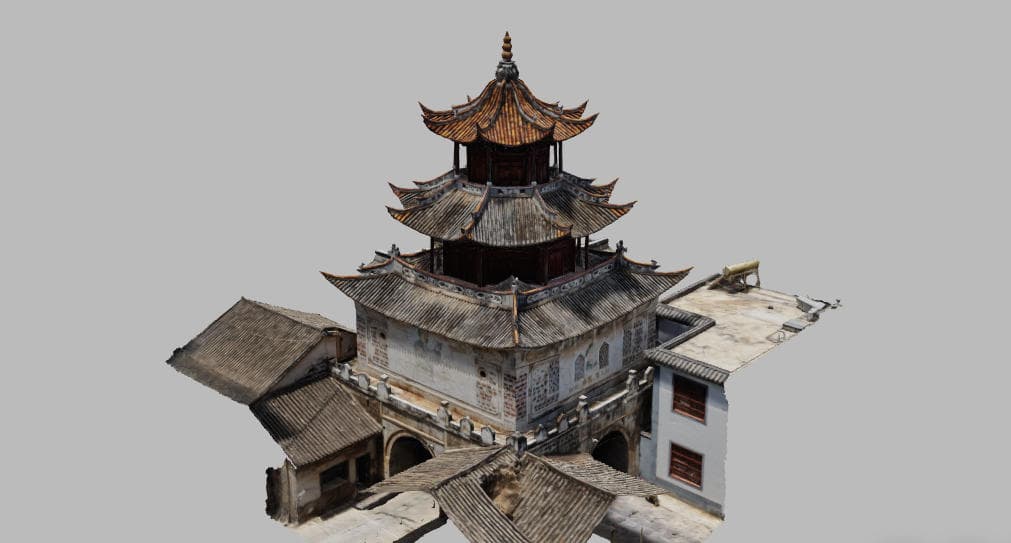
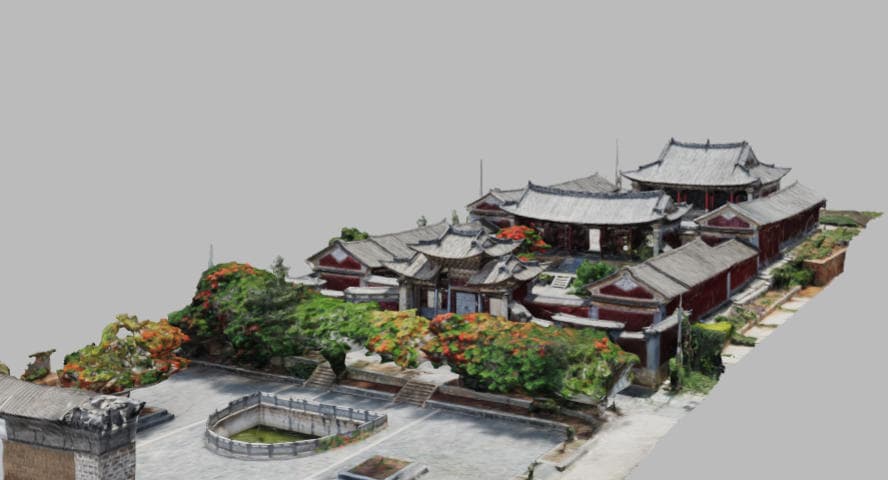
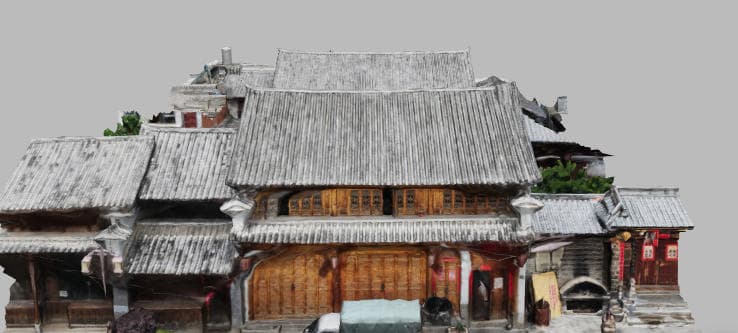
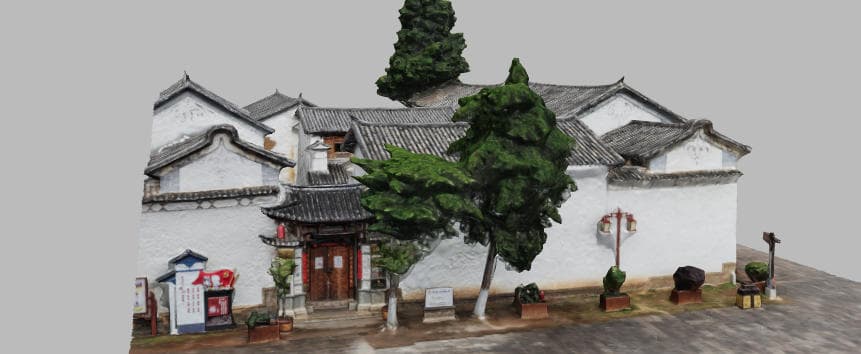
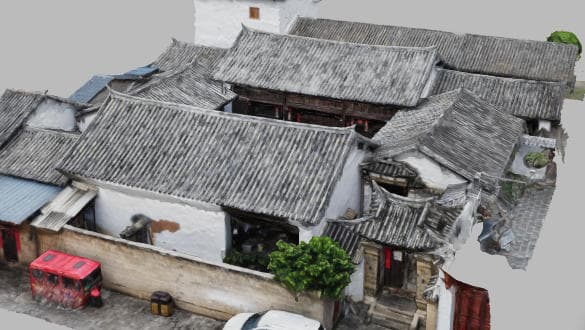
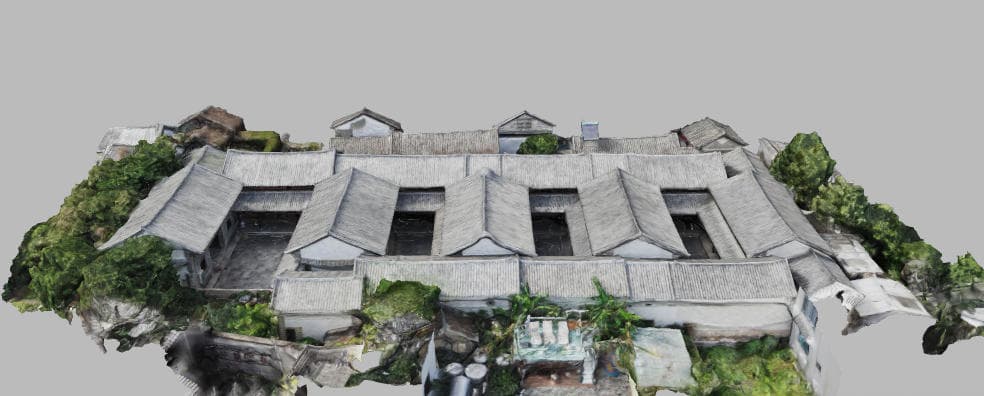
The Martial Temple is located in the southern quarter of Zhoucheng Town, Binchuan County. Established during the early years of the Kangxi reign between 1662 and 1670, and rebuilt in 1883, this sanctuary faces south toward the peaks of Shaozu Mountain. It shares a rare T-shaped boundary with the adjacent Confucian Temple, creating a physical union of civil and martial traditions.
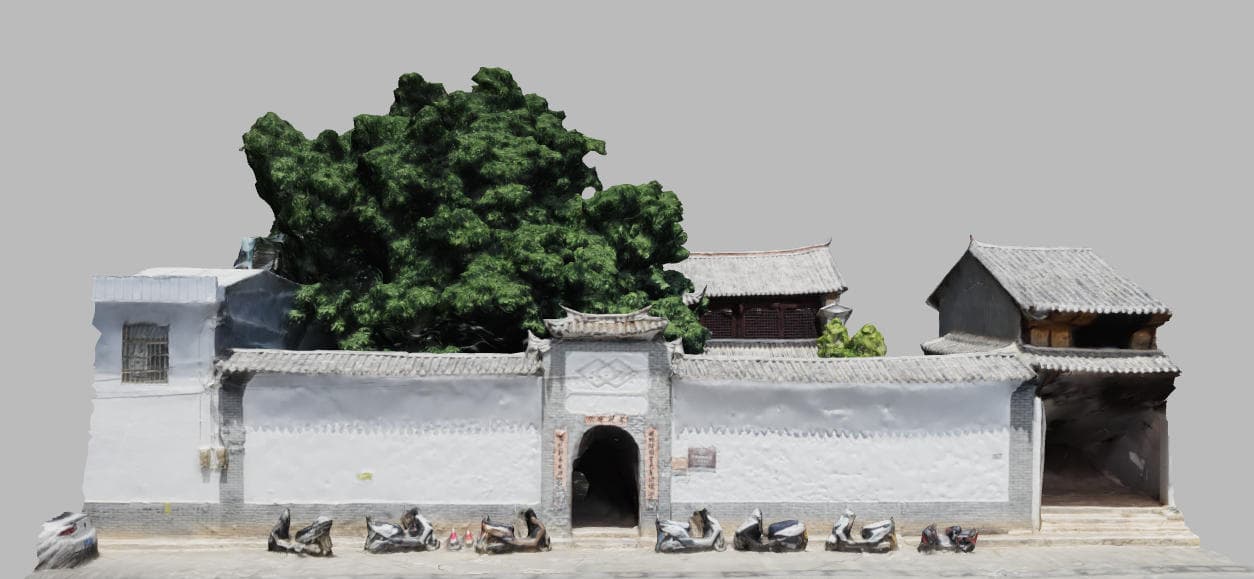
Visitors enter a cascading four-tier courtyard spanning over six thousand square meters. At the threshold stands a massive brick screen wall, measuring 39.5 meters long, 11.7 meters high, and 1.6 meters wide. A large circular window pierces the center of this red brick barrier. Historically, gatekeepers opened this portal to celebrate major local achievements or honor esteemed figures, letting light stream through the brickwork.
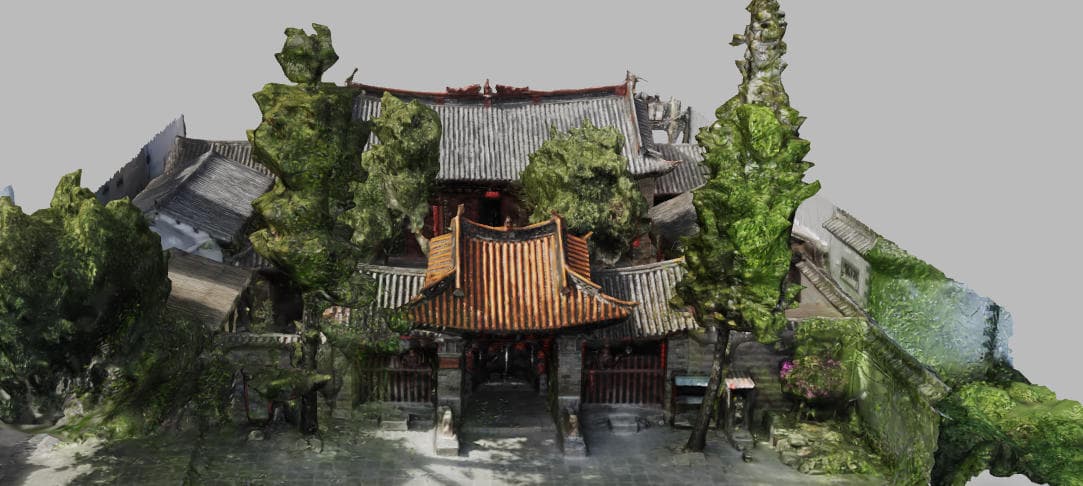
Beyond the screen wall, the mountain gate leads to the quiet courtyards, flanked by the East and West wing-rooms and the Middle Hall. Overhead, the roof ridges of the Wucheng Hall feature stone carvings of mythical Ao fish. Qing Dynasty artisans chose these fish-like creatures to protect the timber frames from earthquakes. The hall itself, measuring 13.5 meters wide, houses the sacred tablets of Guan Yu and Yue Fei beneath its single-eave gable-and-hip roof.
Human presence lingers in the physical details of the site. In the late 1950s, local workers converted these halls into a state grain warehouse, stacking heavy sacks against the painted columns. Outside, a centuries-old banyan tree spreads its canopy. For generations, local farmers touched its rough bark and watched its leaves, using it as a natural weather station to predict seasonal droughts and rains.
Today, the temple is a national cultural protection unit, preserved through careful restorations in 2010. It remains a quiet sanctuary where the scent of old timber, the rough texture of historic brick, and the cool shade of the weather tree connect modern visitors to the military and agricultural rhythms of ancient Yunnan.