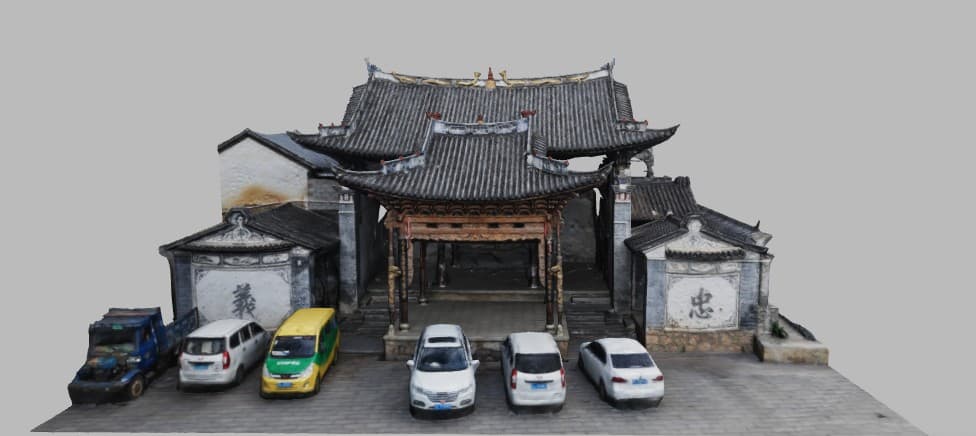
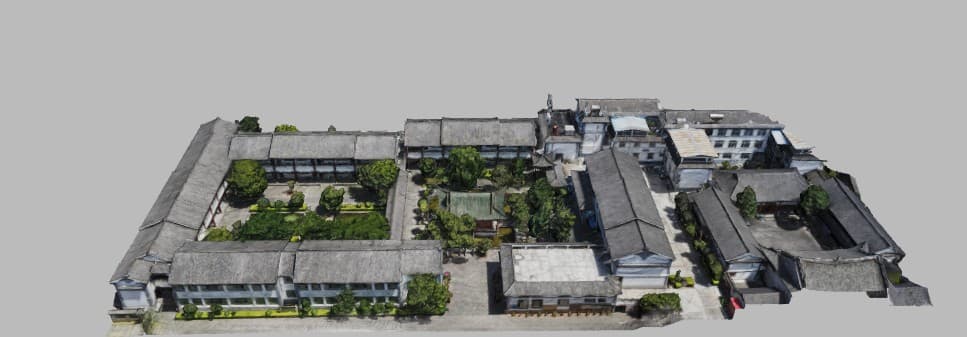
Walk through the western gate of Zhoucheng to No. 50 Ximen Street. Here, within the grounds of Zhoucheng Town No. 1 Junior High School, stands the quiet quadrangle courtyard of the Bishan Academy.
The story of this space began in the late Ming dynasty. He Bangxian, a local born in 1477 who rose to become the Prefect of Chengdu and Binchuan's first imperial scholar, lived on this land. After his death in 1572, his descendants donated his residence to establish the Yuying Academy. For generations, the rustle of ancient ginkgo and cypress leaves accompanied students reciting classic texts.
In 1726, Binchuan Magistrate Zhou Yue arrived to find private homes encroaching on the school's public land. He cleared the properties, repaired the halls, and looked out toward the horizon. Seeing the peaks of Bijia Mountain directly ahead, he renamed the school Bishan Academy, meaning Pen Hill, linking the physical landscape to the scholar's brush.
Time reshaped the curriculum. In 1906, the imperial academy transitioned into a modern Higher Elementary School. By the spring of 1929, it housed the county's first public middle school. In 1944, private Zhenghui High School students walked these grounds, leaving their mark by carving the characters "Zhenghui" into the courtyard stone.
The school also harbored secrets. In September 1948, Yang Pengzhe, operating under the alias Wang Wenzhong, secretly established the Binchuan County Working Committee of the Chinese Communist Party within these walls, embedding a revolutionary legacy into the school's history.
Today, visitors can touch the cold stone lions guarding the main hall, walk through the crossing hall, and explore the north and south wings. A Ming dynasty "School Field Stele," recovered from the debris of a collapsed courtyard wall, preserves the records of the academy's original land endowments. The voices of modern junior high school students now mingle with these quiet stone records, continuing a five-hundred-year-old cycle of learning.