Just south of Győr’s historic centre, a monumental railway station stands at the meeting point of some of Central Europe’s most important rail routes. Its long, symmetrical façade, restrained classical proportions, and imposing entrance reflect the architectural ideals of postwar Hungary. Yet beneath this mid-century exterior lies a history stretching back to the age of steam, shaped by industrial ambition, wartime destruction, and the enduring need to connect cities and people.
The railway first reached Győr on Christmas Eve in 1855, when a new line linked the city to Bruck an der Leitha. As traffic increased, the station underwent an ambitious expansion under Ferenc Pfaff, chief architect of Hungarian State Railways. Completed in the 1890s, the improvements introduced elegant steel canopies above the platforms and, in 1895, pioneering underground passages that allowed passengers to reach their trains without crossing the tracks. These innovations placed Győr at the forefront of railway development in historic Hungary.
The station’s fortunes changed dramatically during World War II. Allied bombing on April 15, 1944, devastated the historic building, leaving it beyond repair. In the following decade, architects József Éhn and János Dianóczky of UVATERV undertook its reconstruction, creating an expansive Socialist Realist complex that opened on August 10, 1958. The design combined a monumental central entrance with elongated wings and spacious passenger facilities, expressing the postwar government’s vision of progress through public architecture. A year later, sculptor Jenő Kerényi completed Újjáépítés, or “Rebuilding,” a vast limestone relief above the entrance. Depicting the collective efforts of workers, farmers, and families, the artwork transformed the façade into a declaration of national renewal.
Today, Győr Railway Station remains a vital junction on the Budapest–Vienna corridor, welcoming international express services and regional trains bound for towns across western Hungary. Its continued operation gives the protected historic building a significance beyond its architectural and artistic legacy. Generations have passed through its halls, carrying with them the ordinary hopes and uncertainties of departure and return. The station has witnessed an empire's disappearance, the devastation of war, and the rebuilding of a nation, yet its essential purpose has remained unchanged. Here, amid the ceaseless rhythm of arriving and departing trains, the passage of history becomes inseparable from the movement of everyday life.
Metadata
Significance
Győr Railway Station is a major railway junction in northwestern Hungary, situated on the main line connecting Budapest and Vienna. Opened in 1855, the station introduced the first underground platform-access passageways in historic Hungary during its expansion in 1895. Following severe damage during World War II, the station was rebuilt in the Socialist Realist style and reopened in 1958. Its entrance façade features a monumental limestone relief titled Rebuilding, created by sculptor Jenő Kerényi in 1959.
@misc{FUNES_gyor_railway_station_2026,
  author       = {Fengze Cao, Yixuan Xie},
  title        = {{Győr Railway Station (Győr vasútállomás) -- 3D Cultural Heritage Record}},
  year         = {2026},
  publisher    = {FUNES.WORLD},
  howpublished = {\url{https://funes.world/entities/gyor-railway-station}},
  note         = {Technique: Photogrammetry; Format: .glb; License: CC BY-NC 4.0}
}
Academic References & Sources (8)
## Overview
Győr Railway Station (Hungarian: Győr vasútállomás) is the primary passenger rail station serving Győr, the county seat of Győr-Moson-Sopron County in northwestern Hungary. Located at Révai Miklós utca 2–4 immediately south of the historic city center, the station is operated by Hungarian State Railways (MÁV).
The station functions as a major Central European rail junction situated along the electrified main line between Budapest and Vienna (Line 1 Budapest–Hegyeshalom). It also acts as a hub and terminus for several regional routes, including the Győr–Sopron (Line 8), Győr–Celldömölk (Line 10), and Győr–Veszprém (Line 11) railways.
## Historical Development
The station opened on December 24, 1855, with the inauguration of the Bruck an der Leitha–Győr line built by the Austrian State Railway Company (StEG). Between 1892 and 1895, the station underwent a major expansion designed by MÁV chief architect Ferenc Pfaff. Inaugurated on July 8, 1895, this expansion introduced elevated island platforms topped with steel canopy roofs and a pedestrian subway, making Győr the first railway station in historic Hungary to feature underground platform-access tunnels.
On April 15, 1944, during World War II, the original station building was severely damaged during Allied bombing raids and was subsequently demolished. Construction of the present station began in the mid-1950s according to plans designed by architects József Éhn and János Dianóczky of the UVATERV design bureau. Built in the Socialist Realist architectural style, the modern station complex was officially opened on August 10, 1958.
## Architectural Features
The station building complex stretches 243 meters in length and covers a footprint of over 10,000 square meters. The structure consists of a two-story central main building flanked by single-story side wings housing separate arrival and departure areas, connected through an underground hall and pedestrian subway system leading directly to the street level.
Designed in the Socialist Realist style, the main exterior entrance facade features a prominent 7-by-17-meter limestone relief titled "Rebuilding" (Újjáépítés), executed in 1959 by Hungarian sculptor Jenő Kerényi. The platform area contains seven active tracks served by one side platform and three covered island platforms accessed via pedestrian subways.
## Current Status
Győr Railway Station remains one of the busiest rail passenger hubs in Hungary. It accommodates extensive domestic regional, InterCity, and international express services—including Railjet and EuroCity trains connecting Hungary to Austria, Germany, and Switzerland.
The station complex holds official protected status as a listed national architectural monument (Identifier: -560). In addition to MÁV passenger support services, ticket offices, and waiting halls, the building complex houses a government administrative service center (Kormányablak).
<strong>Győr vasútállomás</strong> · MÁV-csoport (https://www.mavcsoport.hu) <strong>Győr vasútállomás</strong> · 9021 Győr Révai Miklós utca 4. A pénztár 2026. szeptember 30-án 20:00-ig tart nyitva. A nemzetközi pénztár 2026. október 05-én 17:45-ig tart nyitva. A pénztár 2026.
Győr vasútállomás · MÁV-csoport (https://www.mavcsoport.hu) Győr vasútállomás · 9021 Győr Révai Miklós utca 4. A pénztár 2026. szeptember 30-án 20:00-ig tart nyitva. A nemzetközi pénztár 2026. október 05-én 17:45-ig tart nyitva. A pénztár 2026.
Győr vasútállomás · MÁV-csoport (https://www.mavcsoport.hu) Nagy csarnokban, a pénztárakkal szemben. Belföldi, nemzetközi menetrendi információ · A kerékpártároló az állomás épület előtt található; MÁVDIREKT ügyfélszolgálat: Tel.: +36 (1) 3 49 49 49, Mobilhálózatról: +36 (20/30/70) 499 4999 ·
# Győr vasútállomás
Győr vasútállomás
Győr vasútállomás egy kéményről nézve
Cím
Ország
Magyarország
Hely
Révai Miklós utca 2-4., 9021 Győr, Magyarország
Állomáskategória
- Állomáskód
GV
- UIC állomáskód
5501289
- IBNR állomáskód
5500080
- Építési adatok
- Építés éve
1855
- Megnyitás
1855. december 24.
- Rekonstrukciók évei
1953-1958
- Lebontás éve
1944. április 15.
- Lebontás oka
A II. világháborúban légitámadás érte
- Építési stílus
szocialista realizmus
- Építész(ek)
Pfaff Ferenc
- Kivitelező
ÁVT (Államvasút társaság)
- Felhasználási terület
vasútállomás
- Üzemeltető
- Alapadatok
- Tszf. magasság
115 m
- Alapterület
10.260 m²
- Hosszúsága
243 m
- Egyéb jellemzők
- Emeletek száma
2 ill. 3 (+ pince)
- Peronnal rendelkező vágányok száma
7
- Peronszélek száma
7
- Része ennek
Magyarország vasúti közlekedése
- Szomszédos állomások
- Időzóna
UTC+01:00 (téli időszámítás)
- Vasútvonalak
- Szolgáltatások
- Szolgáltatások
nyilvános WC
- Wi-Fi
ingyenes
- Vonatnemek
- Elhelyezkedése
- é. sz. 47° 40′ 55″, k. h. 17° 38′ 02″47.682000°N 17.634000°E
- A Wikimédia Commons tartalmaz Győr vasútállomás témájú médiaállományokat.
Győr vasútállomás közép-, illetve vonatindító állomás, a MÁV Zrt. üzemelteti. Jelentős forgalmi csomópont, a Nagyszentjános-Győr-Hegyeshalom vasúti forgalmi csomópont központi és irányító állomása. A Budapest-Keleti - Hegyeshalom kétvágányú villamosított fővonalon fekszik (1-es vonal), a Komárom-Hegyeshalom rendelkezési szakaszon, Győrszentiván és Öttevény állomások között. Az Ausztria és Szlovákia érintésével közlekedő nemzetközi vonatok fontos megállóhelye. Az állomás jelenlegi épületét 1958-ban adták át.
## Az állomás fekvése, elhelyezkedése
[szerkesztés | forrásszöveg szerkesztése]
Az állomásépület a Révai Miklós utcában, Győr belvárosában található. Közel van hozzá a városháza, a helyközi autóbusz-pályaudvar (Hunyadi utca) és a Révai Miklós utcai helyi autóbusz-decentrum. A helyközi buszpályaudvarral gyalogos aluljáró köti össze.
Győr állomás a Budapest-Keleti–Hegyeshalom kétvágányú villamosított fővonalon fekszik, Komárom–Hegyeshalom rendelkezési szakaszon Győrszentiván és Öttevény állomások között. Győr állomás közép-, illetve vonatindító állomás a Budapest–Hegyeshalom-fővonalon.
Győr állomásról ágazik el a Győr–Celldömölk egyvágányú fővonal, melyből Győrszabadhegy állomáson ágazik ki a Győr–Veszprém-mellékvonal. E vonalra a személyszállító vonatokat Győr állomás indít. Győr rendelkező állomás a Győr–Celldömölk-fővonalon és a Győr–Győrszabadhegy–Veszprém-mellékvonalon Veszprém állomásig.
Rendelkező és csatlakozó állomás Győr–Sopron egyvágányú villamos fővonalán Sopron állomásig, valamint az összekötő vágány útján Győr-GYSEV állomásig. Győr állomás szomszédos állomásai Budapest felé Győrszentiván, Hegyeshalom felé Öttevény, Celldömölk és Veszprém felé Győrszabadhegy, Sopron felé Ikrény illetve Győr-GYSEV pályaudvar.
A Győrszentiván–Győrszabadhegy pályaelágazás a Budapest–Komárom–Győr fővonalat köti össze a Győr–Celldömölk egyvágányú fővonallal és viszont, Győr állomás érintése nélkül. A Győr-GYSEV deltavágány közvetlen összeköttetést létesít Győr-GYSEV és Sopron GYSEV egyvágányú fővonallal és viszont, Győr MÁV állomás érintése nélkül.
## Forgalom
[szerkesztés | forrásszöveg szerkesztése]
## Részei és feladataik
[szerkesztés | forrásszöveg szerkesztése]
### Győr személypályaudvar
[szerkesztés | forrásszöveg szerkesztése]
Feladata: a személy és az átmenő teherforgalom lebonyolítása.
7 fő- + 1 tartalékvágányra (8. vágány) terelik a személyszállító vonatokat. A vágányok és a peronok alatt két aluljáró van, a peronok megközelítése - az 1. vágány kivételével - ezekkel lehetséges. A főcsarnokból nyíló aluljáróból az 1. vágány kivételével az összes személyszállító vágányra (2.-7.) lehetséges az eljutás, a posta melletti aluljáróról az 1. vágányra és a távolsági autóbusz-pályaudvarra is el lehet jutni.
### Győr rendező pályaudvar
[szerkesztés | forrásszöveg szerkesztése]
Feladata: a teherforgalom lebonyolítása.
### Győr helyi rendező pályaudvar
[szerkesztés | forrásszöveg szerkesztése]
Feladata: a teherforgalom lebonyolítása.
Jelenleg az AUDI Hungaria Zrt. bérli.
## Vonalak
[szerkesztés | forrásszöveg szerkesztése]
## Történelem röviden
[szerkesztés | forrásszöveg szerkesztése]
Lásd még: Győr vasúttörténete
- 1855. december 24. Az állomás és az 1-es vasútvonal megnyitása. Az Osztrák-Magyar Államvasút-társaság (ÁVT) építette és adta át a forgalomnak a Bruck/Leitha (Királyhida)-Győr közötti vonalat és Győr legelső vasúti felvételi épületét is (vasútállomás).
- 1856. A Bruck-Győr vonal folytatása, a Győr-Újszőny közötti vasútvonal is kiépült.
- 1857. Már Alsógalláig (ma Tatabánya-Alsógalla megállóhely) fut be a szerelvények döntő többsége.
- 1872. Viktor Erlanger báró végleges vasúti építési engedélyt kapott. A győri vasútállomással kapcsolatban felmerültek bizonyos problémák. A GYSEV-nek a győri államvasúti pályaudvarhoz történő becsatlakozásához a gabonavásártérből, vagy a Honvéd-ligetből jelentős területeket kellett volna átadni, amihez a győriek nem járultak hozzá. A minisztérium az államvasúttól 1,5 km távolságra adott engedélyt a GYSEV-állomás felépítésére. 1876-ban indult meg a forgalom Győr-GYSEV pályaudvar és Sopron közt. Az állomás, mint személypályaudvar, már nem üzemel. Ma a GYSEV teherpályaudvarként használja.
- 1882. A vasútállomás már a MÁV tulajdonában.
- 1892-1894. Az állomásépület kibővítése. Itt épült Magyarország első vasútállomási aluljárója a két fedett szigetperonnal. Az átépítést tervezte: Pfaff Ferenc, a MÁV főépítésze.[1]
- 1895. Győr-Veszprém-Lepsény-Dombóvár vasútvonal kiépítése. A Győr-Veszprém vonal jelenleg a MÁV 11-es vonala. Az egyvágányú, villamosítatlan Veszprém-Lepsény-Dombóvár vonal személyforgalma 2007-ben megszűnt.
- 1931-1933 között épült ki a felsővezeték.
- 1944. április: A II. világháborúban az 1944-'45-ös magyarországi légitámadások idején Győr állomása sem kerülte el a pusztítást. Az állomásépület súlyosan megsérült.
- 1953-1958. A felvételi épület újjáépítése. A mai felvételi épület 1953-1958 között épült, Dianóczky János és Éhn József (UVATERV) tervei alapján. A csatlakozó posta épületét Vas Dénes tervei alapján építették. A vasútállomás a monumentális és diadalmas szocreál épületek jelentős győri képviselője. Rideg és zárkózott külső megjelenése mögött elegáns, világos, jól átgondolt belső tereket találunk. A külső tömegből is kiugró, kőburkolatú csarnok a város és a vágányok felé is nagyméretű üvegfalakkal megnyitott. A város felé ugyanakkor ez az üvegfal elbújik a monumentális kő kapukeretezés és az oszlopsor mögé, amelyet még egy nagyméretű dombormű is kiemel. A csarnokban a bejárat tengelyében juthatunk le az aluljáróba, két oldalt helyezkednek el a pénztárak. Az emeleti rész galériákkal nyílik a csarnoktérbe, itt egyéb kiszolgáló funkciók, például egy nagyobb különterem is helyet kapott (ez az egykor a közönségforgalomnak is megnyitott terült ma zárva van). A két vakolt oldalszárnyat a földszinten nagyméretű ablakok kísérik végig. A vágányok felőli oldalon helyezkedik el a közlekedő, míg a város felőli oldalon nagyméretű terek találhatóak. Az elrendezés ma is működőképesnek tűnik, hiszen a nagy terek egy része most is szolgáltató funkciót tölt be (bolt, kávézó, presszó), ugyanakkor sok helyen az épülethez méltatlan beavatkozásokat, rendezetlenül beépített “sufnikat” (bolt, virágárus, újságos stb.) látunk, nagyon távol az egykori eleganciától. Az oldalszárnyak emeleti részében irodák találhatóak. A legtöbb bútor, világítótest mára eltűnt, csupán a kőburkolatok, nyílászárók, a fém és fa korlátok, valamint a képzőművészeti alkotások maradtak meg. Ma az egész épület alapos (műemléki) felújításra és funkcióátgondolásra szorul. Az új felvételi épülettel a kibővített aluljárón keresztül megközelíthető perontok új vasbeton tetőket kaptak.
- 1967. december 15. Az állomás Nádorváros felőli oldalán megnyílik a helyközi autóbusz-állomás. (Addig a Baross Gábor híd belvárosi hídfőjénél üzemelt.)
- 1987-1989. A felvételi épület homlokzatának felújítása és a buszpályaudvar felé nyíló aluljáró kiépítése.[2][3]
- 2008. A vágányhálózat és a biztosítóberendezés rekonstrukciója.[4]
- 2014. A Baross Gábor híd felújítása[5]
## Az állomás területén működő szakágak, vállalkozó vasúti társaságok és külső vasúti vállalkozások
[szerkesztés | forrásszöveg szerkesztése]
- Forgalmi Csomópont Győr
- MÁV-START Zrt. Személyszállítási Szolgáltatási Központ Celldömölk
- MÁV Gépészeti Zrt. KjK Fenntartási Műhely Győr
- MÁV-TRAKCIÓ Zrt. Vontatás Szolgáltatási Központ Budapest
- MÁV Vasútőr Kft.
- MÁV Ingatlankezelő Zrt. Szombathelyi körzet
- MÁV Távközlési Üzemeltetési Alosztály Győri részlege (vasúti telefon)
- DB Schenker Kft. (vasúti posta)
- PTK Pályalétesítményi Üzemeltetési Alosztály Győr
- PTK PML Győri Szakaszmérnökség (PFT)
- Bp TLK Részlegvezetőség Győr (Szertárfőnökség)
- PTK. Biztosítóberendezési Karbantartási Alosztály Bp.- Nyugat Biz.ber szakasz Győr
- PQS Kft. (kocsitakarítás)
- Éta – Trió Kft. (személypályaudvari vágányok közötti takarítás)
## Az állomás szolgálati helyei
[szerkesztés | forrásszöveg szerkesztése]
### Személypályaudvar Felvételi épületében
[szerkesztés | forrásszöveg szerkesztése]
Forgalmi csomópont
- Személy pu-i tolatásvezető (az 1. vágány mellett, a földszinten)
- Rendelkező forgalmi szolgálattevő (a postaépület emeletén - Révai M. u. 8.)
- Hangosbemondó (a postaépület emeletén - Révai M. u. 8.)
- Személy pu. forgalmi iroda (az 1. vágány mellett, a földszinten)
- Csomóponti vezető (Állomásfőnök)
- Gazdálkodási koordinátor
- Ált. gazd. ea. (anyaggazdákodó)
- Üzemmérnök
- Forgalmi technológus
- Vezénylő
- Irattárak
MÁV-START Zrt.
- Személypénztárak (a nagycsarnokban, az állomás kp. részében)
- Nemzetközi pénztár (a nagycsarnokból nyíló jobb szárnyon)
- Pénztárellenőri iroda (a nagycsarnok emeletén, a bal oldalon)
- Ügyfélszolgálat - 2013. május 27-től (a nagycsarnokban, a személypénztárakkal szemben)
- Személyszállítási Szolgáltatási Központ irodái
- Utazószemélyzeti gazdálkodási szakelőadó vezénylet
- Utánfizetési pénztár
- Tisztítási átvevők
- Kocsivizsgálók (az 1. vágány mellett, a földszinten)
PQS Kft.
- Kocsitakarítók pihenőhelye
Egyéb szakszolgálatok
- EBK TSZK Körzeti munkavédelmi szakelőadó
- EBK TSZK Körzeti környezetvédelmi szakelőadó
- MÁV Vezérigazgatósági Igazgatási Osztály Vizsgálóbiztosi egysége
- PV Humánpartner
- PV Ügyfélszolgálati Iroda Győr
- MÁV Biztonsági Igazgatósági Területi VBO
- PÜ (Pályafenntartó ügyosztály) Alosztály irodái
### Rendezőpályaudvar Felvételi épületében
[szerkesztés | forrásszöveg szerkesztése]
Forgalmi csomópont
- Rendezőpályaudvari rendelkező forgalmi szolgálattevő
- Belsős vonatfel- és átvevő
- Külső vonat fel- és átvevő
- Kocsivizsgáló
- Operativ koordinátor
### Rendezőpályaudvar Kereskedelmi épületében
[szerkesztés | forrásszöveg szerkesztése]
- Árufuvarozási koordinátor
- Raktárnoki iroda
- Vezető raktárnoki iroda
- Elszámoló helyek
### Fenntartási Műhely - Kocsijavító épület
[szerkesztés | forrásszöveg szerkesztése]
MÁV Gépészeti Zrt.
- KjK Fenntartási Műhely (Kocsijavítás)
### VOKE Arany János Műv. Ház és a volt Hotel Szárnyaskerék épülete (Révai M. u. 5.)
[szerkesztés | forrásszöveg szerkesztése]
- Szolgáltatási központ irodái
Vasútegészségügyi Kht. (vasúti dolgozók részére fenntartott orvosi rendelőben)
- Vasúti üzemorvos
- Fogorvos
PQS Kft.
- Kocsitakarító iroda
### PGF Felvételi épületben
[szerkesztés | forrásszöveg szerkesztése]
- Pályafenntartó Szakaszmérnöki irodák
## Egyéb adatok, információk
[szerkesztés | forrásszöveg szerkesztése]
Győr állomáson összesen 3 db vízdaru (Fűtőházban 2 db, Kémény csonka mellett 1 db) található. Az állomáson olajvételező hely nincs. Fordítókorong a Gépészeti Zrt. területén (jobb oldali Fűtőházban) üzemel. A Fűtőház területén 6 db vizsgálóakna, a volt HK.I. melletti csonkavágányban (kémény csonka mellett) pedig 1 db található.
Az állomáson ELEKTRA 2. egyközpontos, tolatóvágányutas, váltó- és vágányfoglaltság ellenőrzéses elektronikus biztosítóberendezés üzemel.
Az állomás Budapesti Pályavasúti Területi Központ Erősáramú Alosztály Nagyszentjánosi Kirendeltség által táplált villamos felsővezetékkel van ellátva. (25.000 V)
Rakodást a közforgalmú rakodóterületen az un. Csárda vágányokon lehet végezni. A vágányok felett nincs felsővezeték.
A térvilágítást automata kapcsolók szabályozzák, amelyeket az IKE Kft. állít be és üzemeltet. Kivétel képez a rendezőben lévő rámpa, és VI. őrhely körzetében lévő két oszlop (10-11 és 12-13 vágány közötti oszlop), amely kézi kapcsolású. A rámpát bérlő kapcsolja a villanyóra melletti kapcsolóval, a VI. körzetében lévő oszlopokat a VI. szolgálati helyen lévő forgalmi szolgálattevő kapcsolja.
A Révai úton lévő kapuk („X” és volt HK.I.-nél) elektromos kapunyitóval lettek felszerelve. A kapunyitók távirányítói a személypályaudvari forgalmi irodában találhatók. A szolgálatot teljesítő külsős forgalmi szolgálattevő rendkívüli esetben (pl. mentő, tűzoltó, rendőrség) nyitja ki.
Győr állomáson a forgalmazott távbeszélő kapcsolatokat SHR 3000 típusú hangrögzítő berendezés rögzíti. A rögzítő berendezésen 12 db csatorna került kialakításra (táblakezelő planet pult, C35 rádió, Rendező planet pult, Rendelkező planet pult, Menesztő rádió (szpu), Győrszentiván LB, Öttevény, Ikrény, Győrszabadhegy, IV. őrhely rádió, VI. őrhely rádió, Hangos élőszavas). A rögzített hanganyag indokolt esetben féléves visszahallgatást is lehetővé tesz. A távközlő berendezések használata során kerülni kell a felesleges, nem kulturált hangú beszélgetéseket, törekedni kell a rövid utasításszerű információcserére. A planet berendezések csak a beszélgetés idejére vannak bekapcsolva.
Állomási távbeszélő kapcsolatok:
- CB. távbeszélő központ: melyen keresztül lehetőség van a távbeszélő hívószám jegyzékben szereplő állomások közvetlen hívására, a szolgálati helységben elhelyezett CB telefon igénybevételével.
- Menetirányító távbeszélő vonal: melyen értekezés lehetséges a Győr-Hegyeshalom, Győr-Szombathely, és Győr-Sopron vonali menetirányítókkal, továbbá a Győr-Veszprém menetirányítóval.
- Állomásközi távbeszélő (Öttevény, Győrszentiván, Győrszabadhegy, GYSEV Csorna)
- KÖFE: Győrszentiván, Öttevény és Győrszabadhegy állomások felé
- közcélú vezetékes telefonhálózatba (városi) bekapcsolt telefonszámok
Rádiós körzetek:
- Személypályaudvar menesztő rádiós körzet: Rendelkező központ, személypályaudvar külső forgalmi szolgálattevő, tolatásvezetők, tolatómozdony
- Gyári körzet: Rendezői rendelkező forgalmi szolgálattevő, tolatómozdony (Gyári), tolatásvezető, IV. sz. őrhely külső forgalmi szolgálattevő
- Húzó körzet: Rendezői rendelkező forgalmi szolgálattevő, tolatómozdony (Húzó), tolatásvezető, VI. sz. őrhely külső forgalmi szolgálattevő
- Vonatfelvevői körzet: Rendezői rendelkező forgalmi szolgálattevő , külső vonatfelvevő, belső adatrögzítő
- Raktári tolató körzet: Rendezői rendelkező forgalmi szolgálattevő, tolatómozdony, tolatásvezető
Utastájékoztatás: Győr állomás hangos és vizuális utastájékoztató körzetei:
- Győr személypályaudvar peronok (1-6 vágány)
- Győr személypályaudvar utascsarnok
Menetrendi utastájékoztató eszközök Győr állomáson:
- Személypályaudvar A-B-C peron, a lépcsők közelében, zárható vitrinben 1-1 db sárga-fehér menetrend-lap az érkező-induló vonatok listájával
- Félperonon a forgalmi iroda mellett zárható vitrinben 1 db sárga-fehér érkező-induló vonatok jegyzéke
- Kijárati lépcsőfeljáró mellett a vizuális utastájékoztató berendezés alatt zárható vitrinben 1 db sárga-fehér érkező-induló vonatok jegyzéke
- Váróterem kivilágított vitrinben: 1 db sárga-fehér érkező-induló vonatok jegyzéke, 1 db A1 méretű Vasúti hálózatot tartalmazó térkép és 1 vonal fali menetrend.
- Váróteremben a tartóoszlopokon és falon elhelyezett zárható vitrinben összesen 4 db sárga-fehér érkező-induló vonatok jegyzéke
- A trafik melletti falon nyitott vitrinben a vágányzári hirdetmények.
- A váróteremi folyosón elhelyezett zárható vitrinekben az 1-es és a 8-16-os vonalak fali
menetrendje.
A vizuális utastájékoztató berendezés táblái:
- a nagy csarnokban
- a kijárati utascsarnokban
- a kijárati aluljáró autóbusz-pályaudvar felőli oldalán, a lépcső felett.
A sárga-fehér jegyzék menetrendváltáskor kerül cserére. Az évközi menetrendi javításokat a forgalmi technológus végzi. Az utascsarnokban az érkező és induló vonatok, a kijárati csarnokban és lépcső feletti utastájékoztató táblán csak az induló vonatok kerülnek kiírásra. A fedett peronokon kettő vizuális utastájékoztató tábla van elhelyezve. Az aluljárókban a lépcsőfeljáró mellett, 2-től 7 vágányig szintén egy-egy utastájékoztató tábla került elhelyezésre. Az utastájékoztató táblák távvezérlését, a hangos–digitalizált az és élőszavas utastájékoztatást a Hangosbemondó végzi. A hangosbemondó irodából történik Abda (csak Győrből induló vonat esetén) és Győr-Gyárváros (valamennyi vonat esetén) megállóhelyek hangos utastájékoztatása is.
A vonatok tényleges és menetrend szerinti indulása, illetve érkezése előtt 15, 10, illetve 3 perccel kell az utasok hangosbemondó általi tájékoztatását elvégezni. A Hangosbemondónak érthetően és időben a következő információkat kell közzétenni: vágány száma, rendeltetési/cél állomás, vonattípus, indulási/érkezési idő. A nemzetközi vonatok esetében, amelyeknél angol és német nyelvű utastájékoztatás is lehetséges, az utastájékoztatást úgy kell szervezni, hogy a vonat érkezése előtt legalább egy alkalommal mindkét idegen nyelven elhangozzon. Az 5 percet meghaladó késés esetén – az előzőeken felül - a várható késés mértékét, a késés okát és (ha van) az alternatív utazási lehetőségeket be kell mondani. Utastájékoztató hangrendszerként (gépi bemondás) DIGITON berendezés üzemel. A kezelését a Hangosbemondó végzi az irányítótoronyból.
## Egyéb, kisebb állomások Győrben és vonzáskörzetében
[szerkesztés | forrásszöveg szerkesztése]
- Győr-Gyárváros megállóhely
- Győr rendezőpályaudvar és helyirendező között helyezkedik el közvetlenül Győr-Gyárváros megállóhely, amelynek műszakváltások idején jelentős a személyforgalma. Az „A” és „B” peronon az 1-es számú fővonal, a „C” peronon pedig a 10-es és 11-es számú vonalak le- és felszálló utasforgalma bonyolódik le. A győri gyárak, üzemek gazdaságos eléréséhez (mint például ÉDÁSZ, ÁTI-telep, Vagongyár) iparvasúti vágányhálózatot alakítottak ki. Ebben a rendszerben a műszakváltásokra a győri teherpályaudvarra beérkezett teherkocsikat tolatómozdonyokkal vitték a megfelelő üzemekhez.
- Szomszédos állomások: Győr, Nagyszentjános és Gönyű a Keleti pályaudvar-Hegyeshalom kétvágányú villamosított vonalon fekszik, a Komárom-Hegyeshalom rendelkezési szakaszon. A Győrszentiván-Győrszabadhegy pályaelágazás a Budapest-Komárom-Győr fővonalat köti össze a Győr-Szentgotthárd-országhatár egyvágányú fővonallal és viszont, Győr állomás érintése nélkül.
- A Győr-Szombathely vonal elágazó állomása, a Győr-Győrszabadhegy-Veszprém mellékvonal elágazó középállomása.
- Győrszemere
- Ménfőcsanak mrh.
- Győrszabadhegy és Győrszemere állomás közötti nyíltvonali szolgálati hely. A vonatközlekedés szabályozásában, vonatfogadásban nem vesz részt, így a forgalomszabályozó állomás Győrszabadhegy és Győrszemere.
- Ménfőcsanak-felső
- Táblás megállóhelyként üzemel.
- Győrszabadhegy és Pannonhalma állomások között nyíltvonali szolgálati hely.
- Győrszabadhegy és Pannonhalma állomások között nyíltvonali szolgálati hely.
## Jegyzetek
[szerkesztés | forrásszöveg szerkesztése]
- ↑ Kozma Endre - A győri vasútállomás bővítési terve, 1892 (Régi Győr blog, 2017.05.15.)
- ↑ Laczó Balázs - Retró Győr / Előbújtunk a sínek alól Archiválva 2021. június 19-i dátummal a Wayback Machine-ben (kisalfold.hu, 2017.10.14.)
- ↑ Kozma Endre - Gyalogos aluljáró a Belváros és Nádorváros között (Régi Győr blog, 2021.10.21.)
- ↑ Győr - vasutallmások.hu
- ↑ Szeghalmi Balázs - Nézze meg videón a felújított a Baross hidat! Archiválva 2021. június 19-i dátummal a Wayback Machine-ben (kisalfold.hu, 2014.10.06.)
## Források
[szerkesztés | forrásszöveg szerkesztése]
- Győr vasútállomás [5501289] szolgálati hely adatai. kapella2.hu. Közlekedéstudományi Intézet Vasúti Pályakapacitás-elosztó Igazgatóság
- Győr vasútállomás. Magyarország vasútállomásai és vasúti megállóhelyei. vasutallomasok.hu
## További információk
[szerkesztés | forrásszöveg szerkesztése]
- A Wikimédia Commons tartalmaz Győr vasútállomás témájú kategóriát.
- Az új győri vasútállomás, 1958. regigyor.hu. Régi Győr (2017. augusztus 21.) (Hozzáférés: 2022. augusztus 10.)
- Moderngyőr.wordpress.com írása
Július 30-án, csütörtök este 8 órától felújítási munkálatok miatt átmenetileg lezárják a győri pályaudvar utascsarnokát. A MÁV tájékoztatása szerint a csarnokban található szolgáltatások elérhetősége módosul, a jegyvásárlás pedig alternatív helyszínen biztosított.
A vasúttársaság az épület bejáratán elhelyezett hirdetményben értesítette az utazóközönséget a soron következő munkálatokról. A csütörtök este 20 órakor életbe lépő lezárás közvetlenül érinti a megszokott utasforgalmi útvonalakat és a csarnokban található berendezések használatát.
Hol válthatunk jegyet a lezárás ideje alatt?
A felújítási munkálatok idején az utascsarnokban működő csomagautomaták és jegykiadó automaták nem lesznek elérhetők.
- Jegyvásárlás: Az utazók az átmenő aluljárónál, a posta melletti vasúti bejáratnál kihelyezett automatákból válthatják meg menetjegyeiket.
- Online vásárlás: A torlódások elkerülése érdekében javasolt a jegyek előzetes megváltása a MÁV applikációján vagy a jegy.mav.hu oldalon keresztül.
Munkálatok és a várható fejlesztések
Bár a bejárati tájékoztató a munkálatok pontos időtartamáról és a kivitelezés részleteiről egyelőre nem tartalmaz részletes ütemtervet.
Tájékoztatjuk, hogy a weboldal a felhasználói élmény fokozása érdekében sütiket alkalmaz. A honlap használatával a Miniszterelnökség Adatkezelési tájékoztatójában foglaltakat magára nézve tudomásul veszi.
E-mail: 1818@1818.hu
Telefon:
1818
Külföldről: +36 (1) 550-1858
Cím:
9021 Győr, Révai Miklós u. 4-6. (vasútállomás)
hétfő: 8:00-16:00 Sorszámot legkésőbb a nyitvatartási idő vége előtt 15 perccel lehet húzni.
kedd: 8:00-18:00 Sorszámot legkésőbb a nyitvatartási idő vége előtt 15 perccel lehet húzni.
szerda: 8:00-16:00 Sorszámot legkésőbb a nyitvatartási idő vége előtt 15 perccel lehet húzni.
csütörtök: 8:00-16:00 Sorszámot legkésőbb a nyitvatartási idő vége előtt 15 perccel lehet húzni.
péntek: 8:00-12:00 Sorszámot legkésőbb a nyitvatartási idő vége előtt 15 perccel lehet húzni.
szombat: Zárva
vasárnap: Zárva
A kormányablakokat IDŐPONTFOGLALÁS NÉLKÜL IS felkeresheti.
IDŐPONTOT FOGLALHAT ONLINE, amennyiben rendelkezik Ügyfélkapuval. (Egyes ügykörökben – Ügyfélkapu-regisztráció, lejárt személyazonosításra alkalmas okmányok cserére, vezetői engedély honosítása - Ügyfélkapu nélkül is lehetőség van az online időpontfoglalásra.)
IDŐPONTOT FOGLALHAT TELEFONON is Ügyfélkapu nélkül, a 1818-as telefonszámon, bármely ügykörre.
A Kormányablak Mobilalkalmazás segítségével akár MOBILRÓL IS KIHÚZHATJA sorszámát, így csökkentve a várakozási időt. Google PlayApp Store
Felvilágosítást adunk a kormányablakokban, az okmányirodákban és a kormányhivatalok ügyfélszolgálati irodáiban intézhető ügyekkel kapcsolatban.
Az ügyintézéshez IDŐPONTOT FOGLALHAT TELEFONON keresztül (Ügyfélkapu nélkül is).
##### Telefon: 1818
##### Külföldről: +36 (1) 550-1858
##### https://1818.hu/
## The Győr railway station building from the southwest Item Info
- Title:
- The Győr railway station building from the southwest
- Creator:
- József Glück
- Date Created:
- 1920-1930
- Description:
- On 24 December 1855, the Austro-Hungarian State Railways Company opened the line between Bruck/Leitha (Királyhida)-Győr, which was extended in 1856 with the Győr-Ujszőny line. The establishment of the railway line was of great importance for Győr in terms of intermediary trade, as it made it possible not only to tranship goods arriving by ship but also to transport the 6,000 cattle that were occasionally driven up to the fairs held in the area near the station. After the Trianon peace treaty, it became the main line between Budapest and Vienna. On 15 April 1944, the station was also hit by an air raid, and was demolished and rebuilt in 1953-58 in the socialist style, according to the plans of János Dianóczky and József Éhn (UVATERV).
- Subjects:
- railway
- Location:
- Railway station
- Latitude:
- 47.681034754227944
- Longitude:
- 17.632092768125116
- Source:
- Flóris Rómer Museum of Art and History
- Identifier:
- 34/a
- Type:
- glass negative; 24x30 cm
- Format:
- image/jpeg
Source
- Preferred Citation:
- "The Győr railway station building from the southwest", Photos by József Glück (1877-1944), Rómer Flóris Művészeti és Történeti Múzeum
- Reference Link:
- https://romer.hu/gluck/en/items/gluck_034.html
Rights
- Rights:
- Public Domain
From what little I learned through some very limited research before arriving in Gyor, it was a city whose historic treasures could almost all be found in its Belvaros (City center). This was the oldest part of the city. It was said to be filled with Baroque buildings, structural survivors of the multiple conflagrations that had beset Hungary time and again throughout its history. Gyor was one of those lucky places that as history would have it, just so happened to be on the other end of the country from Hungary’s most ferocious invasions. The Ottomans came up through southern Hungary, the Mongols and Soviets roared in from the east. The Austrian Habsburgs were relatively benign compared to these other invaders. Due to the Habsburg influence much of Gyor’s historic architecture was still standing. The same could not be said for its beautiful old railway station. I first arrived in the city at its cavernous successor on a late weekday afternoon.
Hardened Target – A Less Than Warm Welcome
The railway station was a communist-era concrete concoction that managed to be both banal and sinister. It did nothing to improve Gyor’s image and might best be described as functional, uncomfortable and aesthetically displeasing. Part of this was my own country’s fault. On April 15, 1944 Gyor’s railway station was badly damaged by an Allied bombing raid. The building, which was one of many designed by Austria-Hungary’s railway station architect extraordinaire Ferenc Pfaff, had sported turrets and spires. That grand old fin de siècle style greeted passengers upon arrival. Unfortunately, the wartime damage was so bad that the station had to be demolished. In its place, a new station would be built in the preferred post-war Socialist Realist style. From 1953-58, the communists implemented their usual brilliant idea of building something that looked a lot like their imagination, austere and gloomy. There was concrete and cement galore, stiff lines and square forms. This was architecture for the people decreed by a party that never failed to misrepresent them.
I found the station, in its current form, to have at least one enduring trait. It looked as though it would be able to withstand a nasty bombing. There was nothing soft about the place, the phrase, “hardened target” would be an appropriate description. Above the front entrance, carved out of the concrete were reliefs that honored the working class. Figures of workers, both male and female, marched in a variety of strange forms. The oddest by far showed a woman with taut breasts, pulling a horned steer that stared outward at the viewer. All the figures looked totally confident in what they were doing, representing a brave new world that never existed. I was glad to leave this looming hulk of a station behind. After suffering through such an unwelcoming eyesore Gyor could only get better. Almost immediately, it did.
Points of Stubborn Pride – The Height Of Ambition
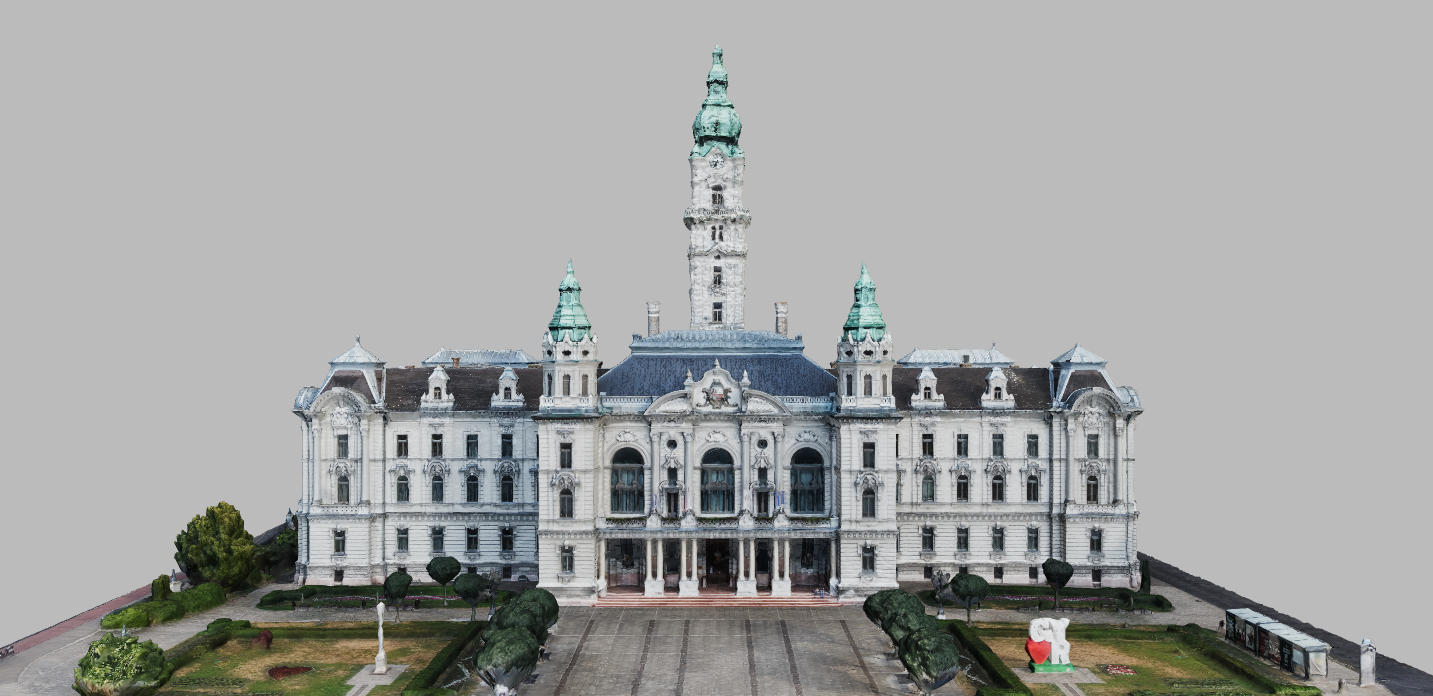
Only a few hundred meters from the station was Gyor’s astonishingly regal Town Hall (Varoshaza). It was here that I realized this city was something special. Gyor’s Town Hall looked like the kind that can be found in large western European cities, in countries such as Belgium or France. The Neo-Classical edifice is topped by a 59-meter tower reaching into the sky above. This stately architectural confection demanded my attention and left a lasting impression. Photographs were not long in coming. Whereas the figures on the reliefs carved at the train station exuded a faux confidence, the Town Hall looked like the very essence of architectural confidence. The building had been constructed in 1896 at the height of Hungary’s Bell Epoque. This was the year of the Hungarian Millennium celebrations celebrating the Magyar conquest of the Carpathian Basin. The Town Hall was a sign of confidence, an expressive singularity that represented the city’s ambition. It was a case where architecture was more than a building, it was also a feeling.
It soon became apparent that there was plenty more to see as I made my way into the city center. My hotel turned out to be on the other side of town from the train station. The accommodation was a great deal for the price, but it also meant a several kilometer long walk. This included a stroll through the middle of Gyor’s Baroque building lined Belvaros, which was just the way I had imagined it, rough around the edges, with plenty of faded grandeur on display. It managed to be spectacularly quaint. The only drawback for me was trying to lug around a suitcase with a broken pull-up handle. This meant I had to either hunch over to grab the handle and push it along by the wheels or try to carry it by the handle. Adding weight to this impromptu workout was the backpack I sported on one shoulder. To say that this was awkward would be an understatement. As a point of stubborn pride, I tried to carry the suitcase just above the ground, switching hands when my arm grew numb from exhaustion. Despite temperatures in the mid-60’s I began to sweat profusely. It was not long before I decided to stop for a momentary break at a gelato kiosk in Szechenyi ter. There can be no more refreshing experience than having a cone of gelato in the heart of a provincial Hungarian city’s Belvaros.
A Feeling Of Possibility – The World Before My Eyes
I finally made it to the hotel, a fine establishment that was clean, pleasant and quiet. My weariness from traveling the entire day was no match for the excitement of being in a totally new place. I had started the day in Ljubljana, two countries away from where I now stood. Here I was in Gyor, a place that a few days ago I had never heard of. Now it was my base of operations for the next several days. To be in an unknown town, without any friends or family members having the slightest idea where I was at enthralled me. This was like living the first day of your life. These are the moments that I find most satisfying, when a whole new world opens before my eyes, one that earlier in my life I could never have imagined and that now I will never forget.
Click here for: What History Is Made Of – The Walls Of Gyor: Guarding A Gate To Vienna
# About railway stations
Station buildings are a kind of gateway in the fabric of a city, and, as well as the coming and going of departures and arrivals, they are sometimes the site of our forced waiting. Interestingly, this waiting was not always a burden, and in the days of civilised waiting rooms, the Royal waiting halls and the “resti” (small railway inns), it was even a way of passing the time. The buildings of railway stations were, of course, primarily functional, and although the form of railway stations has been influenced by history, our travel habits have changed at least as much as these stations.
It is perhaps obvious also to laypersons that station buildings are type buildings, but this was not always the case. Before the monopoly of MÁV, there were several large state-owned and countless small private railway companies in our country, such as the Hungarian Central Railway, the Southern Railway, or the Tisza Regional Railway. Not surprisingly, the buildings of these companies may have differed considerably. What was definitely agreed was that the size of the buildings was designed to take into account the volume of passenger traffic.
What were the type designs like? The common feature was that the buildings were classed, so that the first-class buildings were the largest, while the passenger areas of the class V and class IV stations sometimes consisted of a single waiting room, with only a few steps separating the ticket office and the staff accommodation.
Fortunately, several railway station buildings survived and can still be seen today, having been renovated, which is why expert eyes can conclude from the station buildings not only to the railway company but also to the age of constructions. As far as the style of railway houses is concerned, they bear the taste of Ferenc Pfaff, the chief architect of MÁV. Pfaff studied at the University of Technology and after designing a few small buildings, he joined the MÁV in 1887 as chief architect. From Kolozsvár to Pécs, from Arad to Miskolc, he and his colleagues designed and remodelled 38 station buildings in historical Hungary.
He was first entrusted with the station building in Fiume, which was completed by 1890. He also designed the Transport Museum in Budapest, which was built for the Millennium celebrations. Unfortunately, many station buildings were destroyed in the Second World War. Because of the Trianon peace treaty earlier, a large part of their locations was across the border. All of the buildings still standing today are protected as historical, local or railway heritage monuments. In our selection, the first station (designed by him) along the line No. 100 is the one in Cegléd.
## Line 100
The railway station of Cegléd was completed in 1909. According to the press of the time, there were some problems with the location of the building: the main entrance was not on the axis of the Rákóczi Road originally. If we are to believe recollections, the plans were modified so that the orientation of the building is now correct, owing to the Minister responsible for railways and transport. It is still one of the most beautiful station buildings due to its distinctive red brick cladding. It stands out a little from our selection, and not just because it is the only station house that has not suffered any permanent damage, although the boiler house and sidetracks were demolished during the renovation in 2007.
In the 1840s two groups of capitalists wanted to build railways in Hungary, one was the Viennese banker György Sina, a business associate of István Széchenyi, the other was the banker Móric Ullmann from Pest. Parliament gave Ullmann the right to build the railway, and so the Hungarian Central Railway started building the line to Vienna first. Its first section was the well-known line to Vác, but at almost the same time, work began on the line to Szolnok in the east as well. The Pest-Szolnok line was opened to traffic on 1 September 1847, a year after the Vác line. The first railway station in Ószolnok - which is not the predecessor of the present station building in Szolnok - was built by the Hungarian Central Railway company based on Wilhelm Paul Sprenger's plans in the classicist style.
The second railway station, built in 1857, was built by the Tisza Region Railway Co. on the approximate site of the building that stands there today. Its special feature was the wooden train reception hall, which was intended to demonstrate the importance of the station. The ancestor of the present building, the third railway station, was built in 1908, based on the plans of Ferenc Pfaff. In 1944, the station was so badly damaged by a bomb attack that it was demolished. The bombing of Szolnok during the Second World War was of terrible power. First, hundreds of British and American planes attacked the area around the Tisza Bridge and the railway station, but later, when Soviet troops occupied the city, the Germans began bombing, and the station and its surroundings were almost completely destroyed. The station building, which can still be seen today, was designed by Ybl Prize-winning architect Vilmos Schneller and was inaugurated in 1975, the 900th anniversary of the founding of Szolnok. The building covers an area of 13,000 m2, a size that is not exaggerated, since at that time Szolnok was the most modern railway junction in Central Europe.
Continuing along the line, the railway station building of Debrecen was arranged by the Tisza Region Railway, when the company's first railway line was built from Szolnok to Debrecen. As an innovation, the railway company had a wooden platform roof built over the station tracks.
As the railway expanded in many directions, the need to extend the building arose naturally. Ferenc Pfaff was entrusted with the plans, and he wanted to reinforce the hall-like character of the building with a huge two-storey arched glass wall around the entrance. It was heavily bombed during the Second World War and was demolished in 1958. The new complex, designed by László Kelemen and István Sajó, was completed in 1961. The most prominent part is the waiting hall covered with three cross-vaulted reinforced concrete shell domes, but the interior is also grandiose, with Endre Domanovszky's giant sgraffitos (Debrecen Fair) still decorating the two side walls of the hall. The walls are still covered with Siklós marble and the floor with red marble. The building complex once included a workers' hostel and an inn. In terms of its operation, it had passenger service shops, 'futurist' tables and a 'cultural lounge'.
The last station on the railway line we are following was Nyíregyháza, whose first reception building, built by the Tisza Region Railway in 1858, must have looked like the present-day station in Püspökladány. The second station was designed by Pfaff and was opened in 1910. During the Second World War, during the British bombardment, the station house was destroyed, and the new building (now the third) was inaugurated in 1951. It was built by Jan Bahradniczky, a Polish railway engineer, and owes its structures to Boldizsár Vásárhelyi, a professor at the University of Technology. According to architect Attila Kulcsár, the building was one of the first representatives of so-called modern architecture in Hungary. The newest station building, which is still in use today, was inaugurated in 2002, designed by architects of Nyíregyháza Rita Kovács and József Végh. The somewhat austere, modern building is a functionalist creation and, despite initial aversions, is now an integral part of the city image.
Rail transport has changed a lot in recent decades, freight is no longer transported by rail alone, but the range of passenger services is not what it used to be either. Perhaps the biggest change, much to our annoyance, is the disappearance of waiting rooms and their seats, but one thing that fortunately has not changed is the desire to travel.
TÉ
Translated by Zita Aknai
Sources:
# File:Train station, 'Rebuilding' by Jenő Kerényi, 2018 Győr.jpg
Tools
Actions
General
Print/export
In other projects
Appearance
From Wikimedia Commons, the free media repository
Size of this preview: 960 × 720 pixels. Other resolutions: 330 × 248 pixels | 1,280 × 960 pixels | 2,991 × 2,244 pixels.
Original file (2,991 × 2,244 pixels, file size: 1.3 MB, MIME type: image/jpeg)
File information
Structured data
## Captions
## Summary
[edit]
DescriptionTrain station, 'Rebuilding' by Jenő Kerényi, 2018 Győr.jpg
English:
- Magyar:
Date
Source
Own work
Author
Globetrotter19
Camera location
47° 40′ 56.98″ N, 17° 38′ 01.08″ E
View this and other nearby images on: OpenStreetMap
47.682494; 17.633633
## Licensing
[edit]
- Object
- This reproduction is permitted under article 68 of the Hungarian copyright law (1999/LXXVI), which specifies that if a fine art, architectural or applied art creation is erected with a permanent character outdoors in a public place, a view of it may be made and used without the authorization of the author and paying remuneration to him.Note: According to the article 67 Paragraph (5), the provision of Article 34, Paragraph (1) concerning quotation of parts of a disclosed work, "on the condition of indicating the source and the author specified in the original work", shall not be applicable to the use of fine art, artistic photographic and applied art creations. According to the article 67 Paragraph (3) the author’s name has to be indicated on an image if this is intended to present a specific fine art, architectural art, or applied art. The author’s name has likewise to be indicated if such creations are used for presentation in scientific and educational lectures as well as for school education purposes (Article 33, Paragraph (4)).See COM:CRT/Hungary#Freedom of panorama for more information.
Deutsch ∙ English ∙ magyar ∙ italiano ∙ +/−
- Photograph
- I, the copyright holder of this work, hereby publish it under the following license:
This file is licensed under the Creative Commons Attribution-Share Alike 3.0 Unported license.https://creativecommons.org/licenses/by-sa/3.0CC BY-SA 3.0 Creative Commons Attribution-Share Alike 3.0 truetrue
- You are free:
- to share – to copy, distribute and transmit the work
- to remix – to adapt the work
- Under the following conditions:
- attribution – You must give appropriate credit, provide a link to the license, and indicate if changes were made. You may do so in any reasonable manner, but not in any way that suggests the licensor endorses you or your use.
- share alike – If you remix, transform, or build upon the material, you must distribute your contributions under the same or compatible license as the original.
- You are free:
## File history
Click on a date/time to view the file as it appeared at that time.
Date/Time
Thumbnail
Dimensions
User
Comment
current
18:07, 20 September 2018
2,991 × 2,244 (1.3 MB)
Globetrotter19 (talk | contribs)
User created page with UploadWizard
You cannot overwrite this file.
## File usage on Commons
The following page uses this file:
## Metadata
This file contains additional information such as Exif metadata which may have been added by the digital camera, scanner, or software program used to create or digitize it. If the file has been modified from its original state, some details such as the timestamp may not fully reflect those of the original file. The timestamp is only as accurate as the clock in the camera, and it may be completely wrong.
Exposure time
1/60 sec (0.016666666666667)
F-number
f/5.5
Lens focal length
17.6 mm
Short title
- Orientation
Normal
- Horizontal resolution
300 dpi
- Vertical resolution
300 dpi
- File change date and time
18:51, 20 September 2018
- Y and C positioning
Co-sited
- Meaning of each component
- Image compression mode
2
- APEX exposure bias
0
- Maximum land aperture
3.4 APEX (f/3.25)
- Supported Flashpix version
1
- Color space
sRGB
- File source
Digital still camera
- Scene type
A directly photographed image
- Custom image processing
Normal process
- Exposure mode
Auto exposure
- Digital zoom ratio
0
- Scene capture type
Landscape
- Scene control
Low gain up
- Subject distance range
Unknown
## Structured data
### Items portrayed in this file
#### depicts
#### some value
#### July 2018
#### 47°40'56.978"N, 17°38'1.079"E
#### 0.01666666666666666666 second
#### 5.5
#### 17.6 millimetre
#### image/jpeg
Categories:
- Station building of Győr train station
- Reliefs of cattle in Hungary
- Socialist realism in Hungary
- Reliefs of people in Hungary
- Station clocks in Hungary
- Reliefs in Győr
- Columns in Hungary
- Architectural sculptures in Hungary
- Limestone sculptures in Hungary
- Sculptures by Jenő Kerényi
- 2018 in Győr
- July 2018 Hungary photographs