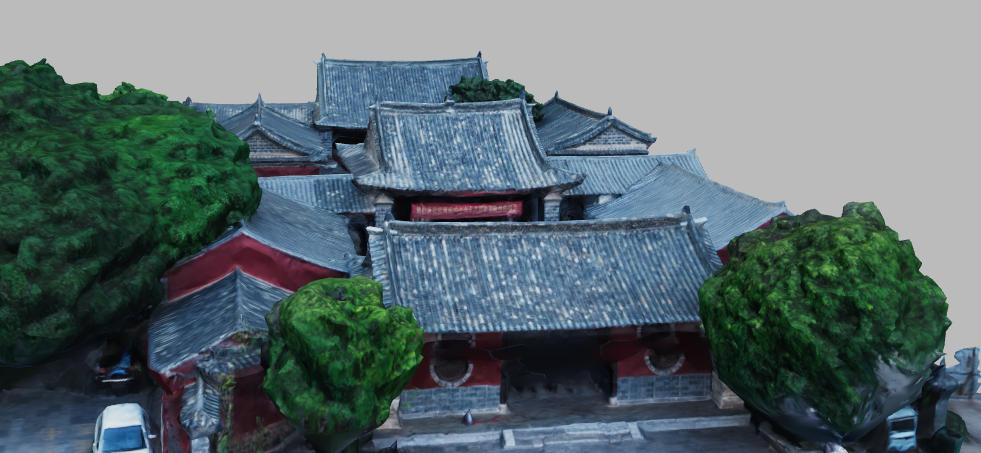
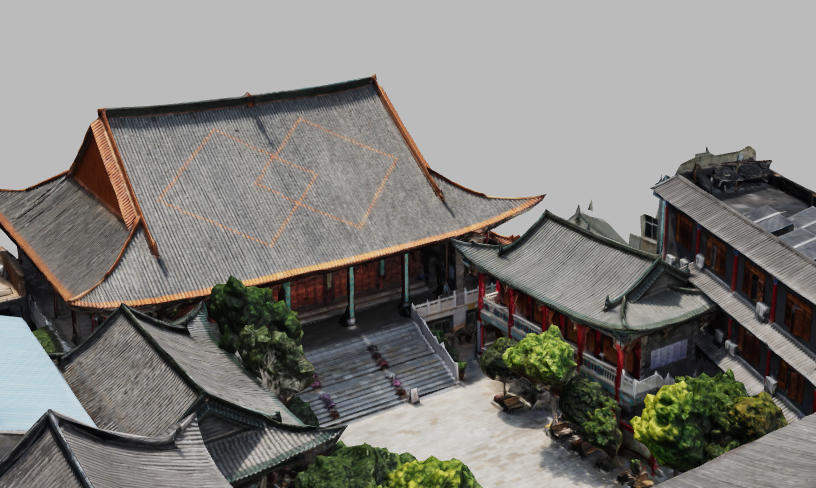
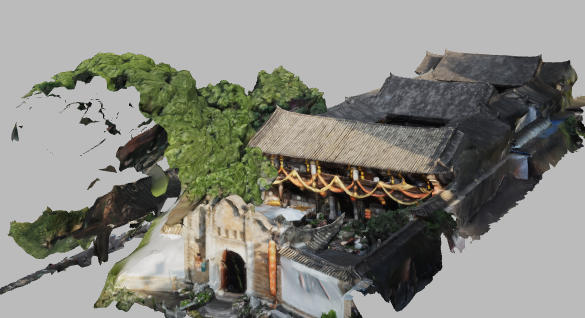
High on a forested hillside in Anning, the Kunming Theravada Double Dragon Temple commands the highest elevation of the Yunnan Buddhist College campus. The approach begins at the Double Dragon Bridge, where a statue of the venerated Sīvali stands at the base, welcoming visitors with a traditional symbol of fortune and merit. From here, a multi-tiered staircase rises toward the main hall. Elaborate golden dragon sculptures line the balustrades, their claws firmly grasping toads and fish in classic regional motifs.
The temple architecture reflects the deep aesthetic traditions of Southeast Asia and China’s Dai minority regions. Its dazzling golden exterior stands out against the dense green canopy and the sweeping blue sky. Reaching the third and final platform, visitors encounter the Double Dragon Hall. The elevation offers a panoramic view of the surrounding mountains, providing a quiet space for reflection before entering the sanctuary. A traditional striking gong sits on the outer terrace, ready to send a deep, resonant hum across the valley.
Inside the main hall, richly decorated columns and window frames surround the central Buddha shrines. The space serves as a daily academic and spiritual home for Pali-language student monks. Behind the main building, a shaded landscape area houses a Reclining Buddha, a Four-Faced Buddha, and fierce Vajra guardian statues, creating a secluded environment for meditation.
The temple functions as a living center for monastic education and ritual practice. As part of an institution globally unique for teaching Chinese, Tibetan, and Pali Buddhist systems on a single campus, the Double Dragon Temple preserves the Theravada heritage. It remains an active venue for ordinations and prayer ceremonies, inviting visitors to observe a continuous tradition of study and devotion.
Metadata
Significance
Perched at the highest elevation of the Yunnan Buddhist College, the Kunming Theravada Double Dragon Temple serves as a rare cultural anchor for Pali-language Buddhism in China. The temple physically manifests the heritage of the Dai minority regions and Southeast Asia through its golden, hillside architecture and traditional dragon motifs. As part of the only institution globally to unite the Mahayana, Vajrayana, and Theravada traditions on a single campus, the temple functions as both an active monastic sanctuary and a center for inter-religious exchange. Its presence preserves ancient ordination practices while reinforcing Yunnan’s historical position as a geographic crossroads for Asia’s diverse Buddhist lineages.
@misc{FUNES_kunming_theravada_double_dragon_temple_2026,
  author       = {Li Wan, Huan Xu},
  title        = {{Kunming Theravada Double Dragon Temple (昆明南传双龙殿) -- 3D Cultural Heritage Record}},
  year         = {2026},
  publisher    = {FUNES.WORLD},
  howpublished = {\url{https://funes.world/entities/kunming-theravada-double-dragon-temple}},
  note         = {Technique: Photogrammetry; Format: .glb; License: CC BY-NC 4.0}
}
Academic References & Sources (12)
## Overview
The Kunming Theravada Double Dragon Temple (昆明南传双龙殿), also known as the Theravada Great Hall of the Yunnan Buddhist College (云南佛学院南传大殿), is a prominent Theravada Buddhist temple. It is located within the Yunnan Buddhist College campus on Longxi Road in Wenquan Town, Anning City, Kunming, Yunnan Province, China. The temple serves as the primary religious and educational facility for the Pali-language (Theravada) Buddhist tradition within the college, which is globally unique for housing and teaching the Chinese (Mahayana), Tibetan (Vajrayana), and Pali (Theravada) Buddhist systems in a single institution.
## Historical Development
The temple was developed as an integral part of the Yunnan Buddhist College, an institution approved by the State Administration for Religious Affairs and co-funded by the Yunnan Provincial People's Government and the Buddhist Association of Yunnan Province. Its construction was specifically intended to represent the Theravada Buddhist heritage historically prevalent in China's Dai minority regions, such as Xishuangbanna and Dehong, as well as Southeast Asia. Over the years, the temple has served as a central venue for Pali-tradition ordinations, prayer ceremonies, and official inter-religious exchanges, reinforcing Yunnan's role as a geographic and cultural nexus for the three major Buddhist traditions.
## Architectural Features
Built into the hillside at the highest elevation of the college campus, the temple commands a panoramic view of the surrounding forested mountains. The architecture is characterized by its dazzling golden exterior and strong Southeast Asian and Dai minority aesthetic influences. Access to the main hall is provided by the prominent "Double Dragon Bridge" (双龙桥) and multi-tiered staircases lined with intricate dragon sculptures. Notable architectural and decorative elements include:
Structural Layout: The complex is organized across a three-tiered platform.
Sculptures and Motifs: Elaborate golden dragon motifs dominate the staircases and balustrades, featuring traditional depictions of dragons grasping toads and fish. A statue of the venerated Sīvali (西瓦利尊者) stands at the base of the bridge.
Main Hall (Double Dragon Hall): The hall features exquisitely decorated columns, doors, and window frames, housing central Buddha statues and shrines for worship.
Rear Landscape Area: The space behind the main hall contains a Reclining Buddha, a Four-Faced Buddha, and Vajra guardian statues.
Ancillary Structures: A traditional striking gong is situated on the outer platform, alongside a nearby bell tower.
## Current Status
Today, the Kunming Theravada Double Dragon Temple is actively used as both a place of worship and an academic sanctuary. It facilitates the daily lives, monastic studies, and ritual practices of the Pali-language student monks enrolled at the Yunnan Buddhist College. The temple is officially maintained as part of the college's operational infrastructure and remains open to the public, attracting devotees, scholars, and tourists. It stands as a significant cultural and religious landmark, symbolizing the harmonious coexistence and preservation of Theravada Buddhism within China's broader religious landscape.
LaoyeNZ微电影microfilm一曲一画一世界, Do your own video主宰自己的影视世界,创造真实自我价值,“探索之路”湖北随州--甘肃兰州--西藏岗仁波济--云南。安宁市云南佛学院古--新南传双龙殿,一个简单质朴却充满神秘和古韵,一个豪华大气上档次而且彩色艳丽精美绝伦,不知道大家更喜欢哪一个。
{"format":"funes-coordinate-repair-event-v1","type":"repair","batchId":"gps-remaining668-20261018-7b0e0ee0cde6","scopeSha256":"7b0e0ee0cde62183297566528bd01cfd8e1c0424cd2a657a7b7b24276021d103","targetSetSha256":"8a7baa6aef786fe25d69197d380bad5296191f051bc4d12089c25bec4f8f0f03","documentId":"jx4eftpiwawkkigl1gg92ar9","operationId":"gps-remaining668-20261018-7b0e0ee0cde6:jx4eftpiwawkkigl1gg92ar9:repair","receiptId":"60a90a88-cd85-4ed2-8ee3-15145acdef8a","performedAt":"2026-10-18T08:47:44.766Z","actor":"ssh:ubuntu/db:funes-cms-admin","repairKind":"conversion","originalCRS":"GCJ02","transform":"eviltransform@03ba58d92dfda57f8a1635f3805483c8fc10bd77/gcj2wgs_exact","beforeCRS":"GCJ02","afterCRS":"WGS84","candidateSha256":"7633014801aa38a60de60c467e4c198d73cdc1be218a6d6827f35525e74324f2","physicalRowId":5058,"before":{"lat":24.949891,"lng":102.446281},"after":{"lat":24.95270613012288,"lng":102.44472862218414},"approximate":true,"note":"Recorded-point CRS correction; not a surveyed center."}